Why Your Ceiling Fan Wobbles and How to Fix It
A wobbling ceiling fan is one of the most common household electrical annoyances, and it often shows up right when you need the fan most. As spring arrives in East Canton and temperatures begin climbing, homeowners start running their ceiling fans again after months of sitting idle. That first flip of the switch sometimes reveals a shaky, noisy fan that rattles the light fixture and fills the room with a low hum. The good news is that most wobble issues have clear causes and straightforward fixes. Some problems you can handle yourself with basic tools, while others point to deeper electrical or structural concerns that need a licensed electrician. Understanding the difference protects your home, your fan, and your safety.
What Causes a Ceiling Fan to Wobble in the First Place
Ceiling fan wobble rarely happens without a reason, and the cause is usually mechanical, electrical, or structural. Dust buildup, loose screws, unbalanced blades, and worn motor bearings are the usual suspects. However, a wobble can also signal that the electrical box in the ceiling was not rated for a fan, which is a safety issue that gets overlooked far too often. Warmer months put extra strain on fans as they run longer hours, exposing weaknesses that stayed hidden through winter. Identifying the root cause early prevents bigger problems like a detached fan or a damaged motor.
The Mechanical Reasons a Ceiling Fan Wobbles
Mechanical issues top the list when it comes to ceiling fan wobble. Over time, the small screws that secure the blades to the motor housing loosen from vibration, and even a quarter turn of play can throw the entire fan off balance. Dust, pollen, and cobwebs collect unevenly on blades during the off-season, adding weight to one side and pulling the fan out of rhythm. Blade brackets can also bend slightly if the fan was bumped during cleaning or installation, which creates an uneven spin pattern. Warped blades from humidity or heat exposure add another layer of imbalance, especially on older fans with wooden blades. A blade that sits even an eighth of an inch lower than the others will produce a visible shake at medium and high speeds. Simple maintenance catches most of these issues before they escalate.
Motor problems also contribute to wobble, though they show up differently than blade-related issues. Worn bearings inside the motor housing create a grinding hum along with the shake, and the fan may feel hot to the touch after running. A loose downrod, which is the metal pipe connecting the fan to the ceiling mount, allows the entire fan to sway instead of just the blades. The ball joint at the top of the downrod can also slip out of its seat, particularly on fans installed on vaulted or angled ceilings. When the motor itself is the problem, replacement is usually cheaper than repair. A qualified electrician can diagnose motor failure quickly and recommend the right next step.
Finally, improper assembly is a surprisingly common source of wobble in newer fans. Homeowners who install ceiling fans themselves sometimes skip the balancing kit included in the box or attach blades in the wrong order. Blade arms are manufactured to match specific positions on the motor, and swapping them creates imbalance even when each arm looks identical. Mounting screws tightened unevenly also warp the motor housing just enough to throw off the spin. If your fan started wobbling the day it was installed, assembly is almost always the cause. Professional installation removes this risk entirely and protects the manufacturer’s warranty.
The Electrical Reasons a Ceiling Fan Wobbles
Electrical issues cause a different kind of wobble, one that often comes with flickering lights or strange noises. A loose wire connection inside the fan canopy can create an intermittent power flow, causing the motor to surge and slow in rapid succession. This surge pattern looks like wobble but is really the motor struggling to maintain consistent speed. Capacitor failure is another electrical culprit; the capacitor controls fan speed, and a weak one makes the fan run slower than its setting, which amplifies any existing balance issues. Burnt or corroded wire nuts inside the ceiling box also cause erratic fan behavior. These problems need immediate attention because they pose fire risks.
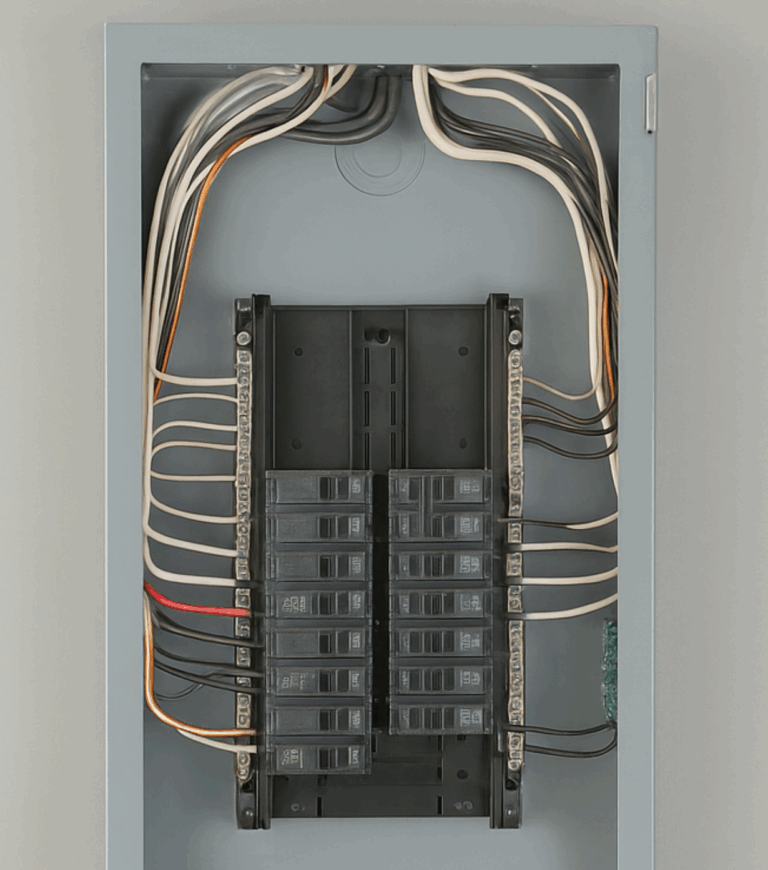
Voltage fluctuations in the home create similar symptoms, and they often trace back to the electrical panel. An overloaded circuit or a failing breaker sends inconsistent power to the fan, which confuses the motor and produces shake. Homes in older East Canton neighborhoods sometimes have aging panels that struggle to deliver steady voltage to modern appliances. Whole-house surge events, including those from spring thunderstorms, can damage fan motors and control modules without blowing a breaker. If multiple fans in your home wobble or behave strangely, the issue likely sits at the panel rather than the fans themselves. Need electrical panel service? Click here for our electrical panel installation service.
Wall controls and remote receivers cause their own set of wobble-adjacent problems. A failing wall dimmer meant for lights, rather than fans, sends the wrong signal type to the motor and creates stuttering motion. Remote receivers tucked inside the fan canopy can overheat or short out, producing the same inconsistent power delivery as a loose wire. Smart home fan switches need to match the fan’s motor type, especially with modern DC motor fans that require specific controllers. When the control does not match the fan, the motor fights itself and shows that struggle as shake. An electrician can test and replace these components safely without guesswork.
The Structural Reasons a Ceiling Fan Wobbles
Structural wobble is the most serious category, and it often signals an unsafe installation. Ceiling fans must hang from a fan-rated electrical box, which is built to hold at least 50 pounds and resist the constant torque of a spinning motor. Standard light fixture boxes are not strong enough, and many older homes have fans mounted to exactly these kinds of boxes. Over months and years, the box pulls loose from the ceiling joist, creating wobble that gets worse as the fan runs. A fan that swings visibly from the ceiling plate is on borrowed time and needs professional attention immediately. Ignoring this kind of wobble risks the fan falling from the ceiling entirely.
Joist mounting matters just as much as the box itself. Fans should be secured directly to a ceiling joist or to a fan brace bar that spans between two joists, not to drywall or a thin wood strip. Homes with finished ceilings sometimes hide improper mounting behind the canopy, which looks fine from below but fails under load. Vaulted ceilings, tray ceilings, and sloped installations all require specific hardware designed for the angle, and using the wrong downrod length amplifies wobble dramatically. Older homes in the area occasionally have settling issues that shift ceiling framing over time, loosening even properly installed fans. A licensed electrician can inspect the mount and confirm it meets current code.
Vibration damage spreads beyond the fan when structural problems go unaddressed. A wobbling fan loosens its own wire connections with every rotation, which creates the electrical issues mentioned earlier. Drywall around the canopy cracks and chips as the fan tugs on the ceiling, leaving visible damage that is hard to repair cleanly. In severe cases, the fan box itself pulls free from the joist, tearing out insulation and exposing wiring above the ceiling. Attic and upper-floor moisture can then reach the electrical connections and cause further damage. Structural wobble is never worth ignoring, even when the fan still technically works.
How to Fix a Wobbling Ceiling Fan Safely
Fixing a wobbling ceiling fan starts with a systematic approach that addresses the simplest causes first. Before doing anything else, turn off the power at the breaker, not just the wall switch, to prevent accidental shocks. Most fan wobble can be resolved with basic cleaning and tightening, but some fixes require tools and skills that belong in a professional’s hands. Knowing when to stop and call an electrician is part of fixing the problem correctly. A rushed or incomplete repair often makes the wobble worse and can damage the fan permanently. Taking the time to diagnose properly saves money and frustration.
Simple Steps to Fix a Wobbling Ceiling Fan at Home
Start with a thorough cleaning of the blades and motor housing. Dust and grime build up unevenly, and even a light cleaning often eliminates minor wobble on its own. Use a damp microfiber cloth to wipe each blade from the center outward, making sure to clean both the top and bottom surfaces. Wooden blades should be dried immediately to prevent warping, while metal and plastic blades can handle a bit more moisture. Check the blades for any visible warping by holding a ruler or straight edge against them in good light. A clean, uniform blade set is the foundation of a balanced fan.
Next, tighten every screw you can access on the fan. This includes the screws holding the blades to the brackets, the brackets to the motor, and the canopy to the ceiling mount. Use a screwdriver that fits snugly to avoid stripping the heads, and turn each screw until it feels firm but not overtightened. Pay special attention to the downrod set screws, which are often the hidden cause of wobble. Many fans come with a small blade balancing kit that includes a plastic clip and adhesive weights; this kit solves minor imbalances that tightening alone cannot fix. Follow the instructions carefully, moving the clip along each blade to find the one causing the shake.
If cleaning and tightening do not resolve the wobble, measure each blade’s distance from the ceiling using a yardstick. Any blade sitting more than an eighth of an inch off from the others needs adjustment. Gently bending the blade bracket can correct small differences, but apply pressure carefully to avoid cracking the bracket. Replacement blades are available for most major fan brands if warping is severe. At this point, if the wobble continues or returns quickly, the problem is likely electrical or structural and needs a professional. Need help with a stubborn fan issue? Click here for our electrical repair service.

When to Call an Electrician to Fix a Wobbling Ceiling Fan
Certain wobble symptoms point directly to electrical problems that require a licensed professional. Flickering lights on the fan, buzzing sounds from the motor, and heat coming from the canopy are all signs that wiring or components have failed. These issues cannot be safely addressed without shutting down the circuit at the panel and opening up the ceiling box. A trained electrician has the testing equipment to check voltage, continuity, and capacitor health without guesswork. DIY attempts on electrical components often create bigger problems, including short circuits and fire hazards. The risk is simply not worth the savings.
Structural wobble always needs professional evaluation. If your fan visibly sways from its mounting plate or you can see gaps where the canopy meets the ceiling, stop using the fan immediately. An electrician can determine whether the electrical box is fan-rated and whether the mounting hardware meets current code. Replacing a standard box with a fan-rated box requires access to the ceiling joist and careful work to avoid damaging drywall or wiring. In some cases, a fan brace bar can be installed from below without cutting a large hole in the ceiling. Professional installation ensures the fan is safe for years of use.
Older homes often need additional electrical work before a ceiling fan can be properly installed or repaired. Aluminum wiring, knob-and-tube remnants, and undersized circuits all complicate fan installations in ways that homeowners cannot see from below. An inspection of the circuit feeding the fan catches these issues early, preventing overheating and nuisance breaker trips. Fan upgrades are also a good time to consider adding a dedicated switch, a dimmer-compatible control, or a smart home controller. A professional visit turns a simple repair into a lasting improvement. Looking to upgrade your home’s electrical system? Click here for our electrical service upgrade service.
How to Prevent a Ceiling Fan from Wobbling in the Future
Preventing future wobble starts with proper installation from the beginning. A fan-rated electrical box, a correctly sized downrod, and secure mounting to a ceiling joist form the foundation of a stable fan. Quality matters too; budget fans often use lighter motors and thinner blades that wobble more easily even when installed correctly. Spending a bit more upfront on a reliable brand pays off in quieter operation and longer lifespan. East Canton homes with ceiling heights above nine feet benefit from longer downrods that position the fan at the optimal distance for airflow and balance. Planning the installation carefully prevents most wobble issues permanently.
Regular maintenance keeps fans running smoothly through every season. Plan to clean blades every two to three months during heavy use periods, and check screw tightness at least twice a year. Seasonal transitions are a natural time for this check; spring and fall offer cooler temperatures for climbing a ladder and taking the time to inspect the fan. Listen for new noises during normal operation, since sounds often precede visible wobble by weeks. Catching a small issue early usually means a five-minute fix instead of a replacement. Good habits extend fan life dramatically.
Pay attention to the electrical environment surrounding your fans. Power surges from storms can damage fan motors and controls over time, leading to wobble and eventual failure. Whole-house surge protection shields every fan, appliance, and electronic device in the home from these events. A properly grounded electrical system also prevents small voltage irregularities that stress fan motors. Homes with older panels or frequent breaker trips benefit from a full electrical inspection to catch hidden problems. Protecting the whole system protects every device plugged into it.
Why You Need a Professional for Serious Ceiling Fan Issues
A wobbling ceiling fan may seem like a minor nuisance, but the underlying causes often connect to bigger electrical and structural concerns. Attempting complex repairs without the right training creates risks for both the home and the homeowner. Licensed electricians bring the tools, knowledge, and experience to diagnose wobble at its source and fix it permanently. Gragg Electrical Services has served East Canton and the surrounding communities for more than two decades, and our team handles ceiling fan issues of every type. Reliable fixes protect your home and restore the comfort you expect from every room.
The Benefits of Professional Ceiling Fan Repair
Professional electricians bring diagnostic equipment that pinpoints wobble causes quickly. Voltage meters, capacitance testers, and thermal cameras reveal problems that are invisible to the eye. This precision saves hours of trial and error, getting your fan running correctly on the first visit. A trained technician also spots related issues, like outdated wiring or improper mounting, that often cause repeat wobble problems. Addressing the full picture produces lasting results.
Safety is another major benefit of professional repair. Ceiling fan work involves climbing ladders, handling live electrical components, and sometimes cutting into drywall. Electricians follow strict safety protocols that protect both the home and the worker. Licensed professionals also carry insurance that covers any accidental damage during the repair. Homeowners who try DIY fixes take on this liability themselves.
Professional repairs come with warranties that DIY work cannot match. When a licensed electrician fixes a fan, that work is guaranteed, giving homeowners peace of mind long after the visit. Manufacturer warranties on new fans often require professional installation to remain valid. Keeping documentation of professional service protects the investment for years. Quality work pays for itself through fewer callbacks and longer equipment life.
When Ceiling Fan Problems Signal Bigger Electrical Issues
Ceiling fan wobble sometimes reveals problems far beyond the fan itself. Recurring issues across multiple fans usually point to panel or wiring concerns that affect the entire home. Flickering throughout the house, warm outlets, and frequent breaker trips combined with fan wobble suggest overloaded circuits or failing components. An experienced electrician connects these symptoms and proposes a full solution instead of patching one problem at a time. Systematic diagnosis saves money and improves safety.
Older homes face unique challenges that amplify fan issues. Electrical panels installed decades ago may not handle the demands of modern households, and certain older panel brands have known safety concerns. Aluminum wiring common in homes from the 1960s and 1970s requires special connections to work safely with modern fans. Knob-and-tube systems, where they remain, often cannot support ceiling fans at all. Professional evaluation catches these issues and provides safe, code-compliant solutions.
Weather events in Ohio put additional stress on electrical systems. Spring and summer storms bring surges that damage fan motors and control modules, sometimes subtly enough to go unnoticed for weeks. Repeated small surges add up over time, shortening the lifespan of every motor in the home. Whole-house surge protection and regular electrical inspections protect against these hidden threats. Caring for the electrical system as a whole extends the life of every fan and appliance.
Why Choose Gragg Electrical Services for Ceiling Fan Repair
Gragg Electrical Services brings more than 20 years of proven local experience to every ceiling fan repair. Our team understands the homes in East Canton and surrounding communities, including the specific wiring challenges found in older and newer properties alike. Every repair comes with our Lifetime Craftsmanship Guarantee, which reflects our commitment to doing the job right the first time. Homeowners trust us because we treat their homes with respect, leaving each workspace clean and tidy. Our reputation is built one satisfied customer at a time.
We back our work with 24/7 emergency services for urgent electrical issues that cannot wait. A fan that suddenly shakes violently or starts sparking is more than an inconvenience; it is a safety risk. Our crews arrive prepared with the tools and parts to address most issues in a single visit. Financing is available through GreenSky and Turns for larger projects, making electrical improvements accessible for every budget. Quality service should be within reach for every homeowner.
Our team is proud to serve East Canton, Canton, North Canton, Massillon, Louisville, Hartville, and every community in between. Each electrician on our crew is licensed, trained, and committed to the highest standards of workmanship. We stand behind every repair with honest pricing, clear communication, and results that last. Call Gragg Electrical Services at (330) 488-8009 to schedule a ceiling fan inspection or repair today. Our team is ready to help restore comfort and safety to your home.