How to Wire a Backyard Pavilion for Lights and Outlets
Spring in East Canton brings longer days and perfect weather for outdoor gatherings, and a properly wired pavilion turns your backyard into a true extension of your home. Wiring a backyard pavilion for lights and outlets requires careful planning, the right materials, and strict adherence to the National Electrical Code. The process involves trenching, running underground conduit, installing weather-rated fixtures, and tying everything back to your main electrical panel through a dedicated circuit. Homeowners who attempt this project without proper training often run into code violations, grounding issues, and moisture damage that can lead to serious safety hazards. A licensed electrician handles permits, inspections, and load calculations to make sure your pavilion is safe for years of cookouts, family dinners, and evening relaxation. This guide walks you through what goes into wiring a backyard pavilion the right way.
What You Need to Know Before Wiring a Backyard Pavilion
Before any wire gets pulled, the project requires a detailed plan that accounts for distance, load, and local code requirements in Stark County. Pavilion wiring is classified as an outdoor branch circuit, which means every component must be rated for wet or damp locations. You will need to know the total amperage of every light fixture, ceiling fan, outlet, and appliance you plan to use under the pavilion. This load calculation determines the wire gauge, breaker size, and conduit type for the job. Skipping this step leads to tripped breakers, flickering lights, and in some cases, melted insulation inside the walls of the pavilion posts.
Planning the Electrical Layout for Your Backyard Pavilion
A smart pavilion wiring layout starts with a scaled drawing of the structure and the path from your main panel. Mark every location where you want a light, ceiling fan, switch, or GFCI outlet, then note the expected wattage of each device. Group the devices into logical circuits so one breaker trip does not kill every light and fan at once. Most residential pavilions run on a single 20-amp circuit, but larger structures with heaters, TVs, or sound systems often need two or three dedicated circuits. Place switches near the main entry point of the pavilion so guests can find the lights easily at night. Leave at least six feet of slack at each device location to make future repairs and upgrades simple.
The distance between your main panel and the pavilion plays a major role in wire selection. Voltage drop becomes a real problem when runs exceed 100 feet, and undersized wire causes lights to dim and motors to overheat. For runs over 100 feet, electricians typically bump up from 12-gauge wire to 10-gauge or even 8-gauge to keep voltage drop under 3 percent. Aluminum feeder wire is sometimes used for very long runs because it costs less than copper, but it requires special connectors and anti-oxidant paste. A professional electrician performs the math and picks the right conductor for your specific run length.
Permits are required for almost every outdoor wiring project in Ohio, and pavilion wiring is no exception. Your local building department will want to see a wiring diagram, load calculation, and proof of a licensed contractor before issuing the permit. Inspections typically happen twice; once during the trenching and rough-in phase, and again after final connections are made. Skipping permits puts your homeowners insurance at risk and can create problems when you sell the house. Need help planning your pavilion project? Click here for our outdoor pavilion wiring service.

Choosing the Right Materials for Backyard Pavilion Wiring
Every wire, box, and fixture that goes into a pavilion must carry the correct rating for outdoor use. Underground feeder cable, known as UF-B cable, is the standard choice for direct burial runs from the house to the pavilion. When wires travel inside conduit, THWN-2 wire is preferred because it handles wet locations and temperature swings without breaking down. PVC schedule 40 or schedule 80 conduit protects the wire from shovels, rodents, and roots during its underground journey. Above ground, rigid metal conduit or liquid-tight flexible conduit shields the wire as it climbs the pavilion post and enters junction boxes.
Outlet boxes at the pavilion must be weatherproof and labeled as “extra duty” or “in-use” bubble covers for wet locations. Standard indoor boxes corrode within a single season and create shock hazards when water seeps inside. Every outlet in the pavilion must be GFCI protected, either through a GFCI outlet at the first device or through a GFCI breaker at the main panel. Light fixtures need a wet or damp rating depending on how exposed they are to rain; ceiling fans under a solid roof can usually use damp-rated models. Switches should sit inside weatherproof boxes with gasketed covers to keep moisture out of the contacts.
Grounding materials matter just as much as the wire itself for a safe pavilion. The pavilion structure needs a bonded ground path back to the main panel, and metal components such as posts, light poles, and ceiling fan mounts often require bonding jumpers. A ground rod at the pavilion is sometimes required for subpanels, though most pavilions feed from a single branch circuit and use the house’s grounding electrode system. Using the wrong materials leads to premature failure and failed inspections. Want to learn about whole-home protection? Click here for our whole house surge protector service.
Understanding Code Requirements for Backyard Pavilion Wiring
The National Electrical Code sets strict rules for outdoor wiring that every electrician must follow. Direct-buried UF-B cable must sit at least 24 inches deep in most residential applications, while cable inside PVC conduit can be buried at 18 inches. Under driveways and heavy traffic areas, the depth requirement increases to 24 inches regardless of conduit type. Warning tape placed 12 inches above the buried line helps future diggers spot the wire before they cut it. Stark County may have additional local requirements that go beyond the national code.
GFCI protection is mandatory for all 125-volt, 15- and 20-amp receptacles in outdoor locations, and this rule applies to every outlet under a pavilion. Article 210 of the NEC covers branch circuit requirements, while Article 406 addresses outlet installation specifics. Outlets must sit at least 18 inches above grade and cannot be installed face-up on a horizontal surface. Switches for wet-location lights need weatherproof covers that maintain their rating even when the switch is flipped. Ceiling fans rated for outdoor use must be mounted to fan-rated boxes designed to hold the weight plus the vibration load.
Bonding and grounding rules require every metal enclosure, light fixture housing, and receptacle to connect back to the equipment grounding conductor. A missing ground path creates a serious shock hazard, especially in wet outdoor environments where bare feet and metal furniture are common. AFCI protection is not typically required for outdoor pavilion circuits, but GFCI protection is non-negotiable. Final inspection confirms that every connection meets code before the power is turned on. Cutting corners here puts your family and guests at real risk.

How to Install Lights and Outlets in a Backyard Pavilion
Once the planning is complete and materials are on site, the actual wiring work moves quickly when done by a trained electrician. The project breaks down into three main phases; trenching and conduit installation, rough-in wiring at the pavilion, and final connections with device installation. Each phase has its own set of tools, techniques, and inspection checkpoints. Most pavilion wiring projects take one to two full days for a skilled crew, depending on trench length and pavilion size. Weather plays a role too, since wet trenches and muddy conditions slow the work and create safety concerns.
Trenching and Running Conduit for Backyard Pavilion Wiring
Trenching is the most physically demanding part of the job and often the most disruptive to your yard. Before digging, call 811 to have all underground utilities marked; hitting a gas line, water main, or buried cable creates an immediate emergency. A trencher or mini-excavator cuts a clean path from the main panel exit point to the pavilion footprint. The trench needs to be deep enough to meet code, wide enough to work in, and free of sharp rocks that could damage the conduit. Sand bedding at the bottom of the trench protects the conduit from settling damage over time.
PVC conduit joints get glued with the proper primer and cement to create watertight seals that last for decades. Sweep bends at the panel exit and pavilion entry points reduce strain on the wire during the pull. Pull strings threaded through the conduit during assembly make the later wire pull much easier. At the pavilion end, the conduit typically rises out of the ground inside a pavilion post or along an exterior corner. LB fittings at the transition points give access for future wire pulls and troubleshooting.
Backfilling the trench requires care to protect the conduit from rocks and debris. The first six inches of fill should be clean soil or sand, followed by the warning tape, then the remaining native soil. Tamping the soil in layers prevents settling that can crack conduit or expose cable over time. Topsoil and grass seed finish the job and help the yard recover by the end of the growing season. A good electrician leaves the yard looking nearly untouched once the project is complete.
Rough-In Wiring for Backyard Pavilion Lights and Outlets
Rough-in is the phase where wire gets pulled through conduit and routed to every device location inside the pavilion. Wire lubricant helps the conductors slide through long runs and around bends without damaging the insulation. A fish tape or wire-pulling rope, attached to the pull string left during conduit installation, makes the process smooth and controlled. Every wire needs to be labeled at both ends to identify the circuit, phase, and purpose for future service. Junction boxes get mounted at every splice point, and no splices are ever buried or hidden behind finished surfaces.
Switch locations, outlet locations, and light fixture boxes get installed according to the layout plan. Boxes mounted in pavilion posts need to be set at the correct depth for the finished surface, whether that is rough-sawn timber, vinyl wrap, or composite cladding. Ceiling fan boxes must be rated for the specific fan weight and fastened directly to a structural beam. Outlet boxes at the edge of the pavilion deck often sit on a weatherproof extension ring to allow for decking thickness. All boxes get a ground pigtail connected to the equipment grounding conductor during rough-in.
Wire connections inside boxes follow a consistent pattern that makes later troubleshooting easy. Hot conductors land on brass screws, neutral conductors on silver screws, and ground conductors on green screws or ground clips. Wire nuts or push-in connectors rated for the wire size create secure splices that hold up to temperature changes and vibration. Every splice gets a gentle tug test to confirm the connection. Rough-in inspection by the building department happens before any cover plates or finish materials go on.

Final Connections and Testing for Backyard Pavilion Wiring
Final connections bring the pavilion wiring to life after the rough-in inspection passes. Light fixtures mount to their boxes with the gaskets and hardware supplied by the manufacturer. Ceiling fans get assembled, balanced, and hung on their rated boxes with the downrod length matched to the pavilion ceiling height. GFCI outlets and standard outlets install with the line and load wires connected to the correct terminals; reversing them creates a non-functional circuit. Switch covers, outlet covers, and fixture trim rings finish the visible hardware.
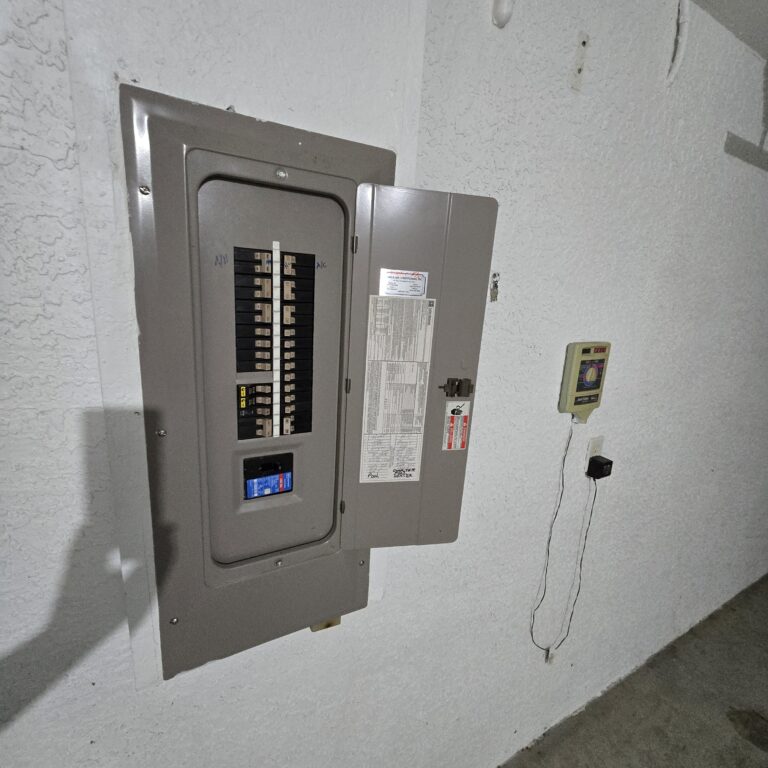
The new circuit breaker gets installed at the main panel last, with the panel cover removed and the main breaker turned off for safety. Torque specifications matter at every breaker and lug; over-tightening damages threads, and under-tightening creates loose connections that arc and heat up. The neutral and ground wires land on their respective bus bars, and the hot wire terminates at the new breaker. Panel directories get updated with a clear description of the new pavilion circuit. A voltage tester confirms proper wiring before the breaker is switched on.
Testing every device confirms the system works as designed. Each GFCI outlet gets tested with the test and reset buttons, and a plug-in tester verifies proper polarity and ground at every outlet. Light switches turn on the correct fixtures, and dimmer switches adjust through their full range without flickering. Ceiling fans spin in both directions at all speeds. Any issue found during testing gets corrected before the final inspection. Looking for licensed help with your next electrical project? Click here for our outdoor pavilion wiring service.
Why You Need a Licensed Electrician for Backyard Pavilion Wiring
A backyard pavilion is a major investment, and the electrical system inside it deserves the same level of craftsmanship as the rest of the structure. Licensed electricians bring the training, tools, and experience needed to handle outdoor wiring safely and up to code. DIY pavilion wiring often looks fine on day one, but problems show up months or years later when moisture creeps in, connections loosen, or overloaded circuits start to fail. The cost of hiring a professional is small compared to the cost of fire damage, injury, or a failed home inspection when you sell. Gragg Electrical Services has wired pavilions across East Canton, Canton, and North Canton for over twenty years.
The Safety Benefits of Professional Backyard Pavilion Wiring
Outdoor electrical work sits at the top of the list for shock and fire hazards when done incorrectly. A licensed electrician understands how moisture, temperature swings, and UV exposure affect every component in the system. Proper GFCI protection, correct wire sizing, and weatherproof enclosures prevent the most common causes of outdoor electrical failures. Bonding and grounding done right keeps fault current flowing safely back to the panel instead of through a person. Every connection gets inspected and tested before the power comes on.
Insurance companies take notice when electrical work is done by a licensed professional. Unpermitted DIY wiring can void your homeowners policy if an electrical fire starts at the pavilion. Claims adjusters often ask for documentation of permits and inspections when processing outdoor electrical damage. A professional install comes with paperwork that protects you in the event of a claim. Peace of mind is part of what you pay for.
Family safety is the most important reason to hire a licensed electrician. Children, pets, and guests all spend time under the pavilion during the warm months. A properly wired system means nobody gets a shock from a wet outlet or a metal ceiling fan housing. Fire risk drops when the right wire gauge, breaker size, and connection methods are used throughout. Your pavilion becomes a place to relax, not a source of worry.
The Long-Term Value of Professional Backyard Pavilion Wiring
Professional wiring holds up for decades when done right the first time. Quality materials and correct installation methods prevent the slow degradation that plagues DIY outdoor wiring. Connections stay tight, insulation stays intact, and circuits keep delivering full power year after year. The initial investment pays off through lower maintenance costs and fewer service calls. Your pavilion stays ready for use from spring cookouts through fall bonfires.
Adding professional electrical service to a pavilion increases your home’s value at resale. Appraisers and home inspectors look closely at outdoor electrical work, and permitted professional installs show up as a plus on inspection reports. Buyers feel confident moving into a home where the outdoor features work safely and reliably. DIY wiring, on the other hand, often triggers repair requests or price reductions during the sale process. A pavilion with proper lighting and outlets becomes a selling point rather than a liability.
Future upgrades become easier when the original wiring was done by a professional. Adding a hot tub, outdoor kitchen, or landscape lighting later is straightforward when the pavilion panel was sized with growth in mind. Clean labeling, proper circuit documentation, and accessible junction boxes make the next electrician’s job simple. Your pavilion system grows with your family’s needs instead of being torn out and replaced. That flexibility is hard to put a price on.
Why Choose Gragg Electrical Services for Backyard Pavilion Wiring
Gragg Electrical Services has served East Canton and the surrounding communities for over twenty years with a focus on craftsmanship and customer care. Every pavilion wiring job we take on gets the same attention to detail, from the first trench cut to the final outlet test. Our licensed electricians pull every required permit and schedule every required inspection so your project meets code from start to finish. We back our work with a lifetime craftsmanship guarantee that gives you confidence in the long-term reliability of your pavilion wiring. That guarantee is something you only get from a team that stands behind its work.
Our crews show up on time, keep the job site clean, and treat your property with respect. We protect landscaping during trenching, restore the yard when the work is done, and communicate clearly about timelines and costs. Financing through GreenSky and Turns makes larger pavilion projects affordable without sacrificing quality. Our 24/7 emergency service means we are there if something ever goes wrong, day or night. Respectful, clean, and professional service is our standard, not an exception.
Call Gragg Electrical Services at (330) 488-8009 to schedule a consultation for your backyard pavilion wiring project. We will visit your property, review your plans, and provide a clear written estimate for the full scope of work. Email us at info@graggelectrical.com or stop by our office at 333 Cedar St S, East Canton, OH 44730. Spring is the best time to start outdoor electrical projects so your pavilion is ready for summer gatherings. Let our team give your backyard the safe, reliable, and beautifully wired pavilion you deserve.