5 Electrical Issues You Should Never Ignore
Our homes are constantly communicating with us. A creak in the floorboards, a drip from a faucet, a draft from a window; these are the small signs and sounds we learn to interpret as part of homeownership. While most of these are minor annoyances that can be added to a weekend to-do list, the signals that come from your home’s electrical system are in a category all their own. A flickering light or a circuit breaker that trips occasionally can be easy to dismiss as a harmless quirk, especially in an older home.
This temptation to ignore or normalize small electrical issues, however, can be a dangerous mistake. Your electrical system is the invisible force that powers your modern life, but it is also a source of immense potential danger if it is not functioning correctly. Certain electrical symptoms are not just warnings of a future problem; they are often evidence of an active and hazardous condition that requires immediate professional attention. Learning to recognize these critical red flags is an essential part of keeping your home and your family safe from the risks of electrical fire and shock.
1.) Frequently Tripping Circuit Breakers
A circuit breaker is one of the most important safety devices in your entire home, and it is essential to understand its true purpose. A breaker is not just an inconvenient switch that you have to reset when the power goes out in a room. It is a protective device that is specifically designed to trip and shut off the power when it detects a dangerous level of electrical current. It is the electrical equivalent of a smoke alarm, and if it is going off repeatedly, it is screaming that there is a problem.
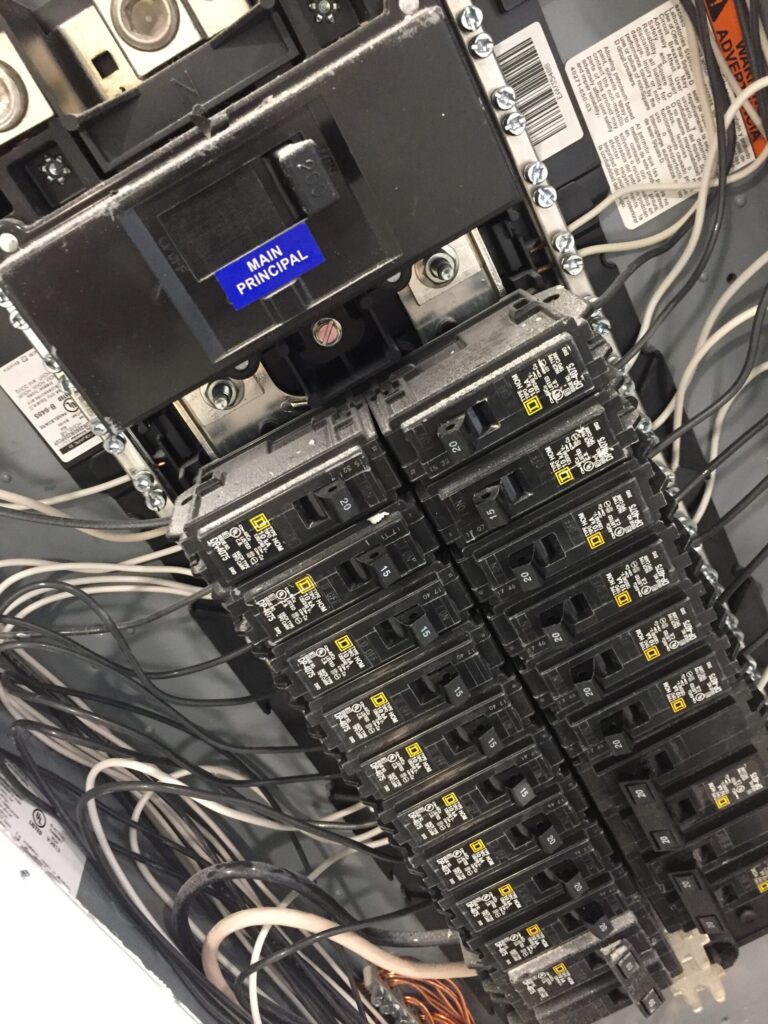
A single, isolated breaker trip is often just a simple overload. This can happen if you plug too many high-power devices, like a space heater and a vacuum cleaner, into a single circuit at the same time. In this case, unplugging one of the devices and resetting the breaker once is generally acceptable. However, a breaker that trips repeatedly, or one that trips immediately after you try to reset it, is a clear sign of a more serious issue.
A frequently tripping breaker could indicate a persistent overload, which means your home’s electrical demands have outgrown the capacity of that circuit. The more dangerous possibilities are a short circuit, where a hot wire is making improper contact with another wire, or a ground fault, where electricity is leaking from the circuit. In either case, the breaker is tripping because the wiring inside your walls is at risk of overheating and starting a fire. Just as you would never ignore a smoke alarm, you should never ignore a circuit breaker that is repeatedly telling you there is a danger.
Are your breakers constantly tripping? Click to explore a panel upgrade.
2.) The Smell of Burning or Unusual Odors
Your sense of smell is a powerful and primitive alarm system, and when it comes to electrical safety, it should be trusted implicitly. If you notice a persistent and acrid smell of burning plastic, hot wiring, or a sharp ozone-like odor that cannot be traced to any other source, you may be smelling the beginning of an electrical fire.
This is not the same as the dusty smell you might get when you turn your furnace on for the first time in the fall. An electrical burning smell is a distinct and pungent chemical odor. It is the literal scent of a component’s protective insulation or plastic casing overheating to the point where it is melting and scorching. This can be happening at a faulty outlet, within a light fixture, deep inside an appliance, at your main electrical panel, or at a bad connection hidden within your walls. This extreme heat is the immediate precursor to a fire, as it can easily ignite surrounding materials like wood, paper, or insulation.
This is a true electrical emergency that requires immediate action. If you can safely identify the source of the smell and it is a single appliance, you should unplug it immediately. If the smell is coming from an outlet or you cannot locate the source, you should go to your main panel and shut off the breaker for that circuit. If you see any visible smoke or if the smell is strong and you are unsure of its origin, your first priority is to get everyone out of the house safely. Once you are outside, call 911 to have the fire department respond, and then call for an emergency electrician.
3.) Lights That Dim or Flicker
Flickering and dimming lights are another one of those common household quirks that are often dismissed as normal, especially in older homes. While an occasional, minor flicker can be caused by a simple issue like a loose lightbulb, a persistent or widespread flickering problem is often a symptom of a more serious, system-wide electrical issue.
If just one light fixture is flickering, the problem is likely isolated to that fixture, its switch, or the bulb itself. However, if your lights flicker or dim across multiple rooms, especially when a large appliance like your air conditioner, a microwave, or a sump pump turns on, it is a sign that your electrical system is under a great deal of strain.

This widespread dimming and flickering can indicate several serious problems. It could be a sign that your main electrical service is overloaded and no longer adequate for your home’s needs. It can also point to a problem with a failing main breaker in your electrical panel or, more dangerously, a loose or corroded neutral connection either in your panel or at the service line coming into your home. A loose neutral connection is a very hazardous condition that can lead to dangerous power surges and arcing in your panel. These are not minor issues; they are signs of an unstable electrical system that requires a professional diagnosis from a licensed electrician.
Having lighting issues and not sure what the issue is? Click for info on an electrical inspection.
4.) Warm, Discolored, or Buzzing Outlets and Switches
Your outlets and switches should be completely silent and should always be at the same temperature as the wall around them. Any audible sound or any noticeable heat coming from these devices is a definitive sign of a dangerous internal failure.
If you ever notice that an outlet or a switch plate is warm or hot to the touch, it is a clear indicator that a large amount of heat is being generated within the electrical box. This heat is almost always caused by a loose wire connection behind the device or a worn-out internal component that is creating electrical resistance. Similarly, a persistent buzzing or sizzling sound coming from an outlet or switch is the sound of electricity arcing, or jumping across a small gap, due to a bad connection.
These symptoms are critical fire hazards. The heat being generated is more than enough to melt the plastic of the device and to ignite the surrounding wood framing and insulation inside your wall. The visible evidence of this long-term overheating is often a scorching or brown and black discoloration on the face of the outlet. These are not the charming quirks of an old house; they are active and dangerous electrical failures. You should immediately stop using any outlet or switch that is exhibiting these signs and call a professional electrician to have it replaced.
Have outdated outlets? Get new outlets installed today.
5.) Any Type of Shock or Tingling Sensation
There is no such thing as a “normal” or “acceptable” electric shock from any appliance, switch, or faucet in your home. Any sensation of a shock, from a minor but surprising “zap” to a more significant and painful jolt, is a non-negotiable emergency sign that a serious and life-threatening hazard exists in your home.
An electric shock is definitive proof that electricity is not following its intended safe path and is instead “leaking” and energizing a metal surface that you can touch. This is the definition of a ground fault, and it means that when you touch the faulty appliance or device, your body is becoming part of the electrical circuit. The cause could be faulty wiring within the appliance, a problem with an outlet, or a more fundamental issue with your home’s grounding system.
It is essential to understand that a small shock is a dire warning. The very next time that fault occurs, the conditions could be different; you might be touching a water source or be standing on a damp basement floor and that shock could be fatal. You should immediately stop using the appliance or circuit that caused the shock and unplug it if you can do so safely. This is a situation that requires an immediate call to a licensed electrician for emergency service to trace and eliminate this life-threatening hazard before anyone else can get hurt.
Your home’s electrical system is a powerful and reliable servant, but it must be treated with respect. It will almost always provide clear warning signs when a dangerous condition is present. The tripping of a breaker, the smell of burning plastic, the sound of a buzzing outlet, or the shock from a faulty appliance are not issues to be ignored or added to a future to-do list. They are urgent communications that demand immediate attention to protect your home and your family.
We encourage every homeowner in the East Canton and greater Stark County area to prioritize their family’s safety above all else. Never take a “wait and see” approach with your electrical system. If you experience any of these five critical warning signs, please contact the 24/7 emergency response professionals at Gragg Electrical Services immediately to ensure the problem is handled safely, correctly, and with the urgency it deserves.