How to Tell If Your AC Wiring Is Undersized
Summer heat in East Canton puts heavy demand on your air conditioning system, and the wiring behind that system carries every amp the compressor pulls. Undersized AC wiring is one of the most overlooked electrical problems in older homes across Stark County, and it can quietly damage your equipment for years before anyone notices. When the wire gauge running to your condenser or air handler cannot safely carry the load, heat builds up inside the conductors, insulation breaks down, and breakers begin to fail in strange ways. Homeowners often blame the AC unit itself, the thermostat, or even the utility company, never suspecting the real problem is hidden inside the walls. Recognizing the warning signs early can save you from a burned-out compressor, a melted disconnect box, or a house fire during the hottest week of the year. This guide walks through the symptoms, the technical reasons behind them, and what a licensed electrician will do to correct the issue before cooling season hits its peak.
Common Warning Signs of Undersized AC Wiring in Your Home
Undersized AC wiring rarely announces itself with a single dramatic failure; it usually shows up as a pattern of small, frustrating symptoms that get worse over time. The wire feeding your central air system has to handle a large inrush of current every time the compressor starts, plus a steady running load whenever the unit is cooling. When the conductor is too small for that demand, the laws of physics take over and heat becomes the enemy. You may notice your lights dim every time the AC kicks on, or the breaker for the condenser trips on the hottest afternoons. Some homeowners report a faint burning smell near the panel or the outdoor disconnect, while others find the wire insulation discolored when a technician opens the unit for service. Catching these clues early is the difference between a simple wiring upgrade and a full system replacement.
The Most Reliable Warning Signs of Undersized AC Wiring
One of the clearest signs of undersized AC wiring is a breaker that trips repeatedly during cooling season, especially on hot afternoons when the unit runs the longest. A properly sized circuit should handle the manufacturer’s listed minimum circuit ampacity without nuisance tripping, so when the breaker keeps shutting off, the conductor or the breaker itself is likely too small for the load. Another red flag is noticeable dimming of lights throughout the house every time the compressor cycles on, which points to a voltage drop caused by resistance in an undersized conductor. You might also feel the breaker, the disconnect, or the wire itself running unusually warm to the touch, which is never normal in a healthy circuit. Some homeowners report a faint plastic or burning odor near the panel or the outdoor unit, and that smell should never be ignored. Each of these symptoms on its own could have other causes, but together they paint a clear picture of a circuit working far harder than it was designed to.
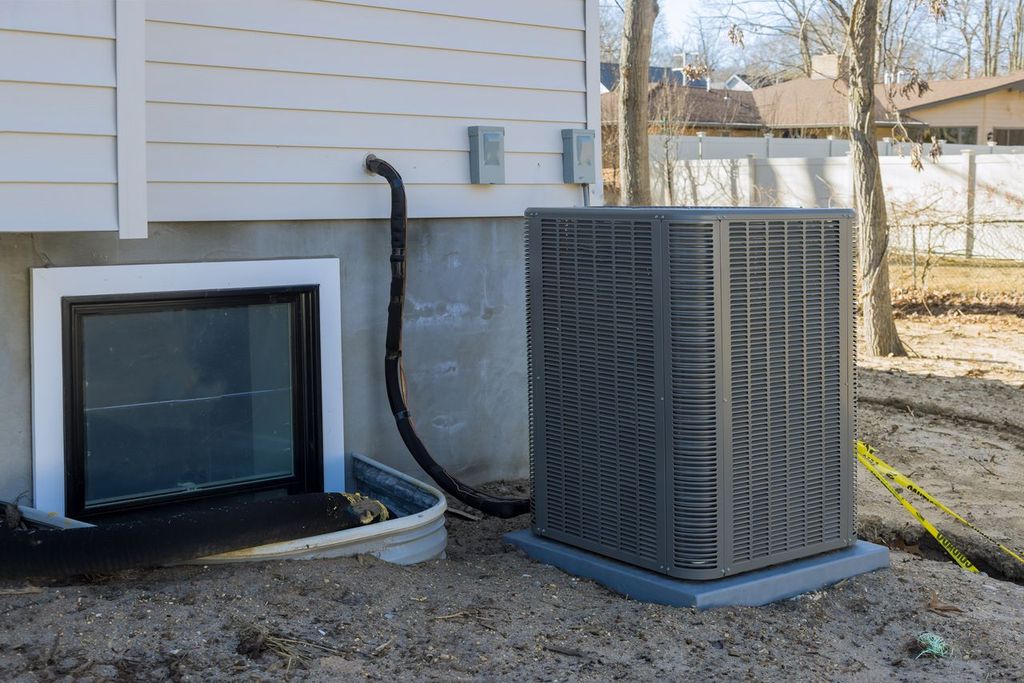
A second category of warning signs shows up at the equipment itself rather than at the electrical panel. Compressors that hum, struggle, or fail to start on hot days are often starved for voltage because the undersized wire cannot deliver enough current during the high-demand startup phase. This condition, sometimes called brownout starting, puts tremendous stress on the compressor windings and shortens the life of the entire condensing unit. You may also see the contactor inside the outdoor unit showing burn marks or pitting, since low voltage causes arcing every time the contacts close. Inside the air handler, the blower motor may run hot or cycle on thermal overload, which technicians sometimes misdiagnose as a bad motor when the real culprit is the wiring upstream. Paying attention to how the equipment behaves, not just how the breaker behaves, gives you a more complete picture.
A third group of clues lives inside the walls and at the connection points, where only a licensed electrician should look. When wire is undersized, the heat it generates softens and discolors the insulation, leaving the conductor brittle and the jacket darkened or even blackened near terminals. Lugs at the breaker, the disconnect, and the equipment terminals often show signs of overheating, including melted plastic, oxidized copper, or a chalky white residue around the screw. In some cases, the wire nut or splice connection inside the disconnect box will look scorched, and the surrounding metal enclosure may be warm even when the unit is off. These physical signs are serious and indicate the circuit has already been operating above its safe limit for some time. If your electrician finds any of these conditions during an inspection, the wiring should be replaced before the system is allowed to run again.
Why Undersized AC Wiring Symptoms Get Worse in Summer
Undersized AC wiring symptoms almost always intensify during the hottest stretches of summer, and the reason comes down to how heat and electrical current interact. Wire ampacity ratings are based on a specific ambient temperature, usually around 86 degrees Fahrenheit, and any heat above that figure reduces how much current the conductor can safely carry. When the attic, the wall cavity, or the outdoor wire run climbs into the 120-degree range on a July afternoon, the effective ampacity of the conductor drops significantly. At the same time, your air conditioner is working harder, running longer cycles, and pulling closer to its maximum rated current. The combination of higher demand and lower safe capacity is exactly when undersized wiring fails most often. That is why so many AC wiring problems surface during the first real heat wave of the season.
The startup phase of the compressor is another moment when undersized wiring shows its weakness most clearly. Air conditioning compressors can draw four to seven times their normal running current for a fraction of a second when they first energize, a phenomenon called locked rotor amperage. A correctly sized conductor handles this surge without dropping voltage below the equipment’s tolerance, but an undersized wire creates a deep voltage sag every time the unit starts. Over a summer with hundreds or thousands of start cycles, that repeated stress damages the compressor windings, the capacitor, and the contactor. You may not see the damage right away, but by August or September the unit starts failing to cool properly or refuses to start at all. The wiring problem causes the equipment problem, even though the equipment usually takes the blame.
Long run lengths make the summer symptoms even more pronounced, which is something many Stark County homes deal with because of how condensers are placed far from the electrical panel. Voltage drop increases with distance, so a wire that might be marginally acceptable for a short run becomes dangerously undersized when it has to travel sixty or eighty feet to reach the outdoor unit. The National Electrical Code recommends keeping voltage drop on branch circuits under three percent, but undersized wiring on long runs can easily exceed five or six percent during peak load. That extra voltage drop turns directly into wasted heat inside the conductor and reduced performance at the equipment. If your condenser sits far from your panel and you notice summer symptoms getting worse year after year, the wire run length is probably part of the problem. An electrician can calculate the actual voltage drop and determine whether upsizing the conductor is required.
Confirming Undersized AC Wiring Requires a Professional Inspection
While the warning signs above give you strong reasons to be suspicious, only a licensed electrician can confirm that your AC wiring is actually undersized. The first step in a professional inspection is checking the manufacturer’s data plate on the condenser, which lists the minimum circuit ampacity and the maximum overcurrent protection device size. Those two numbers tell the electrician exactly what gauge wire and what size breaker the unit requires, and they vary significantly between models and tonnages. Once those values are known, the electrician traces the existing circuit from the breaker to the disconnect to the unit, identifying the wire gauge, the conductor material, and the length of the run. Any deviation from the manufacturer’s requirements or the National Electrical Code is documented and explained to the homeowner. This kind of detailed verification is something no homeowner should attempt without proper training and testing equipment.
The second part of a professional inspection involves live electrical testing under actual load conditions. The electrician will measure voltage at the panel and at the condenser terminals both at rest and during compressor startup, looking for any sag that exceeds acceptable limits. A clamp meter is used to measure actual current draw during normal operation, which is then compared to the wire’s ampacity rating and the breaker’s trip curve. Thermal imaging cameras can reveal hot spots at terminations, splices, and along the wire run that would be invisible to the naked eye. If the inspection includes the panel itself, the electrician will also check the breaker for signs of fatigue, the bus bar for heat damage, and the neutral and ground connections for tightness. All of these measurements together give a complete picture of how the circuit is performing in the real world. If you suspect your AC wiring might be undersized, click here for our air conditioning wiring service and schedule an inspection before the next heat wave.
Finally, a thorough inspection includes looking at the broader electrical context, because AC wiring problems often coexist with other issues in the home. The electrician may check whether the main service panel has enough capacity to handle the corrected AC load, especially in older homes with 100-amp services trying to feed modern high-efficiency equipment. The grounding and bonding of the AC circuit are verified, since proper grounding is essential for surge protection and safe fault clearing. The disconnect switch outside the unit is examined for proper sizing, weatherproofing, and code-compliant installation. If any related deficiencies are found, the electrician will explain how they tie into the wiring problem and recommend a prioritized repair plan. Walking through all of this with a qualified professional is the only way to know for certain what is going on and what it will take to fix it correctly.
What Causes AC Wiring to Be Undersized in the First Place
Understanding why AC wiring ends up undersized helps homeowners make smarter decisions when it comes time to replace or upgrade their cooling system. The problem is rarely the result of a single mistake; it usually comes from a combination of outdated installations, equipment upgrades that were not matched by electrical upgrades, and shortcuts taken by unqualified installers. Homes built in the 1960s, 1970s, and 1980s were wired for the air conditioning equipment of that era, which was typically smaller and less efficient than today’s units. As those original systems were replaced over the decades, the new equipment often had different electrical requirements, but the wiring was left in place to save money. The result is a generation of homes across Northeast Ohio with AC wiring that no longer matches the equipment it feeds. Knowing the common causes helps you ask the right questions before you find yourself dealing with a melted disconnect on a 95-degree day.
Older Homes Often Have Undersized AC Wiring by Design
Many homes in the East Canton and Stark County area were built before central air conditioning was standard, and the original electrical systems were never designed to handle modern cooling loads. When central AC was added later, often in the 1970s or 1980s, contractors installed the smallest legal wire size for the equipment available at the time. Those older units typically had higher SEER ratings on paper but pulled less current overall, so a 10-gauge or even 12-gauge conductor was sometimes acceptable. Today’s high-efficiency systems, especially larger 3-ton, 4-ton, and 5-ton units, often require 8-gauge or even 6-gauge wire to operate safely. The original wiring, still buried in the walls or running through the attic, simply was not sized for what is being asked of it now. This mismatch between old wiring and new equipment is one of the most common causes of undersized AC circuits in our service area.
Older homes also tend to have smaller main electrical services, which influences how AC circuits were originally designed. A house with a 60-amp or 100-amp main panel had very limited capacity to dedicate to air conditioning, so installers often used the smallest possible conductor to leave room for other loads. In some cases, the AC circuit was even tapped off an existing circuit rather than run as a dedicated home run from the panel, which is a serious code violation by today’s standards. As families added appliances, hot tubs, and electric vehicle chargers over the years, the available capacity for the AC shrank even further. The wiring that was marginal in 1985 is now feeding a much hungrier system in a much busier electrical environment. Bringing the whole picture up to current standards usually requires more than just replacing the AC circuit.
A third issue with older homes is that the type of wire used decades ago may not perform as well as modern conductors. Aluminum branch circuit wiring, common in homes built between 1965 and 1973, has different ampacity ratings and connection requirements than copper, and it is more susceptible to overheating at terminations. Some older copper wire used cloth or rubber insulation that has dried out, cracked, or become brittle, reducing its ability to safely handle heat. When this aged wire is also undersized for the load, the risk of failure multiplies significantly. An electrician inspecting an older home for AC wiring issues will always look at the conductor type and insulation condition, not just the gauge. Replacing aged, undersized wiring with modern THHN or THWN-2 copper conductors brings the circuit up to current safety standards.

Equipment Upgrades Frequently Leave Undersized AC Wiring Behind
One of the most common scenarios that creates undersized AC wiring is a homeowner replacing their air conditioner with a larger or higher-capacity unit without also upgrading the wiring. A homeowner who had a 2-ton system for twenty years may decide to upgrade to a 3.5-ton unit for better cooling on hot days, but the existing wire was sized for the smaller load. HVAC contractors are not always electricians, and some will install the new equipment on the existing circuit without verifying that the wire and breaker meet the new manufacturer’s specifications. The result is a brand-new air conditioner running on a circuit that cannot safely support it, often with the warranty technically void because the installation does not match the data plate requirements. This is one of the leading causes of premature compressor failure in newer equipment installed on older wiring.
Heat pump installations create an even bigger risk because heat pumps typically pull more current than a comparable air conditioner, especially in heating mode with electric backup strips engaged. When a homeowner switches from a gas furnace and AC combo to a heat pump system, the electrical requirements can double or even triple. The existing AC wiring is almost never adequate for a heat pump retrofit, but the change is often made without a proper electrical evaluation. Backup heat strips alone can draw 40, 60, or even 80 amps, and feeding that load through wiring sized for a 20-amp AC circuit is a recipe for disaster. Anyone considering a heat pump conversion should have an electrician evaluate the entire electrical system before the HVAC work begins. The cost of doing the wiring correctly upfront is a fraction of what it costs to fix a fire-damaged home.
Even routine equipment replacements can introduce wiring problems if the installer cuts corners. Modern condensers often have different minimum circuit ampacity ratings than the units they replace, even when the tonnage is the same, because variable-speed compressors and high-efficiency designs change how current is drawn. A replacement unit with a slightly higher MCA can push a previously marginal circuit over the edge, especially in hot weather. Some installers will simply upsize the breaker without upsizing the wire, which is one of the most dangerous shortcuts in the trade because it removes the overcurrent protection the wire depends on. Any time an air conditioner or heat pump is replaced, the electrical circuit should be verified against the new equipment’s data plate. If you are planning an HVAC upgrade, click here to learn more about our electrical service upgrade options and make sure your home is ready for the new equipment.
DIY Work and Unlicensed Installations Cause Undersized AC Wiring Problems
A significant portion of the undersized AC wiring we encounter in the field traces back to do-it-yourself work or installations performed by unlicensed contractors. Air conditioning wiring looks straightforward on the surface, just a run from the panel to a disconnect to the unit, but the calculations behind proper sizing involve ampacity tables, voltage drop math, and code requirements that the average homeowner has not studied. Someone trying to save money on installation may pick up a roll of 12-gauge wire at the hardware store because it is cheap and easy to work with, never realizing that the unit actually requires 10-gauge or 8-gauge. The job looks finished, the AC runs, and the homeowner thinks they saved a thousand dollars. The real cost shows up years later in equipment damage, breaker failures, or a fire incident.
Unlicensed handymen and uninsured contractors are another common source of undersized AC wiring, and homeowners are often drawn in by low bids that licensed electricians cannot match. These installers may not pull permits, may not have the equipment to verify their work, and may not stay in business long enough to come back if something goes wrong. Without inspection by a qualified third party, mistakes go undetected until they cause damage. The savings on the front end almost always disappear when the homeowner has to pay a licensed electrician to redo the work correctly, often with additional repairs to fix collateral damage. In Ohio, electrical work on residential AC circuits must be performed by a licensed contractor for very good reasons, and skipping that protection puts the entire home at risk.
Even well-intentioned DIY work can create problems because the National Electrical Code and the manufacturer’s requirements interact in ways that are not always obvious. For example, the breaker size for an AC unit is not chosen based on the running load alone; it has to fall within a specific window set by the equipment manufacturer, which may require a larger breaker than the wire would normally support. Coordinating wire size, breaker size, conductor temperature rating, and equipment requirements correctly takes training and experience. A licensed electrician knows how to balance all these factors and how to verify the installation with proper testing once it is complete. Trusting AC wiring to a qualified professional is the only way to be sure the job meets code, meets the manufacturer’s specifications, and protects the home for the long term.
Why You Need a Licensed Electrician to Address Undersized AC Wiring
Undersized AC wiring is not a problem you can put off until next year, especially with summer approaching and cooling demand about to spike. The longer the circuit runs in an overloaded condition, the more damage accumulates at every termination, every splice, and inside the compressor itself. Acting early gives you time to plan the work, coordinate with your HVAC system, and avoid the panic of a failed AC during a heat wave. A licensed electrician can assess the situation, design a corrective plan, and complete the work safely with proper permits and inspections. Choosing the right contractor for this job matters because the work has to be done correctly the first time to protect your home and your equipment.
A Licensed Electrician Knows How to Correctly Size AC Wiring
A licensed electrician begins any AC wiring project by reading the manufacturer’s data plate and applying the National Electrical Code requirements that govern air conditioning circuits. The minimum circuit ampacity, the maximum overcurrent protection, and the conductor temperature rating all factor into the calculation. The electrician then accounts for the length of the run, the ambient temperature of the spaces the wire passes through, and any derating factors required by code. This level of detail ensures that the new wiring will perform safely under the worst-case conditions your home will experience. It is the kind of careful engineering that separates a code-compliant installation from a shortcut.
Beyond the calculations, a licensed electrician brings the right materials and tools to the job. The correct conductor type, the proper conduit or cable assembly, the right breaker, and the appropriate disconnect switch all have to be selected and installed according to code. Connections at every termination point must be torqued to the manufacturer’s specifications using a calibrated torque tool, because loose connections are a leading cause of overheating. Wire pulls have to be done in a way that does not damage the insulation, and supports have to be installed at the proper intervals. Every one of these details affects the long-term reliability of the circuit.
A licensed electrician also handles the permit and inspection process, which protects you in several important ways. The permit creates an official record that the work was done, which matters when you sell your home or file an insurance claim. The inspection by the local authority having jurisdiction provides an independent verification that the installation meets current code. These steps are not bureaucratic formalities; they are part of how the trade keeps homes safe. Working with a licensed contractor means all of this is taken care of as part of the job.

A Licensed Electrician Protects Your AC Equipment and Your Home
Properly sized AC wiring does more than just prevent fires; it actively extends the life of your air conditioning equipment. When the compressor receives full voltage during every startup, the windings stay cooler, the capacitor lasts longer, and the contactor avoids the arcing damage that causes premature failure. Manufacturers design their equipment to operate within a tight voltage range, and meeting that range requires wiring that does not introduce significant voltage drop. A licensed electrician who sizes the conductor correctly is essentially giving your AC unit the best possible operating environment. That translates into fewer service calls, lower repair bills, and a longer useful life for an expensive piece of equipment.
The home itself also benefits from properly sized AC wiring in ways that go beyond fire prevention. Reduced voltage drop means the lights in your home no longer dim every time the compressor cycles, which is easier on every other electronic device in the house. Cooler running conductors put less heat into wall cavities and attics, reducing the load on the cooling system itself. Proper grounding and bonding, which are part of any correctly installed AC circuit, improve the effectiveness of whole-house surge protection. All of these benefits add up to a safer, more efficient home that is easier to live in and easier to insure.
Insurance is another important consideration when it comes to AC wiring. Many homeowner policies contain language that excludes coverage for damage caused by electrical work performed without permits or by unlicensed installers. If an undersized circuit causes a fire and the work is traced back to an unpermitted installation, the claim could be denied entirely. Working with a licensed electrician and pulling proper permits keeps your insurance coverage intact and protects your investment in the home. This is one more reason why the small upfront cost of doing the job right is always worth it.
Why Choose Gragg Electrical Services for Your AC Wiring Needs
Gragg Electrical Services has been serving East Canton and the surrounding communities for over twenty years, and air conditioning wiring is one of the jobs we handle most often during the spring and summer months. Our team understands the older homes in Stark County, the common wiring problems they hide, and the modern equipment they are being asked to support. We bring the right tools, the right training, and the right respect for your home to every job we take on. Our crews are clean, professional, and committed to doing the work the way it should be done.
Every AC wiring project we perform is backed by our Lifetime Craftsmanship Guarantee, which reflects the confidence we have in our work and our commitment to standing behind it. We pull the proper permits, coordinate inspections with the local authority, and document everything for your records. If financing makes the project easier to manage, we offer options through GreenSky and Turns that let you spread the cost over time. We treat your home like our own, leaving the work area clean and the installation neat and accessible for future service.
When the unexpected happens, our 24/7 emergency service line is always available because electrical problems do not wait for business hours. Whether you have noticed warning signs of undersized AC wiring or you are planning an HVAC upgrade and want to do the electrical work right, we are ready to help. Call us at (330) 488-8009 or email info@graggelectrical.com to schedule an inspection or get a quote. Click here for our air conditioning wiring service to learn more about how we can protect your home, your equipment, and your family this summer.