What Happens During an Electrical Panel Replacement
An electrical panel replacement sounds intimidating until you understand the sequence of work behind it, and most homeowners in East Canton are surprised at how organized the process really is. The panel is the point where power from the utility gets divided and controlled for every circuit in your house, so replacing it touches the safety of the entire structure. Fall is one of the busiest seasons for this work because heating equipment, holiday lighting, and space heaters push older panels harder than the summer months ever did. A licensed electrician follows a defined order of operations that begins with a load calculation and ends with a passed inspection from your local building department. Along the way there are permits to pull, a utility coordination window to schedule, grounding and bonding to correct, and code required protection devices that did not exist when your original panel was installed. Knowing what each stage involves helps you plan your day, budget accurately, and ask better questions when you gather quotes. Below is a complete walkthrough of what actually happens during an electrical panel replacement, from the first site visit to the moment your power comes back on.
What Happens Before an Electrical Panel Replacement Begins
The work that happens before a single wire gets touched determines how smoothly the rest of the electrical panel replacement goes. A qualified electrician does not simply match your old panel amperage and order a new box; he evaluates the total connected load of the home, examines the condition of the service entrance conductors, checks the meter socket and mast, and confirms that the panel location still meets current clearance rules. Permits get filed with the local authority having jurisdiction, and the utility gets scheduled for a disconnect if the service equipment or meter is being changed. This planning stage also identifies surprises that would otherwise stall the job halfway through, such as undersized grounding electrodes, aluminum branch wiring, or a panel installed in a closet where panels are no longer permitted. Homeowners who skip these steps often end up paying twice, once for the rushed install and again for the corrections a failed inspection demands. Everything below explains how the preparation phase protects your investment.
The Home Assessment That Starts an Electrical Panel Replacement
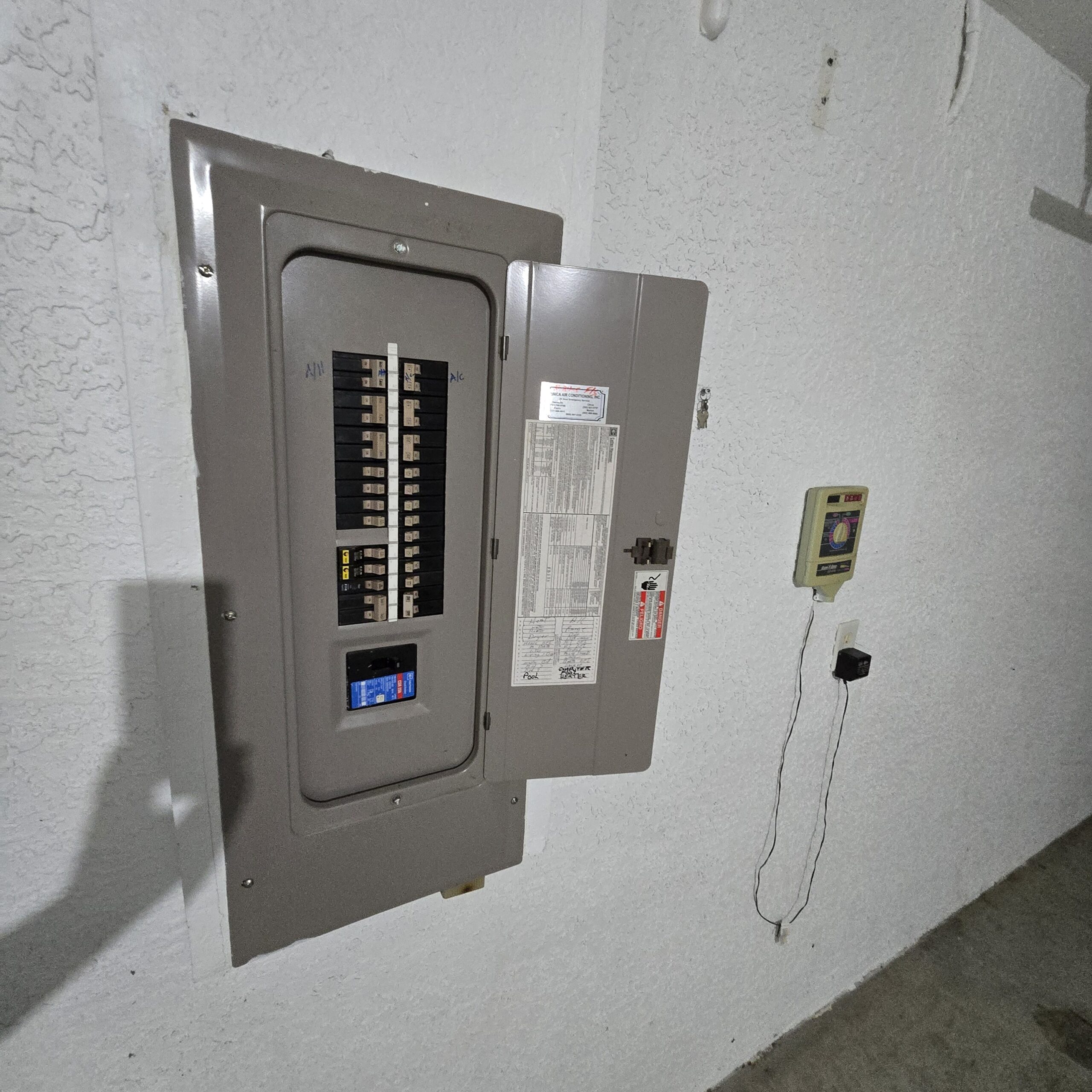
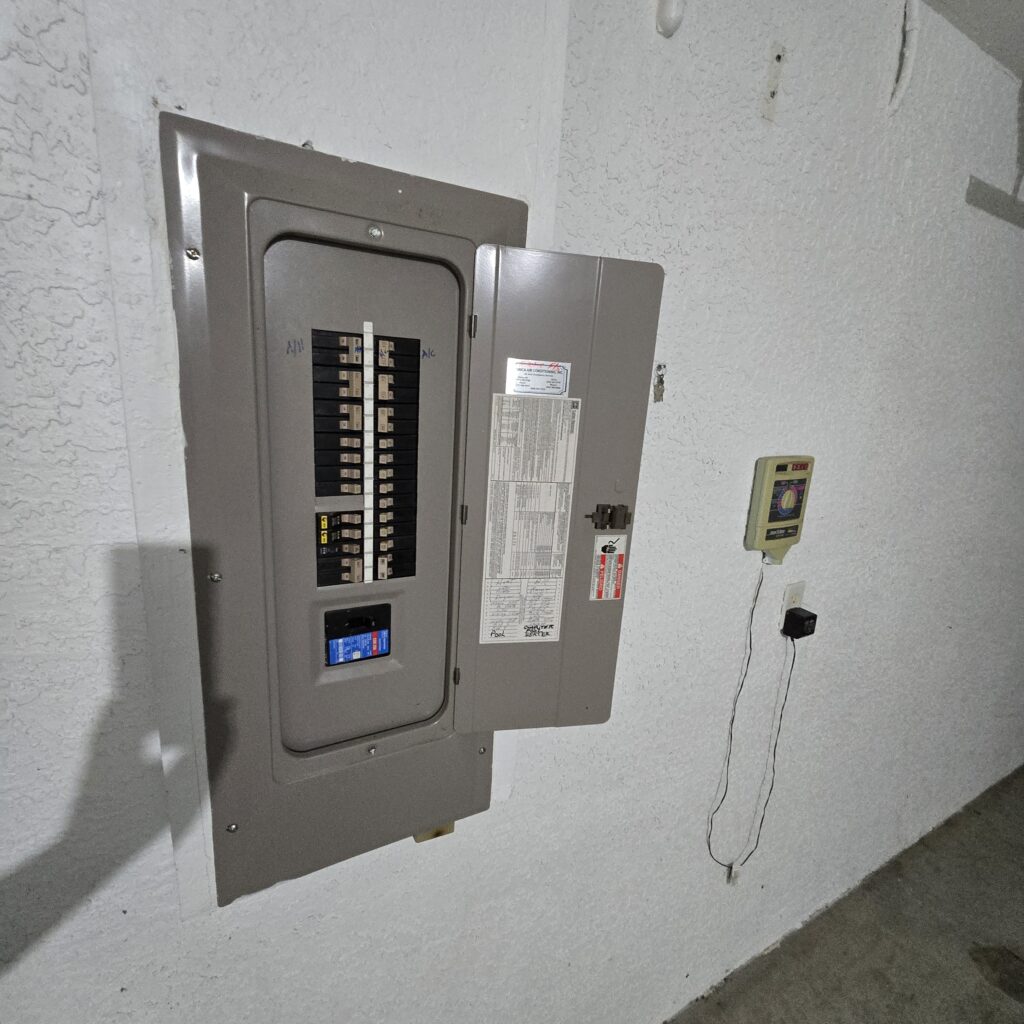
The assessment that opens an electrical panel replacement is a full evaluation of how much power your household actually consumes and how safely that power is currently being delivered. Your electrician will open the existing panel cover, inspect the busbar for heat damage and corrosion, look for double tapped breakers, check the integrity of the neutral and ground terminations, and note any breakers that are discontinued or known to be unreliable. Certain older brands, including Federal Pacific Electric and Zinsco, have documented histories of breakers that fail to trip under fault conditions, and finding one of those panels usually moves the project from optional to urgent. Split bus panels, which have no single main breaker and instead rely on several disconnects at the top of the box, are another common find in homes built between the 1950s and the late 1970s. The electrician also traces the service entrance cable from the weatherhead down through the meter socket to confirm the conductors are sized correctly and free of insulation damage. Scorch marks, a burning odor, rust inside the enclosure, or a panel that feels warm to the touch all point toward connections that have been loosening and arcing for years. This visual inspection sets the scope for everything that follows.
Load calculation is the technical half of the assessment, and it follows the standard method outlined in Article 220 of the National Electrical Code rather than guesswork or rules of thumb. The electrician adds up the general lighting and receptacle load based on the square footage of your home, then layers in the small appliance branch circuits, laundry circuit, range, dryer, water heater, air conditioning, heat pump, and any large fixed appliances you own. Demand factors get applied so the calculation reflects realistic simultaneous use instead of assuming every appliance runs at once. If you are planning an electric vehicle charger, a hot tub, a pool, a shop in a pole barn, or a whole house standby generator, those loads belong in the calculation now rather than after the panel is already installed. Many East Canton homes still run on a 100 amp service that was adequate for a 1970s appliance list but falls short once modern heating equipment and vehicle charging enter the picture. The calculation tells you plainly if a 200 amp service is warranted or if a 100 amp panel with more circuit spaces will do the job. Getting this number right the first time prevents a second upgrade five years down the road.
The final part of the assessment covers panel location and working clearance, which is a code requirement that trips up a surprising number of older installations. Section 110.26 of the National Electrical Code requires a clear working space in front of the panel measuring at least 30 inches wide, 36 inches deep, and 6 feet 6 inches high, and that space cannot be occupied by storage shelving, a water heater, ductwork, or a furnace. Panels are also prohibited from being installed in bathrooms and in clothes closets, so a panel tucked behind hanging coats has to be relocated as part of the replacement. Relocating a panel adds labor and material cost because the service entrance conductors and every branch circuit have to reach the new position, often through junction boxes and additional conduit. Your electrician will discuss these options honestly and show you exactly why the move is necessary rather than presenting it as an upsell. Moisture is another location factor; panels in damp basements or attached garages may need a different enclosure rating to hold up over time. Sorting all of this out before the truck is loaded keeps the installation day predictable. Ready to find out what your home actually needs? Click here for our electrical panel upgrade service.
Permits and Load Calculations for an Electrical Panel Replacement
Every legitimate electrical panel replacement in Ohio requires a permit from the local building department, and that permit is filed by the licensed contractor before work starts. The permit application typically includes the address, the scope of work, the panel amperage, the manufacturer and model of the equipment, and the completed load calculation supporting the chosen service size. Some jurisdictions ask for a simple riser diagram showing the service entrance path, the grounding electrode system, and the location of the main disconnect. Permit fees vary by municipality and township, but they are a small fraction of the overall project cost and they buy you an independent set of eyes on the finished work. Contractors who offer to skip the permit are not saving you money; they are transferring risk onto you. Unpermitted service equipment shows up during real estate transactions, insurance claims, and future inspections, and correcting it later almost always costs more than doing it right today. A reputable electrician treats the permit as a standard line item rather than an optional extra.
The load calculation submitted with the permit does more than satisfy a reviewer; it dictates the conductor sizing, the main breaker rating, and the grounding electrode conductor size for the entire installation. For a 200 amp residential service, the service entrance conductors are commonly 2/0 copper or 4/0 aluminum, sized according to the residential service allowance in Table 310.12 rather than the general ampacity tables. The grounding electrode conductor gets sized from Table 250.66, and the equipment grounding conductors for branch circuits come from Table 250.122. Each of these numbers connects back to the calculation, which is why a padded or sloppy load estimate creates code violations further down the line. If your existing conductors are undersized for the new main breaker, the project expands into a full service upgrade that includes new cable from the weatherhead through the meter to the panel. That distinction matters enormously for pricing, and an honest electrician identifies it during the estimate rather than discovering it midway through installation day. Clear math up front means no awkward conversations while your power is off.
Local code adoption adds another layer that homeowners rarely think about. Ohio enforces a statewide residential code that references a specific edition of the National Electrical Code, and individual jurisdictions occasionally add amendments on top of it. Recent code editions introduced requirements that directly affect panel replacements, including an outdoor emergency disconnect for one family and two family dwellings, surge protection at the service equipment, and arc fault protection for existing branch circuits when a panelboard is replaced. Ground fault protection rules have also expanded to cover more locations and more appliance circuits than older editions required. Your electrician confirms which edition and which amendments apply in your township before ordering equipment, because a panel that satisfies the rules in one county may need additional devices in another. This is one of the strongest arguments for hiring a local contractor who works under these inspectors every week. Familiarity with the inspector saves days of back and forth on a job that should take one day.
Scheduling the Power Shutoff for an Electrical Panel Replacement
Every electrical panel replacement involves a complete power outage at your home, and scheduling that outage properly is what separates a smooth day from a frustrating one. When the meter socket, service entrance conductors, or mast are being changed, the electric utility has to disconnect the service drop or pull the meter before work can begin. That coordination is handled by your electrician, but the utility controls the timeline, and depending on demand the disconnect window may be set for a specific morning rather than an exact hour. If only the panel interior is being swapped and the meter stays untouched, some situations allow the work to proceed with the meter pulled under a utility authorization rather than a full drop disconnect. Your electrician will explain which path applies to your home during the estimate. Storm season and widespread outage events can push utility scheduling out, which is another reason fall projects benefit from early booking. Planning a week or two ahead almost always beats waiting for a failure.
The outage itself typically runs four to eight hours for a straightforward residential panel replacement, and longer if the service entrance cable, meter socket, or mast are being replaced at the same time. Preparing your household for that window is simple but worth doing the day before. Set your refrigerator and freezer to the coldest setting and keep the doors shut; a full freezer holds safe temperatures for well over a day when left closed. Charge phones, laptops, and any medical equipment batteries, and make arrangements if someone in the home depends on powered medical devices. Sump pumps will not run during the outage, so keep an eye on the forecast and consider a battery backup if heavy rain is expected. Well pumps also stop, meaning no running water in homes not on municipal supply, so filling a few containers ahead of time is a practical move. Small preparations remove nearly all of the inconvenience.
Access and jobsite protection get arranged in this same window. The electrician needs clear working room around the panel, an unobstructed path from the driveway to the work area, and access to the exterior wall where the meter and service entrance are located. Clearing stored items away from the panel wall the night before saves the crew time you would otherwise pay for. Pets should be secured away from the work zone because doors will be opening repeatedly and tools carry sharp edges. Drop cloths and floor protection go down before demolition begins, and a professional crew cleans the workspace before leaving rather than handing you a pile of wire clippings and cardboard. Weather also factors in for exterior work, since open meter sockets and service equipment should not be left exposed to heavy rain. A little coordination on the front end pays back in a clean, quiet, one day project.
Step by Step: What Happens During the Electrical Panel Replacement Itself
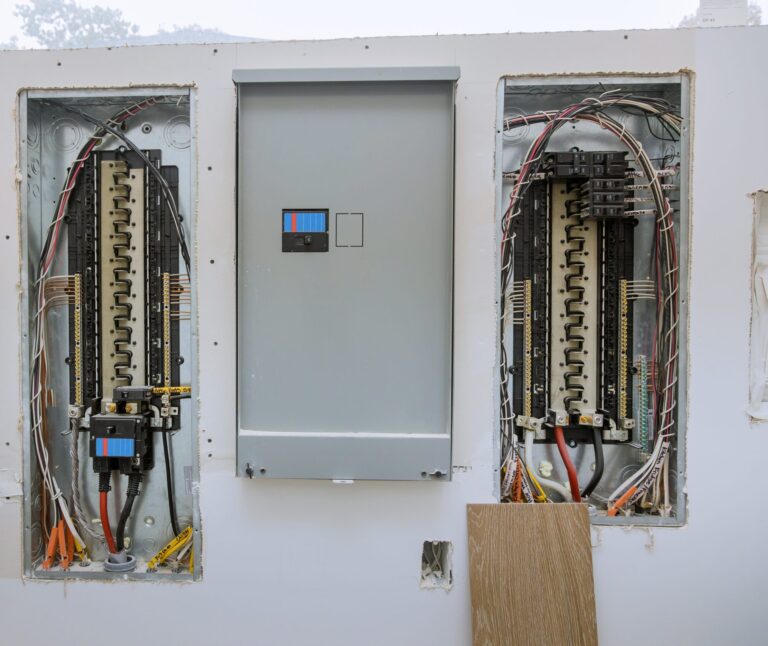
Once permits are in hand and the utility disconnect is scheduled, the electrical panel replacement moves fast and follows a strict sequence. The old panel gets de energized and verified dead, existing branch circuits are labeled and released, the old enclosure comes off the wall, and the new panel gets mounted, wired, and terminated to specification. Grounding and bonding are corrected during this phase, new protection devices are installed, and every connection is torqued to the manufacturer’s published values. The circuit directory gets filled out legibly so the next person who opens that cover knows exactly what each breaker controls. Power is restored only after the electrician verifies voltage, polarity, and correct neutral and ground separation. What follows breaks each stage into plain terms so you can picture the day as it unfolds.
Removing the Old Panel During an Electrical Panel Replacement
Removal begins with confirmation that the panel is truly de energized, which is never assumed and always verified with a meter at the main lugs. The electrician tests for voltage at multiple points, including the line side of the main breaker, because a pulled meter still leaves the possibility of backfeed from a generator connection or an unmarked circuit. Once the panel is confirmed dead, the dead front cover comes off and every branch circuit conductor gets tagged before anything is disconnected. Good electricians label by room and function rather than by breaker position, since the new panel layout rarely matches the old one exactly. Photographs of the existing terminations serve as a backup reference during reassembly. This labeling step is tedious and it is also the difference between a tidy new panel and a directory full of question marks. Rushing it creates confusion that lingers for the life of the house.
With circuits labeled, conductors are released from their breakers and neutral bars, then gently pulled clear of the enclosure so the old box can be unmounted. This is the point where common problems surface. Branch circuit conductors cut short by a previous installer may not reach the terminals in the new panel, requiring junction boxes and splices to extend them safely. Aluminum branch wiring, used in many homes built during the mid 1960s through the late 1970s, requires listed connectors or pigtail devices rather than direct termination on standard breakers. Cable clamps that were missing or improperly installed have to be corrected, and any conductor with cracked, brittle, or heat damaged insulation gets repaired rather than reused. Nicked or overheated conductors are a genuine hazard and a competent electrician will not simply land them and close the cover. Each of these findings gets explained to the homeowner as it comes up.
The old enclosure then comes off the wall along with the service entrance conductors feeding it, and the wall surface behind it gets evaluated. Older panels were sometimes surface mounted over finished drywall, sometimes recessed between studs, and sometimes fastened to bare masonry with anchors that have loosened over decades. The new panel needs solid, plumb mounting and an enclosure size that provides adequate wire bending space at the top, bottom, and sides. Removal often reveals mouse damage, moisture staining, or insulation that was stuffed into the enclosure, all of which get addressed before the new equipment goes up. If the panel is being relocated, this is when the new opening is cut and the raceway path is established. The old panel and scrap material leave with the crew rather than sitting in your garage. A clean removal sets up a clean install.

Mounting and Wiring the New Panel in an Electrical Panel Replacement
Mounting the new panel starts with positioning the enclosure so the main breaker handle falls within the height limits set by the code, generally no higher than 6 feet 7 inches to the center of the operating handle. The box is leveled, anchored securely, and set at the correct depth so the finished cover sits flush against the wall surface without gaps. Service entrance conductors land on the main lugs or main breaker first, torqued precisely to the manufacturer’s specification using a calibrated torque tool as required by Section 110.14 of the National Electrical Code. Loose lugs are one of the leading causes of panel failure, generating heat that slowly destroys the busbar and eventually leads to arcing. Overtightening is equally damaging because it deforms the conductor and the terminal. This is a detail that separates trained electricians from handymen, and it is invisible once the cover goes on. Torque values are followed for every terminal in the box, not just the big ones.
Grounding and bonding are established next, and this is where many older installations get meaningfully safer. The grounding electrode system usually includes driven ground rods, a bond to the metallic water service where present, and a bond to any metal gas piping, all sized according to Table 250.66. The main bonding jumper connects the neutral bar to the enclosure at the service disconnect and only at the service disconnect, which is why grounds and neutrals share a bar in the main panel but must be separated in every downstream subpanel. Many homes have subpanels wired incorrectly by previous owners, and a panel replacement is the natural time to correct that condition. Proper grounding gives fault current a reliable low impedance path back to the source so breakers trip quickly instead of allowing current to travel through unintended paths. Without it, metal appliance housings and plumbing can become energized during a fault. This part of the job protects people, not just equipment.
Branch circuits then get landed on their new breakers according to the load calculation and the code requirements that apply to each circuit type. Kitchen countertop receptacles, bathrooms, laundry areas, garages, unfinished basements, outdoor receptacles, and several appliance circuits require ground fault protection, while bedrooms, living rooms, dining rooms, hallways, and most other living space circuits require arc fault protection. Recent code editions require arc fault protection to be extended to existing branch circuits when a panelboard is replaced, so your new panel will likely contain a mix of standard, ground fault, arc fault, and dual function breakers. Surge protection at the service equipment is also required in current code editions for dwelling units, which pairs perfectly with the sensitive electronics, heat pump boards, and smart devices found in modern homes. The circuit directory is completed in permanent, legible writing that identifies each circuit by its specific load and location rather than vague terms like “lights.” Neutral conductors get their own individual terminal positions, since doubling neutrals under one screw is a violation. Finished properly, the inside of the panel looks organized and every wire has a reason to be where it sits. Protecting your new panel from voltage spikes is a smart companion project. Click here for our whole house surge protector service.
Inspection and Power Restoration After an Electrical Panel Replacement
Before power is restored, the electrician performs his own verification pass over the entire electrical panel replacement. Every termination gets checked, the dead front is installed, and the panel is inspected for correct breaker types, proper conductor routing, and adequate wire bending space. The utility reconnects the service or reinstalls the meter, and the main breaker is energized with all branch breakers still in the off position. Voltage is then measured line to line and line to neutral to confirm the incoming service is correct and balanced. Branch circuits are turned on one at a time so any fault reveals itself immediately rather than hiding behind a dozen simultaneous loads. Ground fault and arc fault breakers are tested using their built in test buttons to confirm they trip and reset as designed. Only after these checks pass does the crew consider the installation complete.
The municipal or township inspection follows, sometimes the same day and sometimes within a few business days depending on the jurisdiction’s schedule. The inspector verifies conductor sizing, breaker ratings, grounding electrode connections, bonding, working clearances, weatherproofing at exterior penetrations, panel labeling, and the presence of required protection devices. He is checking the work against the adopted code edition, which is exactly why the permit process exists. A well executed installation passes on the first visit, and the approved permit becomes part of the permanent record for your property. That record has real value when you sell the home, refinance, or file an insurance claim after a storm. Keep the signed permit card and any documentation your electrician provides in a safe place with your other home records.
Once the inspection is signed off, your electrician should walk you through the finished panel rather than simply packing up. That walkthrough covers where the main disconnect is located, how to read the new directory, how to reset a tripped breaker safely, and what the difference is between a standard trip and a ground fault or arc fault trip. Arc fault breakers occasionally trip on older wiring or on certain motor driven appliances, so knowing how to identify a nuisance trip versus a real fault saves you an unnecessary service call. You should also learn the warranty terms on both the equipment and the labor. A quality contractor leaves you informed rather than guessing. Keep the paperwork, note the panel brand for future breaker purchases, and you are set for decades.
Why You Need a Licensed Electrician for Your Electrical Panel Replacement
An electrical panel replacement is not a weekend project, and it is not work that a general handyman should take on. The service conductors feeding your panel remain energized even when the main breaker is off, which means the line side terminals carry lethal voltage with no local way to shut them down. Beyond the immediate shock and arc flash hazard, the consequences of an improper installation are slow and silent: loose lugs that heat over years, missing bonding that leaves fault current with nowhere to go, and breakers that fail to trip when a real fault arrives. Licensed electricians carry insurance, pull permits, follow published torque and clearance requirements, and stand behind their work in writing. In East Canton and across Stark County, that combination is what keeps a panel safe for the next thirty years. Here is why the decision matters and why local homeowners keep calling Gragg Electrical Services.
Safety Risks of Delaying an Electrical Panel Replacement
Waiting on a needed electrical panel replacement rarely ends well, because the failure modes in an aging panel get worse rather than stabilizing. Loose or corroded terminations generate heat every time current flows, and that heat oxidizes the metal, which increases resistance, which produces more heat. That cycle eventually damages the busbar itself, at which point the entire panel has to be replaced rather than repaired. Breakers that have tripped repeatedly over the years can lose their calibration and fail to open under an overload. A panel that feels warm, smells faintly of burning plastic, or shows any discoloration around a breaker needs attention immediately.
Certain warning signs deserve a same day response rather than a scheduled appointment. Buzzing or crackling sounds from the panel, visible sparking when a breaker is switched, scorch marks on the dead front, a breaker that will not reset, or lights that dim significantly whenever a large appliance starts all point toward serious problems. Burning odors near the panel or in the walls should always be treated as an emergency. Repeated tripping is a message from the system that something is wrong, and replacing a breaker with a larger one to stop the tripping creates a fire hazard by allowing conductors to carry more current than their insulation can handle. Never increase a breaker size to solve a nuisance trip.
Insurance and resale consequences add a financial layer to the safety concerns. Some insurers charge higher premiums or decline coverage outright on homes with certain older panel brands, and home inspectors flag these panels routinely during real estate transactions. Buyers frequently ask for the replacement as a condition of sale or negotiate the cost off the price, often at a number higher than what the work actually costs. Handling it on your own schedule gives you control over the contractor, the timing, and the equipment. It also removes a hazard from the home you and your family occupy every day. Smelling burning or seeing sparks right now? Click here for our emergency electrician service.

What an Electrical Panel Replacement Adds to Your Home
A properly executed electrical panel replacement immediately expands what your home is capable of supporting. Older 100 amp services with a full complement of breakers leave no room for the additions homeowners actually want, including electric vehicle chargers, hot tubs, heat pumps, pole barn subpanels, workshop equipment, and standby generators. Moving to a 200 amp service with open breaker spaces means those projects become straightforward instead of requiring another round of service work. Capacity also improves day to day performance, since a properly sized service handles simultaneous heavy loads without voltage sag. Lights that dim when the air conditioner or well pump kicks on are often symptoms of an overloaded or poorly terminated service.
Modern protection devices deliver safety improvements that older panels simply cannot provide. Arc fault breakers detect the specific signature of arcing in damaged cords and deteriorating wiring, which is a failure type that standard breakers were never designed to catch. Ground fault protection interrupts current within milliseconds when it finds an imbalance, protecting people in wet and damp locations. Service level surge protection clamps down the voltage spikes that come from utility switching and nearby lightning, shielding furnace control boards, heat pump electronics, appliances, and computers. These devices work quietly in the background and most homeowners never think about them until they prevent a problem.
Property value and future flexibility round out the benefits. A permitted, inspected 200 amp panel with a legible directory and open spaces is a genuine selling point that appraisers and inspectors both recognize. It removes the single most common electrical objection during a home sale and signals that the property has been maintained rather than neglected. For homeowners planning to stay put, the panel becomes the foundation for renovations, additions, and outdoor projects over the next several decades. Doing it once, correctly, is far cheaper than doing it in pieces. Planning an addition or a major remodel? Click here for our electrical service upgrade page.
Why Choose Gragg Electrical Services for Your Electrical Panel Replacement
Gragg Electrical Services has more than 20 years of proven local experience handling electrical panel replacement work throughout East Canton, Canton, North Canton, Louisville, Hartville, Massillon, Green, Uniontown, and the surrounding communities. We pull permits on every job, follow the adopted code edition, torque every termination to specification, and coordinate directly with your utility so you are not left making phone calls. Our crews are respectful, clean, and professional, and we protect your floors and clean the workspace before we leave. Every panel we install comes with a legible circuit directory and a walkthrough so you understand your own system. Our craftsmanship is backed by a Lifetime Craftsmanship Guarantee.
We also understand that a panel replacement is not always a planned expense. Financing is available through GreenSky and Turns, which lets you move forward on urgent safety work without draining your savings. Our 24/7 emergency service stays on standby for the situations that cannot wait until Monday morning, including burning odors, sparking equipment, and total service failures. We give straight answers about what your home needs and what it does not, because our reputation in this community is worth more than any single job. You will get a clear scope and a clear price before we start.
Call Gragg Electrical Services at (330) 488-8009 or email info@graggelectrical.com to schedule an evaluation of your existing panel. We are located at 333 Cedar St S in East Canton, Ohio, and we are proud to serve East Canton and the surrounding communities. Fall is the right time to handle this work, ahead of the heating season and the holiday load that pushes older panels to their limits. Book early and we will handle the permits, the utility coordination, and the inspection from start to finish. Your panel should be the safest part of your home, and we will make sure it is. Want a full evaluation before you commit? Click here for our electrical inspection service.