How Cold Weather Affects Your Home’s Electrical System
Cold weather in Stark County puts steady pressure on the wiring, panel, and devices that keep your house running every day. Temperatures drop, metal contracts, and the connections behind your walls shift just enough to create resistance and heat where none belongs. At the same time your household demand climbs sharply, because furnaces cycle longer, space heaters run for hours, and holiday lighting loads circuits that sat unused all summer. That combination of physical stress and heavy load is the reason electrical service calls spike across East Canton between November and March. Most winter failures are not truly sudden; they build quietly through the fall and then reveal themselves on the first genuinely cold night of the season. Understanding what cold does to each part of your electrical system helps you catch small problems while they are still inexpensive to correct. This guide walks through the specific effects of cold weather, the failures those effects cause inside real homes, and the practical steps that keep your family safe through an Ohio winter.
What Cold Weather Does to Your Home’s Electrical System
Electricity itself does not mind the cold, but the materials carrying that electricity react to temperature in ways that matter a great deal. Copper, aluminum, steel, and plastic all expand and contract at different rates, and every seasonal swing works those materials against each other. Ohio winters deliver dozens of freeze and thaw cycles, so a connection that felt tight in July can loosen measurably by January. Loose connections raise resistance, resistance generates heat, and heat damages insulation and terminals until something finally fails. Meanwhile the moisture that comes with snow, sleet, and ice finds its way into outdoor boxes, meter sockets, and underground conduit runs. The sections below break down exactly where cold weather hits your electrical system hardest and what those effects look like in a typical home.
How Cold Weather Affects Your Electrical System Wiring and Connections
Every terminal screw, wire nut, and breaker lug in your home relies on mechanical pressure to maintain a solid electrical path. When temperatures swing from seventy degrees inside a wall cavity down to near freezing in an unheated attic or crawl space, the metal in those connections contracts and then expands again as conditions change. Repeat that cycle several hundred times over a decade and the clamping force behind a terminal gradually relaxes. A relaxed connection carries the same current through a smaller and less consistent contact area, which produces heat right at the joint. That heat discolors the terminal, cooks the surrounding insulation, and eventually chars the device or the box itself. Homeowners often describe the warning sign as a warm outlet cover or a faint smell near a switch plate. Those symptoms deserve immediate attention rather than a wait and see approach, because the failure mode at the end of that road is an arcing fault inside a wall.
Wire insulation also changes character in the cold, and older homes around East Canton and Canton Township feel that change first. Thermoplastic insulation stiffens as temperatures fall, and the rubber based insulation used in mid century wiring becomes brittle enough to crack when disturbed. Pulling a receptacle out of an old box on a cold January morning can flake insulation right off the conductor, exposing bare copper inside a metal enclosure. Aluminum branch circuit wiring, common in houses built between the mid 1960s and late 1970s, deserves extra scrutiny because aluminum expands and contracts more than copper does under the same temperature change. That difference drives a slow loosening process at every device termination, along with oxidation that further increases resistance. Homes with aluminum branch wiring should have connections inspected and, where appropriate, corrected with listed connectors and antioxidant compound. A qualified electrician can identify the wiring type in minutes and tell you exactly what condition it is in.
Winter also exposes wiring problems in the unheated spaces most homeowners never visit. Attics, garages, pole barns, crawl spaces, and detached workshops all experience the full temperature swing, and the wiring in those locations ages faster as a result. Rodents move indoors when the ground freezes, and insulated wire in an attic is a favorite target for nesting and chewing. Long circuit runs to detached structures suffer voltage drop under heavy winter loads, which makes motors run hot and lights dim noticeably when equipment starts. Junction boxes in these areas frequently sit unsealed, letting condensation collect and corrode terminals over several seasons. Any flickering, buzzing, or intermittent operation in an outbuilding circuit should be traced before winter storms arrive. Noticing flickering lights, warm outlets, or breakers that trip without explanation? Click here for our electrical repair services and get the problem found before it grows.

How Cold Weather Affects Your Electrical Panel and System Capacity
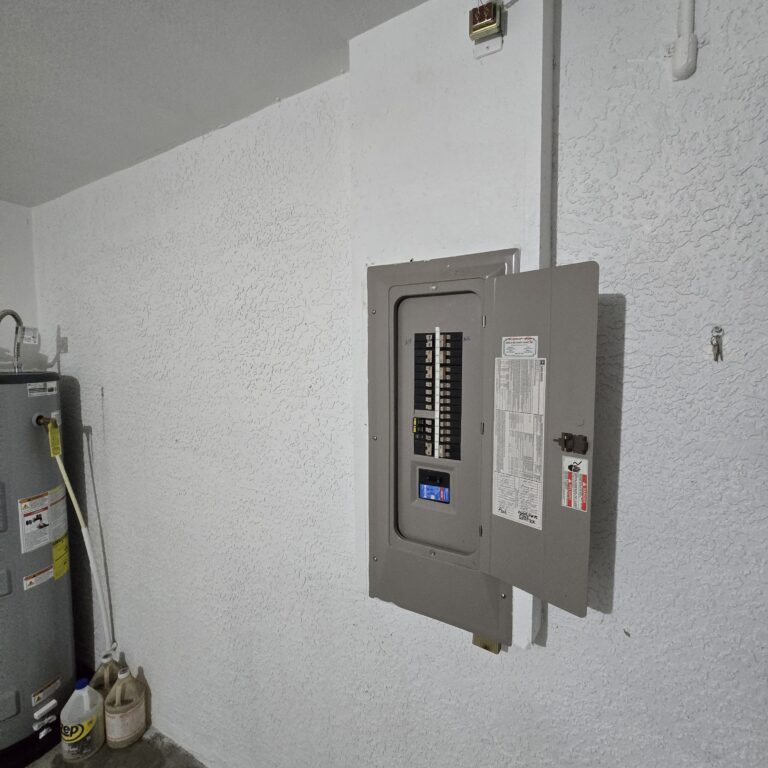
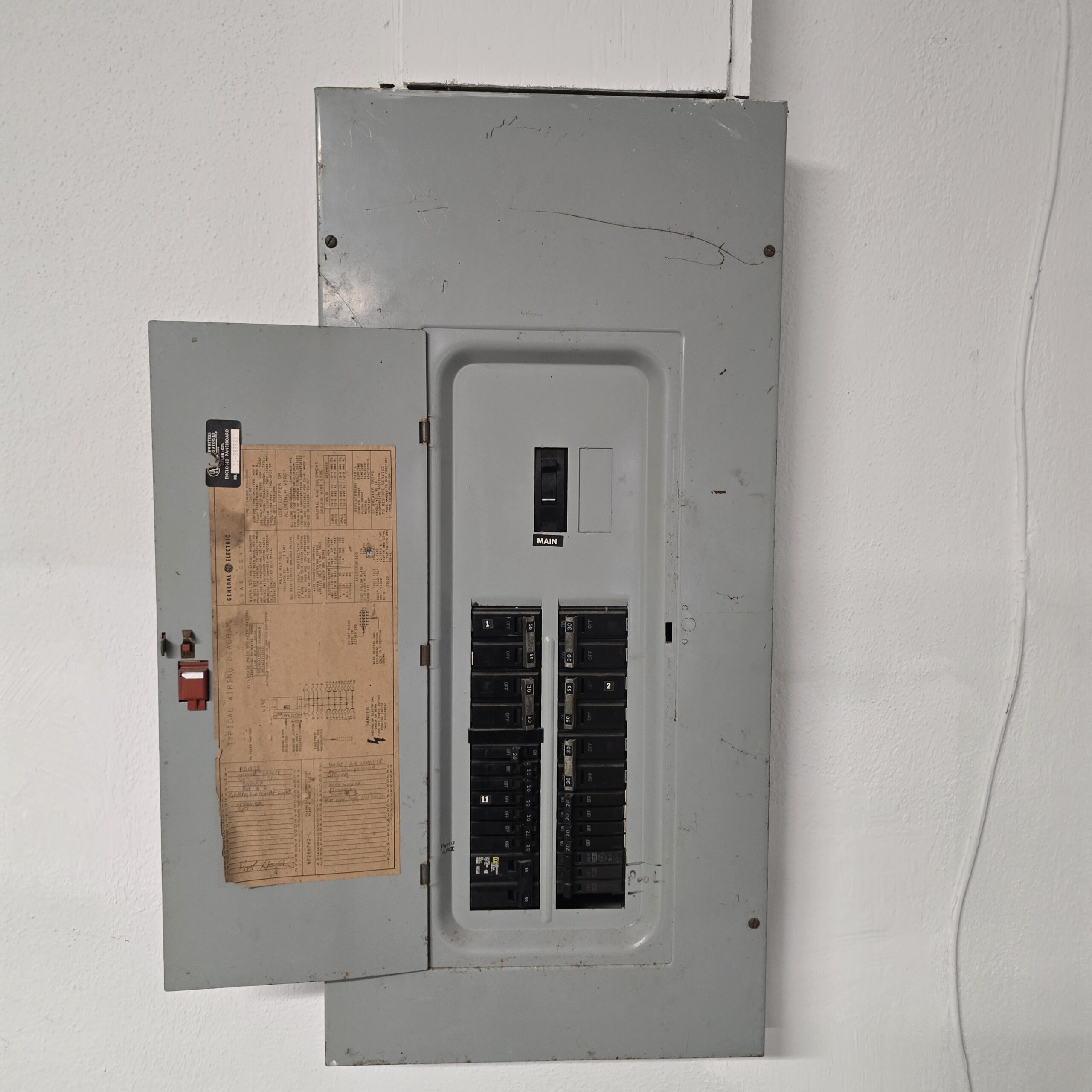
Your electrical panel is the single busiest point in the house during winter, and it feels every additional load you add. A furnace blower motor, a well pump, a garage heater, and two portable space heaters can easily push an older service toward its practical limit. Many homes in Louisville, Minerva, and Carrollton still operate on 100 amp services that were sized decades ago for far less equipment. Modern households run electric ranges, electric dryers, hot tubs, EV chargers, and multiple large appliances that simply did not exist in the original load calculation. When total demand approaches the rating of the service, the main breaker runs warm, voltage sags during motor starts, and nuisance tripping becomes a weekly frustration. A panel that is undersized does not usually fail dramatically; it just runs hotter than it should for months on end. That sustained heat shortens the life of every breaker and busbar connection inside the enclosure.
Cold weather compounds capacity problems because winter loads run continuously rather than in short bursts. A space heater running six hours a day represents a genuine continuous load, and continuous loads are limited to eighty percent of a circuit rating for good reason. Breakers are thermal devices, so they respond to accumulated heat over time rather than instantaneous current alone. Panels installed in unheated garages or on exterior walls also see condensation as warm interior air meets cold metal, and that moisture corrodes busbar stabs and breaker clips. Corroded stabs create high resistance connections that heat under load, which is one of the most common causes of a burned breaker slot. If your panel makes crackling sounds, smells warm, or has breakers that feel hot to the touch, shut off what you can and call an electrician immediately. Certain older panel brands have documented failure histories and should be evaluated rather than trusted through another winter.
Upgrading your service is the practical fix when the existing panel simply cannot support how your family lives today. A modern 200 amp service provides room for the furnace, the well pump, holiday lighting, and future additions like a generator or a vehicle charger without constant compromise. New panels also accept combination arc fault and ground fault breakers, which offer real protection against the exact failure modes that cold weather creates. Current code requires surge protection when a dwelling unit service is replaced, and that requirement protects sensitive electronics from the switching surges common during winter storms. An upgrade further gives you a clean, labeled, and accessible panel that any technician can work in safely during an emergency. Planning the work in early fall means you are not scheduling it during an ice storm. Running out of breaker space or still on an old 100 amp service? Click here for our electrical panel upgrade services and get sized correctly before winter.
How Cold Weather Affects Your Outdoor Electrical System Components
Outdoor receptacles, fixtures, and equipment take the worst of what an Ohio winter delivers. Snow melts against a receptacle cover, refreezes overnight, and works moisture past worn gaskets into the box behind it. Water inside an energized enclosure creates a ground fault path, which is exactly why every outdoor receptacle in a dwelling requires GFCI protection. Those GFCI devices then trip repeatedly through the winter, and homeowners often assume the device is defective when it is actually doing its job. Outdoor receptacles should be the weather resistant type, and receptacles in wet locations need a bubble style cover that stays closed even with a cord plugged in. A standard flip lid cover offers no protection at all once something is plugged into it. Replacing worn covers and gaskets in October costs very little and prevents a season of frustration.
Underground feeds to detached garages, pole barns, and outdoor pavilions face a different set of problems. Frost heave shifts soil, and that movement stresses conduit joints, direct burial cable, and the transitions where conduit exits the ground. Water enters through a cracked fitting, freezes, expands, and splits the conduit further with each cycle. Homeowners typically discover the damage when a circuit trips repeatedly or an outbuilding loses power entirely during a thaw. Landscape lighting transformers, post lights, and outdoor outlets on those circuits often show corrosion at every splice by the time the problem surfaces. Repairs in frozen ground are far more difficult and expensive than the same work done in mild weather. Testing outdoor circuits before the first hard freeze is a genuinely worthwhile hour.
Service entrance components deserve attention too, since they sit outside year round with no protection at all. The weatherhead, service mast, meter socket, and the drip loop where conductors enter all rely on intact insulation and proper geometry to shed water. Ice buildup adds substantial weight to overhead service conductors, and a heavy ice load can pull a mast out of alignment or tear it loose from the wall. Falling limbs during ice storms strike service drops with real force, and a damaged drip loop lets water track directly into the meter base. Any visible rust streaking below the meter, a loose mast, or frayed insulation on the service conductors calls for professional evaluation right away. These are not repairs to attempt personally, because the conductors ahead of the main breaker remain energized at all times. A quick visual check from the ground each fall tells you if something needs a closer look.
Common Winter Electrical Problems and How to Prevent Them
The failures homeowners experience each winter follow predictable patterns, and nearly all of them are preventable with modest effort. Space heaters cause more circuit overloads than any other single appliance, and they contribute heavily to home heating fires nationwide. Holiday lighting introduces temporary circuits, extension cords, and connection points that would never be acceptable as permanent wiring. Storms bring outages, and outages bring generators, which introduce a set of hazards that harm people every year. Layered on top of all of that is a furnace that must start reliably every single time it calls for heat. The three sections below cover the winter electrical problems that generate the most emergency calls and the specific steps that prevent them.
Preventing Winter Electrical Problems Caused by Space Heaters
A standard portable space heater draws roughly 1,500 watts, which works out to about 12.5 amps at 120 volts. A 15 amp branch circuit is limited to 12 amps of continuous load, so a single heater running for hours already exceeds what that circuit should carry continuously. Add a television, a lamp, and a phone charger on the same circuit and the breaker will trip, often at the worst possible moment. Homeowners frequently respond by moving the heater to another outlet on the same circuit, which changes nothing at all because the circuit conductor is the limiting factor. Bedrooms in older homes commonly share a single circuit across several rooms, which makes overload almost guaranteed. The correct solution is a dedicated circuit for any space that needs supplemental heat regularly. An electrician can evaluate the panel and add that circuit in a single visit.
Extension cords and power strips are the second major hazard associated with space heaters. Most household extension cords use 16 gauge conductors rated for around 13 amps, and many light duty cords are smaller than that. Running a 12.5 amp heater through an undersized cord for hours heats the entire cord length, softens the insulation, and can ignite carpet or bedding around it. Power strips and surge protectors are built for electronics, not for high draw resistive loads, and their internal connections are not designed for that duty. Every space heater manufacturer instructs users to plug the unit directly into a wall receptacle, and that instruction exists because of documented fire history. Check the receptacle itself as well, since a worn outlet with weak contacts will heat badly under a heater load. Any outlet that feels warm or shows scorch marks should be replaced before the heater goes back into service.
Placement and habits matter as much as the wiring behind the wall. Keep at least three feet of clearance around any heater, and never place one near curtains, furniture, or stacked laundry. Choose units with tip over switches and thermal shutoff, and never run a heater in an unoccupied room or overnight in a bedroom. Winter is also the peak season for carbon monoxide incidents, so test every smoke alarm and CO alarm now rather than in December. Smoke alarms should be replaced roughly every ten years, and CO alarms typically carry a seven to ten year service life printed on the housing. If your home lacks hardwired interconnected alarms, adding them is one of the highest value safety upgrades available. Homes in Hartville, Uniontown, and North Canton with older detection equipment should treat this as a fall priority.
Preventing Winter Electrical Problems With Holiday Lighting
Holiday lighting fails every year for the same handful of reasons, and connection count is at the top of the list. Manufacturers specify how many light strings may be connected end to end, and incandescent sets typically allow only three to five sets in series. Exceeding that limit overloads the wire and the plug connections at the first set, which is where overheating begins. LED light strings use dramatically less power, often eighty to ninety percent less than incandescent equivalents, and they allow far longer runs. Switching to LED sets reduces load, reduces heat, and lets you decorate more of the house on fewer circuits. Inspect every set before hanging it, discarding any string with cracked insulation, missing bulbs, or a damaged plug. Cold makes brittle plastic worse, so a set that survived last year may not survive this one.
Every outdoor decoration must be plugged into a GFCI protected receptacle without exception. Melting snow, blowing rain, and ice all create the exact conditions that GFCI protection exists to address. Use only cords and light sets rated for outdoor use, and keep every connection point elevated above the ground and out of standing water. Cord connections left in a puddle will freeze solid and then conduct once the thaw arrives. Never staple through cord insulation or run cords through window and door openings where they get pinched and crushed. Inflatable decorations, projectors, and heated mats all add up quickly, so total the wattage before loading one circuit. Timers rated for the actual load help, but a timer does nothing to raise the capacity of the circuit behind it.
Roof and gutter heat cable deserves its own consideration during winter planning. Heat cable draws continuous power for weeks at a time and should be installed according to the manufacturer instructions on a GFCI protected circuit. Many homeowners plug these systems into whatever outdoor receptacle is closest, which frequently means sharing a circuit with holiday lighting. That shared arrangement leads to repeated tripping and, worse, to people bypassing GFCI protection out of frustration. A dedicated outdoor circuit with proper protection solves the problem permanently and costs far less than the ice dam damage it prevents. The same logic applies to permanent outdoor lighting, which performs better on properly sized circuits with weather rated components. Planning outdoor power in the fall gives you a system that simply works when the snow arrives.
Preventing Winter Electrical Problems During Storms and Power Outages
Ice storms and heavy wet snow bring down limbs and lines across Stark County nearly every winter. When the power goes out, the immediate concerns are heat, water, refrigeration, and any medical equipment in the home. Portable generators solve part of that problem, but they introduce serious hazards when connected improperly. Backfeeding a generator through a dryer outlet or a range receptacle energizes your home wiring and pushes power back onto the utility lines outside. That practice can kill line workers and neighbors, and it is prohibited for exactly that reason. A properly installed transfer switch or interlock kit isolates your home from the utility and makes generator power safe to use. Portable units also must run outdoors and well away from windows, doors, and attached garages because of carbon monoxide.
A permanently installed standby generator removes nearly all of that risk and all of the guesswork. Standby units sense the outage, start automatically, transfer the load, and shut down when utility power returns. They run on natural gas or propane, so there is no fuel to store and no cans to refill during a storm. The transfer equipment is engineered and permitted, which means your home and the utility grid stay properly separated at all times. Sizing matters, because the unit must handle the furnace, well pump, refrigerator, and sump pump starting loads together. An electrician performs a load calculation and specifies equipment that matches how your household actually operates. Tired of losing heat and water every time a storm hits? Click here for our generator installation services and keep your home running through the next outage.
Surges are the other storm hazard, and they arrive both during outages and when power is restored. Utility switching, line faults, and nearby lightning all send voltage transients into home wiring that damage electronics over time. Furnace control boards, well pump controls, appliance electronics, and network equipment are all vulnerable to repeated small surges. A whole house surge protective device installed at the panel clamps those transients before they reach your equipment. Point of use protectors at sensitive electronics add a useful second layer, but they cannot substitute for protection at the service. Current code requires surge protection on new and replacement dwelling unit services because the need is that well established. Adding one to an existing panel is a straightforward job for a licensed electrician.
Why You Need a Winter Electrical Inspection Before the Cold Sets In
A winter electrical inspection finds loose connections, overloaded circuits, and failing components while conditions are still comfortable enough to correct them. Fall is the ideal window, because the furnace has not yet run all season and the heavy holiday load has not yet arrived. An inspection produces a clear list of what is safe, what needs attention soon, and what must be addressed immediately. That information lets you budget and schedule instead of reacting to an emergency in the middle of January. Homeowners who inspect proactively simply have fewer outages, fewer tripped breakers, and far fewer surprises.
What a Winter Electrical Inspection Covers in Your Home
A thorough winter electrical inspection begins at the service entrance and works inward through the entire system. The electrician evaluates the mast, weatherhead, meter base, grounding electrode system, and bonding connections for corrosion and mechanical damage. Inside the panel, the technician checks torque on terminations, looks for heat damage at breaker stabs, verifies proper breaker sizing, and confirms accurate circuit labeling. Thermal patterns, discoloration, and corrosion all tell an experienced electrician where trouble is developing. The result is a real picture of panel condition rather than a guess based on age alone.
Branch circuits receive equal attention during a winter electrical inspection. The electrician tests GFCI and AFCI devices, checks outdoor receptacles and covers, verifies correct polarity and grounding at outlets, and identifies circuits carrying more load than they should. Furnace and blower circuits get specific review, including the service disconnect switch and the dedicated circuit feeding the equipment. Kitchen, bath, garage, and basement circuits are checked against current protection requirements. Any device showing heat damage or physical wear gets flagged for replacement.
The inspection also documents safety equipment and existing conditions that matter during winter. Smoke alarm and carbon monoxide alarm placement, age, and function are confirmed room by room. Extension cord use, undersized cords, and improvised wiring are identified so they can be replaced with permanent circuits. Detached structures, outbuilding feeders, and outdoor lighting circuits are included when they are part of the property. Want a complete picture of your system before winter? Click here for our electrical inspection services and get a clear report on your home.

The Best Time to Schedule a Winter Electrical Inspection
Early fall is the best time to schedule a winter electrical inspection, and the reasons are practical rather than arbitrary. Ground is workable, attics and crawl spaces are accessible, and outdoor repairs do not require fighting snow and ice. Parts availability is better before the seasonal rush, and scheduling is far more flexible in September and October than in December. Correcting a problem now means the work happens on your timeline instead of during an emergency call. That difference in timing usually translates to a meaningful difference in cost.
Certain events should trigger an inspection regardless of the calendar. Buying a home, finishing a basement, adding a hot tub or a vehicle charger, or living in a house over forty years old all justify a full evaluation. Any home that has experienced repeated breaker trips, flickering lights, or warm devices needs professional attention rather than continued observation. Homes with aluminum branch circuit wiring or older panel brands with known failure histories should be assessed by a licensed electrician. Insurance carriers increasingly ask about these conditions as well.
Inspection findings also help you plan larger projects intelligently. Knowing that your service is near capacity tells you to address the panel before adding a generator, a hot tub, or a heated garage. Learning that outdoor circuits lack proper protection tells you what to correct before hanging a single string of lights. Sequencing the work correctly avoids paying twice for the same access and the same labor. A good electrician explains that sequence in plain terms so you can decide what makes sense this year.
Why Choose Gragg Electrical Services for Your Winter Electrical Inspection
Gragg Electrical Services has served East Canton and the surrounding communities with more than twenty years of proven local experience. Our crews know the housing stock here, from century homes in Canton to newer builds in Jackson Township and Green. We back our work with a Lifetime Craftsmanship Guarantee, because we stand behind every connection we make. Our technicians arrive on time, protect your floors, and leave the work area cleaner than they found it. Respectful, clean, and professional service is the standard on every single call.
Winter problems do not wait for business hours, which is why we keep 24/7 emergency service always on standby. A dead furnace circuit at midnight or a burning smell at the panel gets a real response, not a voicemail. We also make larger projects manageable through financing available with GreenSky and Turns, so a needed panel upgrade does not have to wait another season. Every job is performed to current code by licensed, insured electricians. You get straight answers, clear pricing, and work that holds up.
We are proud to serve East Canton, Canton, North Canton, Louisville, Hartville, Uniontown, Massillon, Minerva, Alliance, Navarre, Canal Fulton, Carrollton, and the surrounding communities. Call us at (330) 488-8009 or email info@graggelectrical.com to schedule your winter electrical inspection. Our team will walk your home, test your system, and give you a written picture of exactly where things stand. Small corrections made in the fall prevent the emergencies that define a hard winter. Reach out today and head into the cold season with confidence.