How to Safely Light a Pumpkin Display and Outdoor Decor
Fall in East Canton brings cool evenings, damp leaves, and front porches lined with carved pumpkins that neighbors slow down to admire. Lighting that display the right way takes a little more planning than most homeowners expect, because outdoor decor sits in the weather for weeks at a time while it draws power from circuits that were never designed for seasonal loads. Wet grass, morning frost, and October rain all find their way into cords, sockets, and timers that were meant for indoor use, and that combination causes a spike in electrical calls every single autumn. The good news is that a bright, safe pumpkin display is easy to build when you understand which lights belong outside, how much power your circuits can actually handle, and where protection devices need to be installed. Gragg Electrical Services has spent more than twenty years wiring homes, porches, and outdoor spaces across Stark County, and our crews see the same preventable mistakes year after year. This guide walks through the equipment, the load math, and the safety steps that keep your decorations glowing from the first week of October through Thanksgiving. Everything here follows current National Electrical Code practice for outdoor residential wiring, so you can decorate with confidence instead of guessing.
What You Need to Safely Light a Pumpkin Display Outdoors
A safe pumpkin display starts with three things working together: lighting rated for wet locations, cords built to survive weather and foot traffic, and a receptacle protected by a ground fault circuit interrupter. Skip any one of those and you introduce risk that grows every time it rains or the temperature swings. Homeowners often assume that a light string is a light string, but indoor rated products carry no protection against moisture entering the sockets, and that moisture is exactly what creates arcing, tripped breakers, and burned insulation. Cords matter just as much, since a thin indoor cord run across a wet lawn can overheat under load or become a shock hazard once the jacket cracks in the cold. Ground fault protection is the final layer, because it senses current leaking to ground and shuts the circuit down in a fraction of a second. Put those three pieces in place and your display becomes something you can leave running on a timer without worrying about it. The sections below break down each piece in detail so you know what to buy and how to install it correctly.
Choosing Safe Lights for Your Pumpkin Display
Every light you put outside should carry a listing mark from a recognized testing laboratory along with a rating for outdoor or wet location use, and that information is printed right on the tag attached to the cord near the plug. Products marked for indoor use only have sockets and connections that allow water intrusion, which is why they fail so quickly on a porch railing or in a flower bed. LED light strings are the better choice for pumpkin displays and outdoor decor in almost every situation, because they consume roughly eighty to ninety percent less power than the old incandescent versions and they run cool enough to sit against a carved pumpkin without scorching the flesh. Lower heat also means less risk when a string ends up buried under mulch, straw bales, or corn stalks that surround a seasonal display. Cool operation lets you connect far more strings end to end, though the manufacturer still sets a hard limit that appears on the packaging and must be respected. Older incandescent strings usually cap out around three connected sets, while many LED sets allow far more. Read the tag before you chain anything together, because that limit exists to protect the small gauge wire inside the string itself.
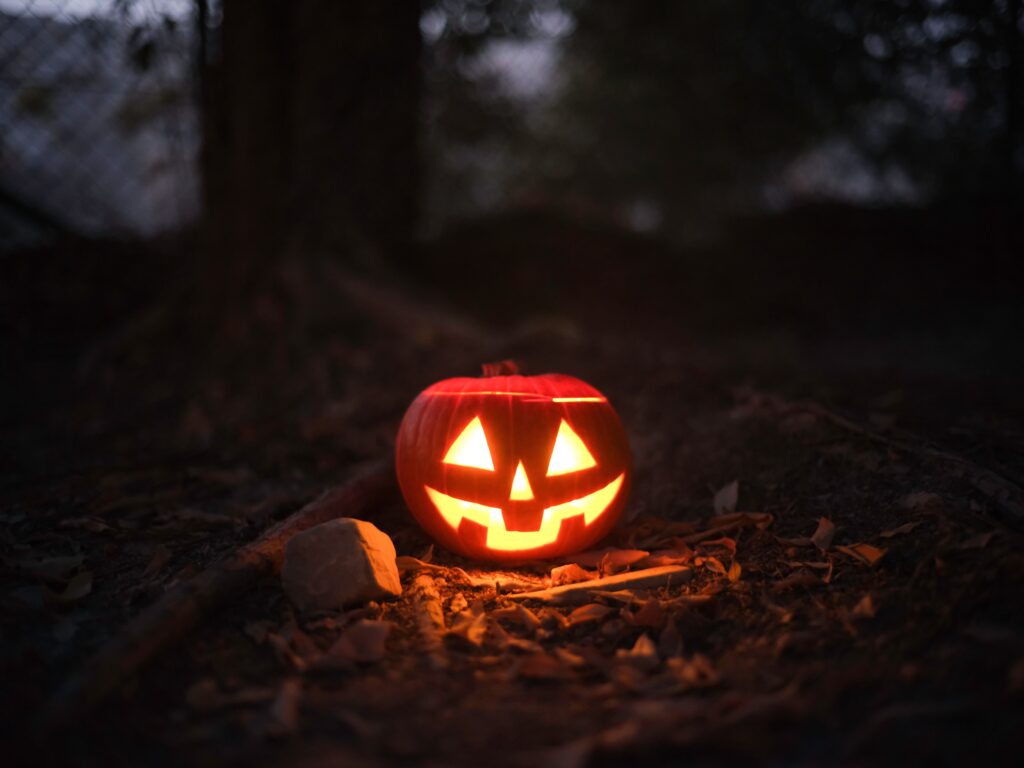
Real candles inside a carved pumpkin remain one of the most common causes of decoration fires in this country, and fire departments across Ohio issue the same warning every October for good reason. An open flame sitting inside dried pumpkin flesh, surrounded by paper bags, cornstalks, or a nylon costume brushing past on a porch step, is a genuine hazard rather than a theoretical one. Battery powered LED tea lights solve the problem completely and produce a convincing flicker that reads the same from the sidewalk. They cost a few dollars, run for many hours on a single set of batteries, and they will not tip over and ignite anything when a squirrel knocks the pumpkin off the step. For larger carved displays, a single low wattage LED puck light or a short LED string tucked inside the pumpkin gives even brighter output with no flame at all. Keep any electrical light inside a pumpkin dry by lining the cavity with a small piece of plastic, since carved pumpkins release moisture as they age and that moisture will find its way into an unprotected socket.
Fixtures for the rest of your outdoor decor deserve the same attention that you give the light strings. Spotlights and flood lights aimed at hay bales, inflatables, or a pumpkin arrangement should be rated for outdoor use and mounted so that water drains away from the housing instead of pooling inside it. Stake lights pushed into soft ground need to sit high enough that sprinkler spray and standing water stay below the socket, and they should never be placed where a lawn mower or leaf blower will reach them later in the season. Set every fixture on an outdoor rated timer or a photocell so the display runs on a predictable schedule instead of staying energized around the clock, which cuts both energy use and wear on the components. Avoid stringing lights across walkways or driveways where they can be stepped on, driven over, or pulled loose by a passing trick or treater. If your porch has no good place to mount decorative lighting, that is a sign the exterior needs a proper solution. Ready for outdoor lighting that works every season instead of just one? Click here for our outdoor lighting installation service.
Powering a Pumpkin Display With Outdoor Rated Extension Cords
Extension cords used outside must be marked for outdoor use, and the marking appears as a W in the cord type stamped along the jacket, with SJTW and SJEOW being two of the most common designations you will find at any supply house. That jacket is thicker, more resistant to sunlight, and far better at handling cold weather without cracking than the flat brown cords sold for lamp duty inside a living room. Gauge matters as much as the weather rating, since a longer run of thin wire drops voltage and generates heat under load. For most pumpkin displays a sixteen gauge cord handles short runs of LED lighting without trouble, while runs beyond fifty feet or displays that include inflatables and flood lights call for fourteen or twelve gauge. Every outdoor cord should have three prongs and connect to a properly grounded receptacle, because that grounding path is part of what allows protective devices to function. Never cut off a ground pin to make a plug fit an older two slot outlet, and never use an adapter to defeat it. If your exterior receptacles still accept only two prongs, the wiring behind them needs attention from a licensed electrician before decorating season begins.
How you route the cord is just as important as which cord you buy. Run cords along the edge of a porch, under a railing, or against the foundation where people will not walk on them, and keep the connection points elevated off wet ground using a plastic hook or a purpose built cord protector. Connections lying in a puddle or buried under wet leaves invite corrosion at the contacts, and corroded contacts generate heat that eventually melts the plug housing. Never run an extension cord under a doormat, a rug, or a bale of straw where heat cannot escape and damage stays hidden from view. Do not staple or nail through a cord to hold it in place, since the fastener can pierce the insulation and create a short that may not show up until weeks later. Insulated cord clips and plastic light clips cost very little and hold everything securely without damaging the jacket. Wrapping the connection point between two cords in a plastic bag is a common trick, but a purpose built outdoor cord cover does a far better job of keeping water out while still allowing the plug to breathe.
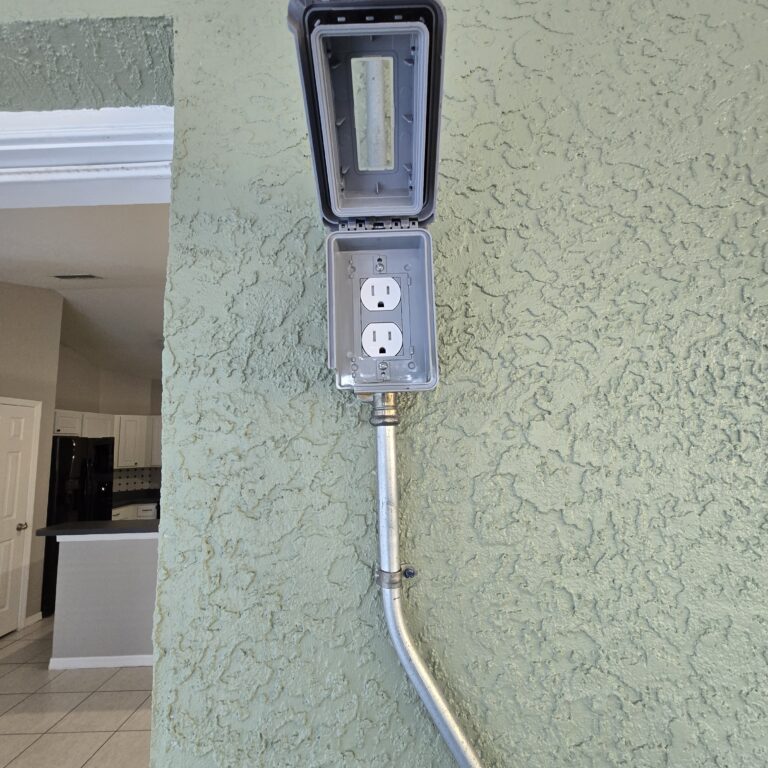
Extension cords are meant to be temporary, and that distinction matters more than most homeowners realize. Code treats cord and plug connected wiring as a seasonal solution rather than a substitute for permanent circuits, which is why leaving a cord snaked across the yard year round is both a safety problem and a code problem. Cords also lose capacity when they are coiled, because a tightly wound coil traps heat that a straight run would shed into the air. Unwind the full length of any cord you plug in, even when you only need part of it, and never connect several short cords together to reach a distant point in the yard. Each connection adds resistance and one more place for water to enter the circuit. When your display keeps growing every year and the cord count keeps climbing along with it, the smarter fix is an outdoor receptacle installed where you actually need power. Our electricians install weather resistant exterior outlets with proper in use covers so your decor plugs in directly, with no cord crossing the lawn at all.
GFCI Outlets Protect Every Pumpkin Display and Outdoor Decor Setup
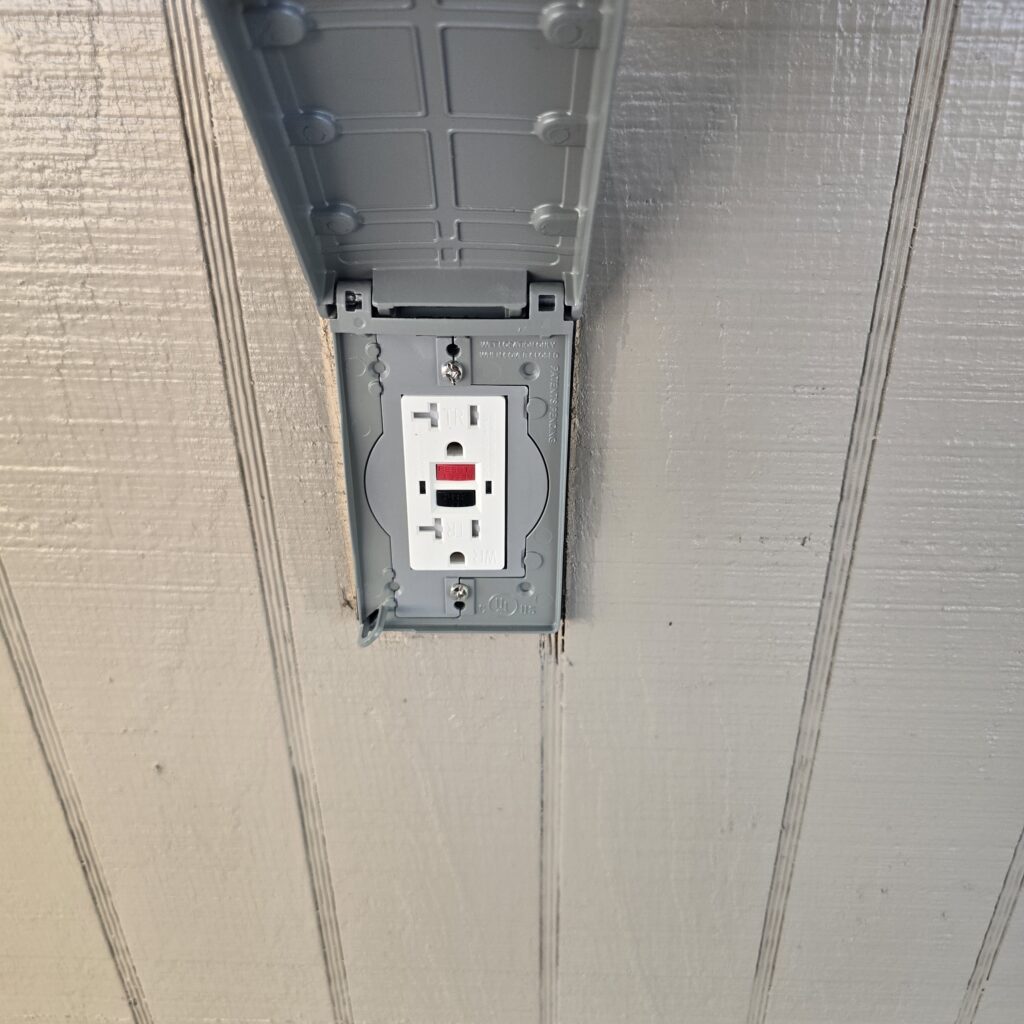
Ground fault circuit interrupter protection is required by the National Electrical Code on all outdoor receptacles at a dwelling, and it is the single most important safeguard for anything you plug in outside. A GFCI device constantly compares the current leaving on the hot conductor with the current returning on the neutral, and any imbalance beyond a few milliamps tells it that electricity is escaping somewhere it should not be. That escape path could be a wet socket, a nicked cord, or a person standing on damp grass while touching a metal light stake. When the device senses that imbalance, it opens the circuit in a fraction of a second, long before the current level becomes dangerous to a human heart. A standard circuit breaker will not do this, because a breaker only responds to overload and short circuit conditions measured in whole amps rather than the tiny leakage currents that cause electrocution. That difference is why GFCI protection matters so much once decorations move outdoors into rain, dew, and melting frost.
Test the GFCI outlets serving your display before you plug anything into them and again once a month during the season. Press the test button, confirm that power at the receptacle actually shuts off, then press reset to restore it. A device that fails this test needs replacement, and a device that keeps tripping while your lights are connected is telling you something real about the condition of those lights or cords. Homeowners often blame nuisance tripping and reach for a workaround, but the far better approach is to unplug items one at a time until the offending piece reveals itself. Long light strings, damaged inflatable fans, and old flood lights are the usual culprits. Keep in mind that very long runs of LED lighting can produce small amounts of natural leakage that add up, so splitting a large display between two protected circuits often solves repeat trips without compromising safety.
Older homes across East Canton, Louisville, and Canton Township frequently have exterior receptacles that predate GFCI requirements, and some have no exterior receptacles at all. Adding protection is straightforward work for a licensed electrician, either by installing a GFCI receptacle at the outdoor location or by installing a GFCI breaker in the panel that protects the whole circuit. Both approaches also give you the chance to upgrade the cover to a weatherproof in use model, which is the bubble style enclosure that keeps rain off a plug while the cord is connected. Flat flip covers do not meet current requirements for wet locations with something plugged in, since they cannot close over an inserted plug. Getting this handled before October arrives means your display goes up in one afternoon instead of turning into a project. Need GFCI protection before decorating season? Click here for our GFCI outlet installation service.
Common Mistakes That Make a Pumpkin Display and Outdoor Decor Unsafe
Most autumn electrical calls trace back to a handful of repeat offenders rather than anything exotic. Circuits get loaded past their comfortable limit, water reaches connections that were never sealed, and cords that should have been retired years ago come out of a storage tote for one more season. None of these problems announce themselves clearly at first, which is what makes them dangerous; a warm plug or a slightly flickering string looks like a minor annoyance right up until it becomes a service call. Understanding what actually goes wrong helps you spot trouble early and decorate in a way that avoids it entirely. The three sections below cover the failures our electricians encounter most often on residential outdoor decor. Each one is preventable with a little planning and the right equipment.
Overloaded Circuits Behind a Pumpkin Display
Every branch circuit in your home has a fixed capacity, and understanding that number keeps your display from tripping breakers all season. A fifteen amp circuit at one hundred twenty volts can carry eighteen hundred watts at its absolute maximum, but continuous loads running three hours or more should stay at eighty percent of that figure, which works out to fourteen hundred forty watts. A twenty amp circuit tops out at twenty four hundred watts, with a continuous limit of nineteen hundred twenty watts. Holiday lighting qualifies as a continuous load because it runs for hours at a time, so plan around the eighty percent number rather than the maximum. Add up the wattage listed on every light string, inflatable, projector, and flood light you plan to connect, then compare that total against the circuit capacity. LED strings make this easy since a typical set draws only a few watts, but inflatable fans, older incandescent sets, and halogen flood lights consume far more than people expect. Write the total down somewhere so you can check it again next year when the display grows.
The complication in most homes is that the exterior receptacle rarely lives on a circuit all by itself. Outdoor outlets on older wiring are often fed from the same circuit as garage receptacles, basement outlets, or even a bathroom, which means a space heater or a shop vacuum running at the same time as your display can push the total past the limit without warning. Breakers doing their job will trip, and that is a feature rather than a failure; repeatedly resetting a breaker without reducing the load is how conductors overheat inside walls. If a particular circuit trips every time the decorations come on, treat it as useful information about capacity rather than a nuisance to work around. Never replace a fifteen amp breaker with a twenty amp breaker to stop the tripping, because the wire behind it is sized for fifteen amps and a larger breaker removes the protection entirely. That single shortcut has caused more house fires than almost any other do it yourself electrical decision.
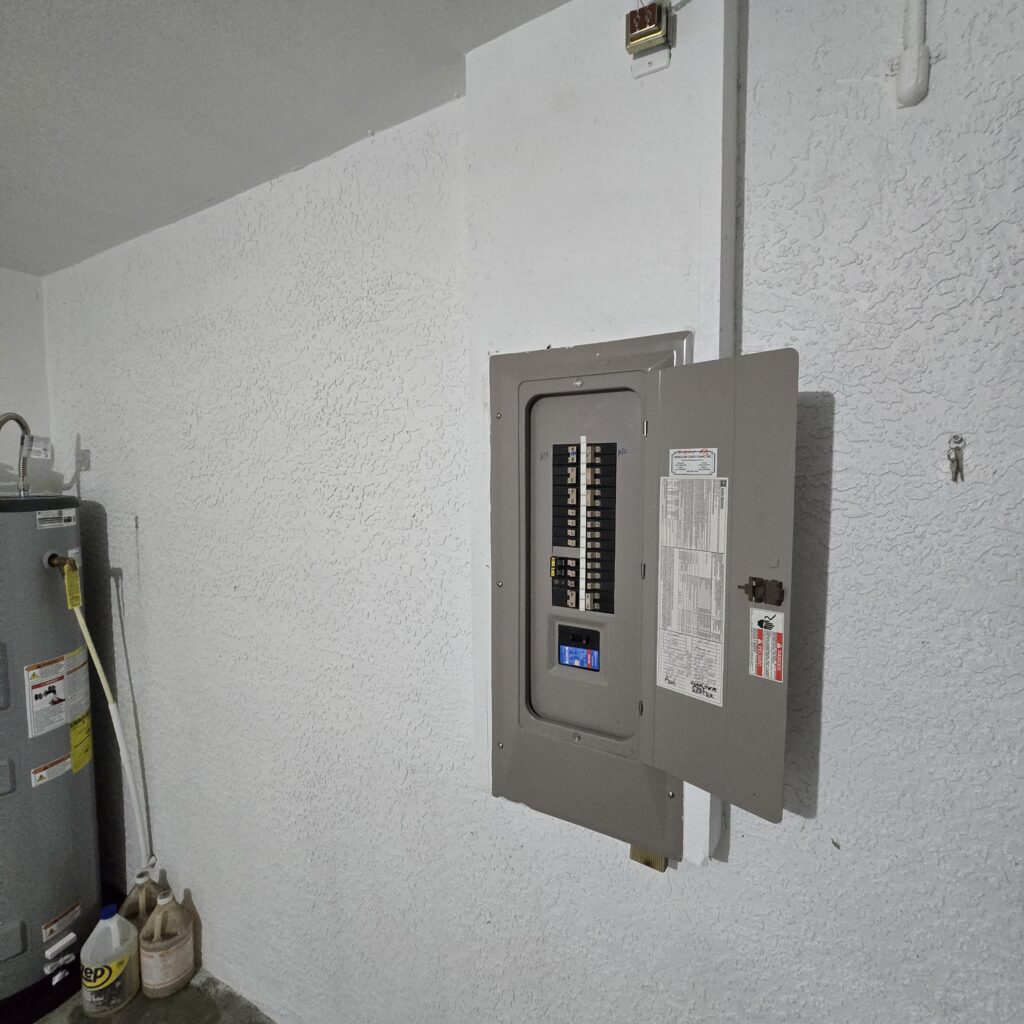
Signs of an overloaded or struggling circuit show up before the breaker gives out, and they are worth watching for. Lights that dim noticeably when another appliance kicks on, plugs that feel warm to the touch, faint buzzing at a receptacle, and a faint smell of hot plastic all point to a problem that needs professional attention. Panels in homes built before the mid nineteen eighties often have limited capacity to begin with, and adding modern loads like EV chargers, hot tubs, and expanded seasonal displays pushes them further. An electrical service upgrade or an added dedicated circuit solves the constraint permanently instead of forcing you to ration what you plug in. Our team evaluates the existing panel, calculates the actual load, and recommends the smallest change that fixes the problem. Tripping breakers every time your decorations come on? Click here for our electrical panel upgrade service.
Water Damage Around Pumpkin Display Lighting
Ohio autumn weather works against outdoor decorations in ways that are easy to underestimate. Morning dew soaks anything sitting on the lawn, afternoon rain drives water sideways under porch overhangs, and overnight temperature drops pull moisture into gaps as materials contract. Carved pumpkins add their own problem, since the flesh begins breaking down within days and releases water that pools in the bottom of the cavity. A light string tucked into that cavity ends up sitting in a shallow pool by the end of the first week, and the sockets on a light string are not designed to be submerged. Line the inside of any carved pumpkin with plastic before adding lighting, or better yet use a sealed battery powered LED that has no connection to house current at all. Uncarved pumpkins hold up far longer and pair perfectly with exterior spotlights placed a safe distance away.
Connection points are where water causes the most damage, and elevation is the simplest defense. Keep every plug and coupler at least a few inches off the ground using a brick, a plastic stand, or a hook mounted under the railing, and orient cords so water runs away from the connection instead of toward it. A drip loop, meaning a downward curve in the cord just before it reaches an outlet or a fixture, gives water a place to fall off before it reaches the contacts. This one habit costs nothing and prevents a surprising number of problems. Weatherproof cord covers designed for outdoor decorating seal the junction between two cords and cost only a few dollars each. Never leave a connection lying in mulch, leaf litter, or a low spot in the yard where runoff collects during a storm.
Corrosion from repeated moisture exposure creates resistance at contact points, and resistance creates heat. That heat degrades the plastic housing over several seasons until the plug no longer grips properly, which produces arcing every time the connection shifts in the wind. Inspect the blades on every plug when you pack decorations away, and discard anything showing green or white residue, pitting, or discoloration around the metal. The same inspection applies to the receptacle itself; a face plate with rust streaks or a receptacle that no longer holds a plug snugly should be replaced. Water intrusion inside an exterior box can also damage the wiring behind it, which is not something a visual check will reveal. If your outdoor outlet has been sitting under an open cover through several wet seasons, having an electrician open it up and evaluate the condition is a small investment that prevents a much larger repair.
Damaged Cords and Old Decor Lights in a Pumpkin Display
Seasonal decorations spend most of the year compressed in a storage tote in an attic or a garage, and those environments are hard on wire insulation. Attic temperatures swing from well over one hundred degrees in July to below freezing in January, and that cycling makes plastic brittle over time. Rodents chew on cords for the salt residue left behind by handling, and the damage often sits on the underside where nobody notices it. Before anything gets plugged in, run every cord and light string through your hands from end to end while looking for cracked insulation, exposed copper, flattened sections, melted spots near sockets, and loose or missing bulbs. Any string with visible copper goes in the trash rather than back on the porch, because electrical tape is not a repair for damaged insulation on an outdoor cord. Missing bulbs in an incandescent string also create an open socket where fingers and water can reach live contacts, so replace them or retire the set.
Age alone is a reason to replace decorative lighting. Light strings manufactured before modern safety standards took hold often lack fused plugs, use thinner wire, and have no rating for wet locations at all. A fused plug protects the string itself from an overcurrent condition, and it is a standard feature on quality products sold today. Switching an old incandescent display over to LED cuts the load dramatically, reduces heat, and usually pays for itself in energy savings across a couple of seasons. LED sets also survive rough handling better since there is no delicate filament to break. Replacing a decade old collection of light strings feels like an expense in October, but it eliminates the exact failure mode that causes the majority of decoration fires.
Timers, splitters, and multi outlet adapters deserve the same scrutiny as the lights themselves. Indoor rated power strips have no place outside, regardless of how carefully they are positioned, because their internal components and switch openings are not sealed against moisture. Outdoor rated timers and stake mounted power hubs exist specifically for this application and cost very little compared to the risk they eliminate. Check that any splitter you use is rated for the total wattage you are running through it, and never chain multiple splitters together to expand capacity. When the decorations come down, coil cords loosely rather than wrapping them tightly around your elbow, since sharp bends at the same points every year eventually break conductors inside the jacket. Store everything in a sealed container in a conditioned space when possible, and your equipment will last several seasons longer.
Why You Need a Licensed Electrician for Your Pumpkin Display and Outdoor Decor
Plenty of pumpkin displays go up safely with nothing more than good LED lights and a properly protected outlet. The moment your plans outgrow what a single exterior receptacle can support, though, the project moves into territory where a licensed electrician saves you money, time, and risk. Adding circuits, installing weatherproof receptacles where you actually need them, and verifying that existing outdoor wiring meets current code are all jobs that require training and a permit in most Stark County jurisdictions. Doing that work correctly also raises the value of your property, because permanent exterior power and lighting benefit you every month of the year rather than just six weeks in autumn. Gragg Electrical Services handles all of it, from a single GFCI receptacle to a full service upgrade, and our crews show up on time and leave the site clean. Reach us at (330) 488-8009 to talk through what your display needs.
Permanent Outdoor Lighting Beats a Temporary Pumpkin Display
Seasonal lighting is fun, but permanent exterior lighting solves problems that light strings never will. Properly placed path lights, soffit lighting, and landscape spotlights improve safety on steps and walkways, deter break ins, and make your home look intentional rather than cluttered with cords. Those same fixtures become the backbone of your seasonal decorating, giving you a bright, even wash of light on the pumpkins and hay bales without a single extension cord in sight. Modern LED landscape systems draw very little power and run on low voltage transformers that are far safer around children and pets than line voltage strings. Installation is usually completed in a day or two depending on the size of the property.
The cost picture makes more sense than most homeowners assume. A permanent installation replaces the annual purchase of replacement strings, cords, timers, and stakes, and it eliminates the labor of putting everything up and taking it down twice a year. Energy consumption drops considerably compared to older decorative lighting, and quality outdoor fixtures carry warranties measured in years rather than seasons. Insurance considerations matter too, since a fire caused by a failed extension cord is a far more expensive outcome than any lighting project. Homes with well designed exterior lighting also photograph better and show better, which matters at resale time.
Our electricians design outdoor lighting around how you actually use your property rather than around a catalog layout. That means light where you walk, light on the features you want people to see, and controls that let you set schedules or adjust brightness from your phone. We handle the trenching, the transformer sizing, the fixture placement, and the connection back to a properly protected circuit. Everything is installed to code and inspected before we consider the job finished. Want lighting that makes your home look great in every season? Click here for our outdoor lighting installation service.
Electrical Inspections Keep Your Pumpkin Display and Outdoor Decor Safe
An electrical inspection gives you a clear picture of what your home can handle before you start adding load. Our electricians evaluate the panel, check the condition and rating of every exterior receptacle, verify GFCI protection where code requires it, and identify circuits that are already running close to capacity. That information turns decorating from guesswork into a plan, and it frequently uncovers issues that have nothing to do with holiday lights. Aluminum branch wiring, missing grounds, backstabbed connections, and obsolete panels all show up regularly in homes across this area. Finding them during a scheduled inspection is far less disruptive than finding them during an outage.
Older properties benefit the most from this kind of review. Houses built before the nineteen seventies often carry sixty or one hundred amp services that were adequate for the appliances of that era but strain under modern demand. Additions, finished basements, and converted garages sometimes carry wiring installed by a previous owner without a permit, and that work rarely meets current standards. An inspection documents what exists, flags what needs correction, and prioritizes repairs by actual risk rather than by guesswork. You get a written record you can act on at your own pace.
Timing an inspection for early autumn works well because it comes before the heaviest electrical season of the year. Once the weather turns, furnaces, space heaters, and holiday lighting all start competing for the same capacity, and problems that stayed quiet all summer come to the surface. Handling any needed corrections in September or October means you enter the winter with a system you can rely on. Want to know exactly what your home can safely handle? Click here for our electrical inspection service.
Why Choose Gragg Electrical Services for Pumpkin Display and Outdoor Decor Lighting
Gragg Electrical Services has served East Canton and the surrounding communities for more than twenty years, and that local experience shapes how we approach every job. We know the housing stock in Canton, North Canton, Louisville, Hartville, Uniontown, Massillon, and Minerva, and we know which panels and wiring methods show up in which neighborhoods. Our work is backed by a Lifetime Craftsmanship Guarantee, which means we stand behind what we install without an expiration date. Every crew that enters your home is respectful, clean, and professional, and we treat your property the way we would treat our own.
Electrical problems rarely wait for business hours, and neither do we. Our 24/7 emergency service is always on standby, so a tripped circuit on a Saturday night or a burning smell at an outdoor receptacle gets a real response rather than a voicemail. We arrive with the parts and equipment to diagnose the issue on the spot and get power restored safely. Clear communication is part of the process, so you always know what we found, what it will cost, and what your options are before work begins.
Larger projects should not stall over budget, which is why we offer financing through GreenSky and Turns. That flexibility lets homeowners handle a panel upgrade or a full outdoor lighting installation on a schedule that works for their finances instead of postponing necessary work for another year. Call us at (330) 488-8009 or email info@graggelectrical.com to schedule an estimate. We are proud to serve East Canton and the surrounding communities, and we would be glad to help you light your display the right way this fall.