What to Check Before Plugging in Outdoor Christmas Lights
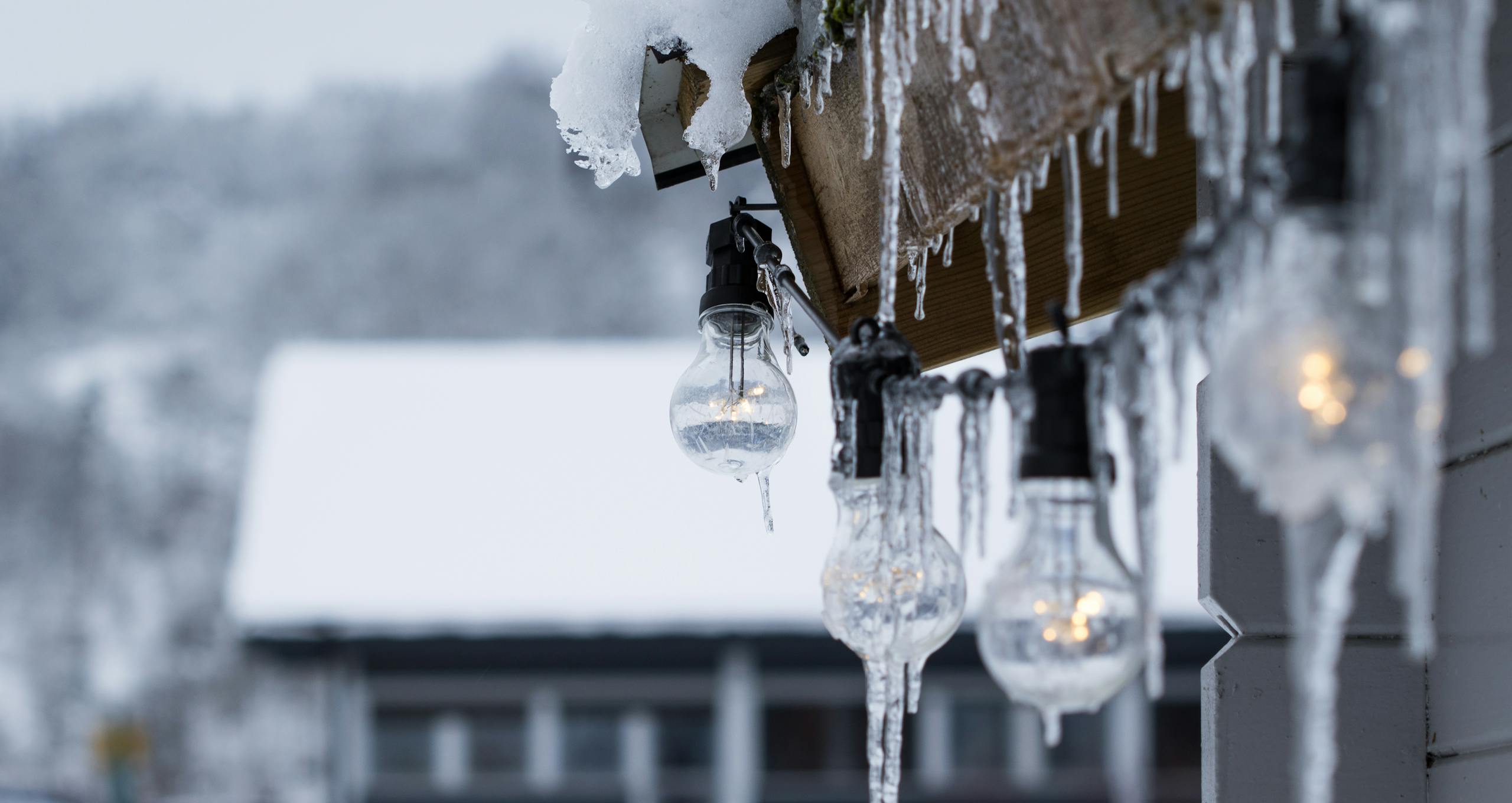
Outdoor Christmas lights turn an ordinary house into the brightest home on the block, and most families hang them in a single Saturday afternoon without giving the electrical side of the job much thought. That is usually where the trouble starts. Cold weather, roof runoff, road salt, summer heat in an attic, and eleven months inside a cardboard box all take a toll on light strands and extension cords, so a set that worked perfectly last December can easily fail this year without showing any obvious damage from a distance. Fire officials tie hundreds of home fires every season to holiday decorations, and a large share of those fires trace back to cracked insulation, damaged plugs, or circuits carrying far more load than they were designed to handle. The good news is that a careful ten minute inspection catches nearly every one of those problems before power ever reaches the display. The checks below are the same ones our electricians run before energizing any holiday lighting job in East Canton, Canton, North Canton, and the surrounding Stark County communities. Work through them in order, and you will spend December enjoying your display instead of standing in the cold trying to figure out why the breaker keeps tripping.
Safety Checks to Make Before Plugging In Outdoor Christmas Lights
Every safe holiday display starts with three things: undamaged equipment, a properly protected outlet, and a cord that is actually built for wet weather. Skipping any one of those three creates a weak link, and water always finds the weak link first. Homeowners often assume that because a strand lit up last year, it is still safe, but insulation becomes brittle in cold storage and rodents love to chew on wire bundles left in a garage or shed. Outdoor receptacles fail quietly as well, since a ground fault circuit interrupter that no longer trips looks exactly like one that works. The checks in this section take very little time and require no tools beyond your eyes and hands. Do them on a clear day, in good light, with everything unplugged and spread out on a dry surface where you can actually see what you are handling.
Inspecting Cords and Sockets Before Plugging In Outdoor Christmas Lights
Pull every strand out of storage and lay it across a driveway or garage floor before you climb a single ladder, because damage is nearly impossible to spot once a strand is twenty feet up in a bush or along a roofline. Run the entire length of wire through your hands slowly and feel for stiff spots, flattened sections, nicks, cuts, or any place where the outer jacket has split and exposed the copper conductor underneath. Look closely at the molded plug on each end, since that connection point takes the most abuse and often cracks where the wire enters the plastic body. Check that all three prongs are present and straight on grounded strands, and never file down or snap off a ground pin to force a plug into an older receptacle. Inspect each socket for cracked plastic, corrosion, moisture staining, or a bulb that wobbles loosely in place, because a loose bulb creates arcing and heat right where the light sits against your siding or shrubbery. Any strand with damaged insulation goes in the trash, not back on the house, and no amount of electrical tape makes a compromised outdoor strand safe again. Replacement light sets are inexpensive compared to the cost of a fire or a damaged exterior wall.
While you are inspecting, confirm that each set is actually listed for outdoor use rather than indoor use only. Underwriters Laboratories uses a simple color code on the tag attached near the plug, and a red holographic tag means the set is approved for indoor and outdoor installation while a green tag means indoor use only. Indoor sets use thinner insulation and sockets that are not sealed against moisture, so hanging them along a gutter or wrapping them around a porch column invites a ground fault the first time snow melts. If a tag has fallen off and you cannot verify the rating, treat that set as indoor only and buy a replacement. Mixing indoor and outdoor strands on the same run is a common mistake in older collections that have grown over the years, and it defeats the protection built into the outdoor equipment. Take a moment to sort your collection into two clearly labeled bins so this question never comes up again. Future you will appreciate the fifteen minutes spent organizing.
Bulb condition matters just as much as wire condition, and burned out or missing bulbs cause more problems than most people realize. On older incandescent series strands, a missing bulb leaves the socket energized and open to rain, and a burned out bulb forces the remaining bulbs to carry additional voltage, which shortens their life and raises operating temperature. Replace missing bulbs with the exact voltage and wattage the manufacturer specifies, never with whatever spare happens to fit the socket. On LED sets, check for sections that flicker or glow dimly, since that behavior usually points to a failing rectifier or moisture that has already worked its way into the strand. Give every plug and socket a firm wiggle to confirm nothing is loose before you commit to hanging it. Set aside any questionable strand rather than gambling on it lasting through the season. Planning a display that goes beyond a few strands along the roofline? Click here for our outdoor lighting installation service and let a licensed electrician design and power it correctly.
Testing GFCI Outlets Before Plugging In Outdoor Christmas Lights
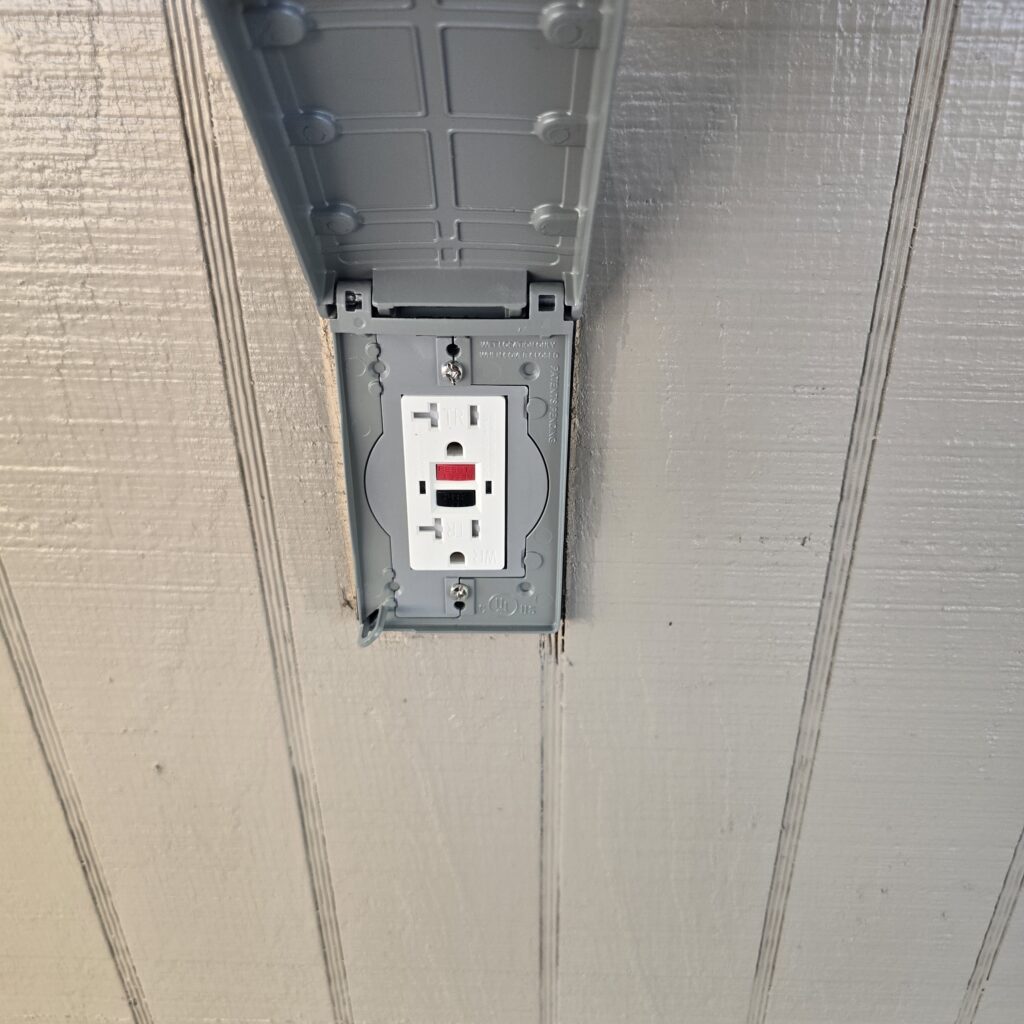
Every outdoor receptacle in a modern home is required to have ground fault circuit interrupter protection, and that protection is the single most important safety device standing between your family and a serious shock. A GFCI monitors the current flowing out on the hot conductor against the current returning on the neutral, and it cuts power in a fraction of a second when it detects even a small imbalance caused by electricity leaking to ground through water, a damaged cord, or a person. Testing one takes about five seconds. Press the button marked TEST, confirm that power to the outlet shuts off, then press RESET and confirm that power returns. If the device does not trip when tested, or will not reset afterward, it has failed internally and needs to be replaced before you plug anything into it. Manufacturers recommend testing these devices monthly, and the beginning of the holiday season is a perfect reminder to do exactly that.
Homes built before the mid 1970s frequently have exterior receptacles with no ground fault protection at all, and some have two prong outlets with no equipment grounding conductor. Those outlets should never power a holiday display. Water and electricity meet constantly during an Ohio December, between wet snow, freezing rain, and the meltwater that runs off a roof onto whatever sits below it, and an unprotected circuit gives that moisture a direct path through anything that touches the strand. Adapters that convert a three prong plug to fit a two prong receptacle do not create a ground and offer no protection whatsoever. Upgrading an exterior receptacle to a properly protected device is a short, affordable job for a licensed electrician and it protects far more than your Christmas lights, since the same outlet powers your leaf blower, pressure washer, and power tools the rest of the year. Need protected outdoor outlets before the season starts? Click here for our GFCI outlet installation service.
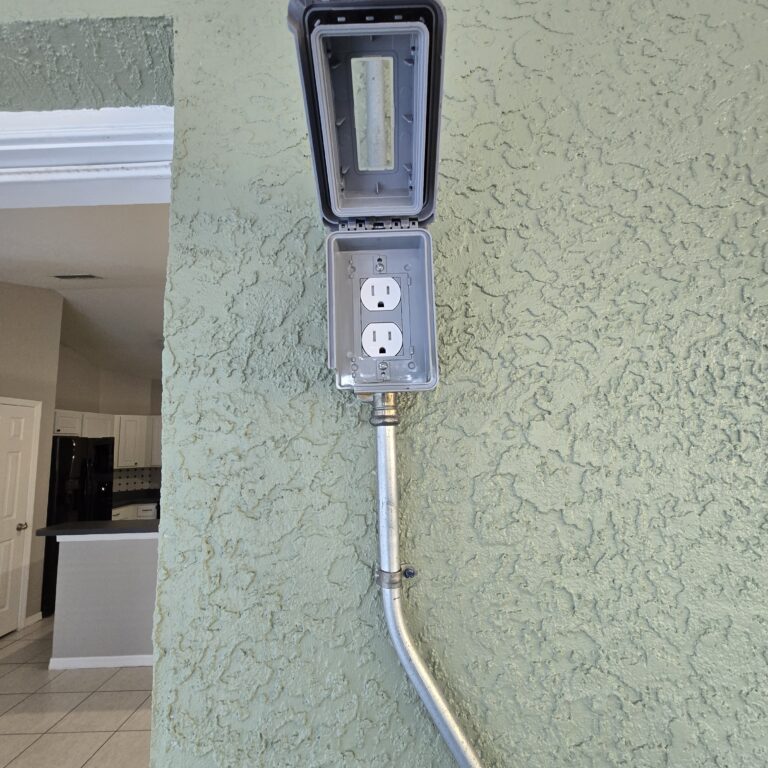
The cover over that outlet matters as much as the device behind it. Exterior receptacles in wet locations require a weatherproof enclosure that stays sealed while a plug is inserted, commonly called an in use cover or bubble cover, and the older flat flip lids only protect the outlet when nothing is plugged in. That distinction is exactly why so many holiday displays trip a breaker after the first hard rain, because a flip lid propped open by a cord funnels water straight into the receptacle. Check that your cover closes fully with a cord in place, that the gasket is intact, and that the mounting screws are tight against the siding. If the plastic has yellowed and cracked from years of sun exposure, replace it. A quality in use cover costs very little and prevents the most common cold weather nuisance trip our technicians get called out to fix in December.
Choosing Outdoor Rated Extension Cords for Outdoor Christmas Lights
An extension cord is not a generic accessory, and the flat brown cord from behind your couch has no business running across a lawn in December. Cords approved for exterior use carry a W in the type designation printed along the jacket, and common outdoor markings include SJTW and SJEOW. Those cords use thicker, more flexible insulation that resists water, sunlight, and cold without cracking, while indoor cords stiffen and split at low temperatures. The jacket also tells you the gauge, and lower numbers mean heavier wire with more current carrying capacity. As a general rule, a 16 gauge cord handles light loads up to about 25 feet, a 14 gauge cord is the better choice out to about 50 feet, and runs approaching 100 feet or carrying heavier loads should use 12 gauge. Undersized cords heat up and lose voltage over distance, which dims your display and creates a real fire risk under the mulch or snow where nobody can see it.
How you route the cord matters as much as which cord you buy. Keep every connection point elevated off the ground and out of standing water, or protect it with a cord connection cover made for the purpose. Create a drip loop by letting the cord hang below each connection so water runs down and falls off instead of following the wire into the plug. Never run a cord under a rug, through a door jamb, or across a window sash where the frame pinches the insulation, and never staple or nail directly through a cord to hold it in place. Use insulated plastic clips, gutter hooks, or light clips designed for the job, all of which are sold in bulk for a few dollars. Avoid daisy chaining multiple extension cords together, since each additional connection adds resistance and creates another point for water to enter. One properly sized cord run directly to the display is always safer than three shorter cords linked end to end.
Timers and controllers need the same scrutiny as the cords. Any timer sitting outside must be rated for outdoor use and mounted so that water cannot pool inside the housing, and the load rating stamped on it must exceed the total amperage of everything plugged into it. Mechanical timers rated only for indoor use fail quickly when temperatures drop, and a failed timer can stick in the on position and leave your display energized all night unattended. A better approach for many homes is a switched exterior receptacle or a controller mounted inside the garage that feeds a protected outdoor circuit. Keep in mind that the National Electrical Code treats holiday lighting as temporary wiring and allows it to remain installed for a maximum of 90 days, so plan on taking the display down after the season rather than leaving it up until spring. Cords and clips degrade fast under Ohio weather, and a display left up year round will not be safe by the time next December arrives.
How to Avoid Overloading Circuits With Outdoor Christmas Lights
Overloaded circuits cause more holiday electrical failures than any other single issue, and the frustrating part is that a circuit can be overloaded without ever tripping a breaker. Breakers protect the wiring in your walls from overheating, not the extension cord lying in your flower bed, and they do not react instantly to a load that sits just above the safe continuous limit. The math involved is simple, but almost nobody does it before hanging lights. A typical exterior receptacle in an older home shares a 15 amp circuit with the garage, the porch light, and sometimes a bathroom or two, which leaves far less capacity available than homeowners assume. Understanding your available load lets you plan a display that runs all season without nuisance trips, dimming, or warm plugs. It also tells you when it is time to add a dedicated circuit instead of stretching what you already have.
Calculating Amp Load for Outdoor Christmas Lights
Start with the circuit itself. A 15 amp circuit at 120 volts can deliver 1,800 watts at absolute maximum, but continuous loads like holiday lighting are limited to 80 percent of that rating, which works out to 12 amps or roughly 1,440 watts. A 20 amp circuit follows the same rule and allows 16 amps or about 1,920 watts of continuous load. Those numbers cover everything on the circuit, not just your lights, so subtract anything else already drawing power from it before you start adding strands. Find the breaker that feeds your outdoor receptacle, note its amperage, and then walk the house to identify what else goes dark when you switch it off. That five minute exercise gives you a real budget to work with instead of a guess.
Next, add up what your display actually draws. Every light set carries a label listing wattage or amperage, and the numbers add up faster than most people expect on traditional incandescent strands. Large C9 incandescent bulbs typically pull around 7 watts apiece, meaning a single 25 bulb strand draws roughly 175 watts, and eight of those strands alone will consume nearly your entire safe 15 amp budget. Smaller C7 bulbs run about 5 watts each, and mini incandescent bulbs are far lower at a fraction of a watt, though a long run of them still adds up. Inflatable decorations, projectors, and animated figures carry motors and transformers that draw additional current, so include those in your total. Write the numbers down on paper as you go rather than trying to keep a running tally in your head. If your total lands anywhere near the limit, split the display across two circuits or reduce the load.
Manufacturer limits on connecting strands end to end exist for the same reason and must be respected. Traditional incandescent mini sets usually cap out at three to five strands connected in series, because the wire gauge inside the strand can only carry so much current for the sets downstream of it. Exceeding that limit overheats the first plug in the chain, and that plug is often the one buried in a bush where nobody sees the melted plastic until it is too late. LED sets tolerate far longer runs, frequently twenty or more strands, but the number printed on the box is a hard limit rather than a suggestion. Warning signs of an overloaded run include noticeably dim bulbs at the far end, plugs that feel warm to the touch, a faint buzzing sound, or a breaker that trips after an hour of operation. Any of those symptoms means you should unplug the display and rework it before continuing. Warm plugs in particular deserve immediate attention, since heat at a connection point is the direct precursor to a fire.
Switching to LED Outdoor Christmas Lights to Cut Circuit Load
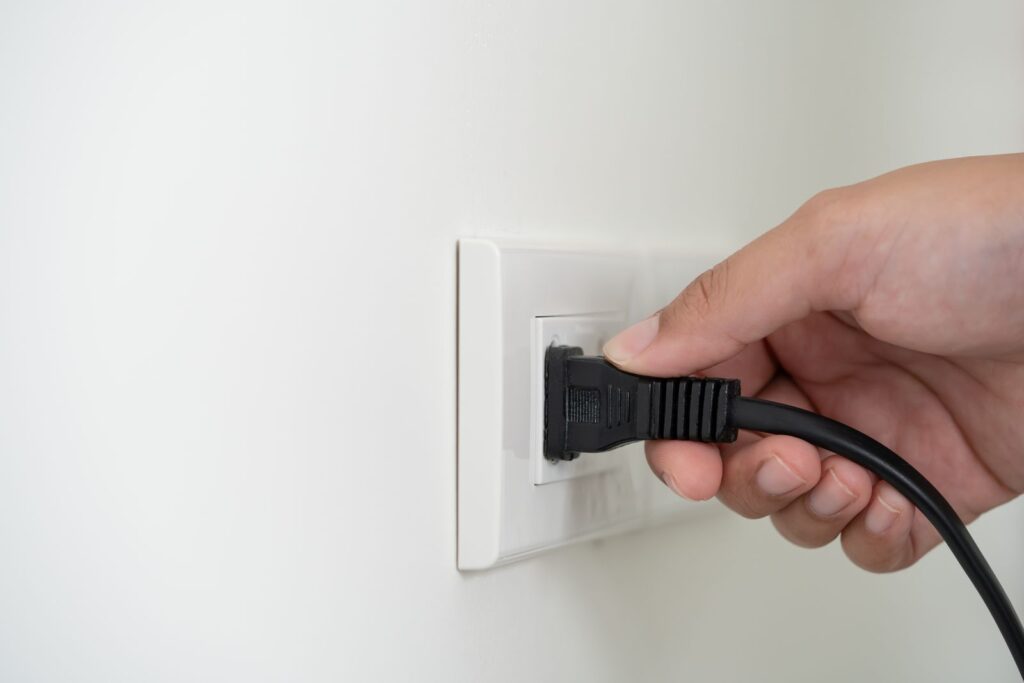
LED holiday lighting solves the overload problem more effectively than any other change a homeowner can make. An LED bulb produces the same visible brightness while consuming somewhere between 70 and 90 percent less power than its incandescent equivalent, which means a display that once maxed out a circuit can shrink to a small fraction of that load. Where eight incandescent C9 strands might consume 1,400 watts, an equivalent LED display commonly draws under 100 watts total. That difference shows up on your December utility bill, and it also frees up capacity so you can expand the display without adding circuits. LED strands run cool to the touch, which matters when lights sit against dry wreaths, garland, or wood trim for six weeks straight. They also use solid plastic lenses instead of thin glass, so they survive being dropped, stepped on, or knocked off a gutter by ice.
Longevity makes the switch pay for itself over several seasons. Quality LED holiday sets are rated for tens of thousands of hours, and many homeowners get eight or ten years out of a set that gets stored properly between seasons. Incandescent bulbs burn out constantly by comparison, and each failure means climbing a ladder in cold weather to replace it. LED strands also wire their sections in parallel groupings, so one dead bulb rarely takes down an entire run the way it does on older series wired sets. Look for sets with sealed lenses, coaxial or fully molded connectors, and a red UL tag confirming outdoor approval. Commercial grade LED sets cost more upfront but use heavier wire and better weather sealing, which is worth the difference on a display you plan to keep for a decade.
Plan on replacing your collection gradually rather than all at once if budget is a concern. Convert the largest runs first, since those carry the most load, and keep incandescent sets only for small accent areas where the total draw is negligible. Do not mix incandescent and LED strands on the same connected run, because the two types have different electrical characteristics and connecting them end to end can cause flickering, premature failure, or damage to the LED driver circuitry. Keep each type on its own separate run plugged into its own outlet. Store the sets you keep in a dry, temperature stable location rather than an uninsulated attic, and wrap them around a reel or piece of cardboard instead of stuffing them in a bag where connectors get crushed. Not sure your existing wiring can handle the display you have in mind? Click here for our electrical inspection service and get a clear answer before you hang a single strand.
Adding Dedicated Outdoor Outlets for Outdoor Christmas Lights
Many homes in East Canton and the surrounding townships were built with a single exterior receptacle, usually near the back door, and that one outlet was never intended to power a full front yard display. Running a hundred feet of extension cord around the house from that outlet is inconvenient, creates trip hazards, and puts every connection point out in the weather. A dedicated outdoor circuit solves all of it at once. An electrician can install weather rated, GFCI protected receptacles at the front of the house, under the eaves, along a porch, or near the driveway, each fed from a properly sized circuit at the panel with capacity to spare. Eave mounted receptacles are especially useful for roofline displays, since they eliminate the long cord run entirely and keep every connection up out of the snow.
Switch control turns a good installation into a great one. Adding a switch inside the house, or a smart controller that works from your phone, means you never have to walk out into the cold to plug in or unplug the display. That convenience also improves safety, because homeowners who can easily shut the lights off actually do so rather than leaving them energized around the clock. Photocell and astronomic timer options handle the schedule automatically, turning the display on at dusk and off at a set hour every night without any input from you. These same receptacles and switches serve you the rest of the year for landscape lighting, pressure washing, yard tools, and outdoor entertaining. The investment gets used far more than twelve weeks a year.
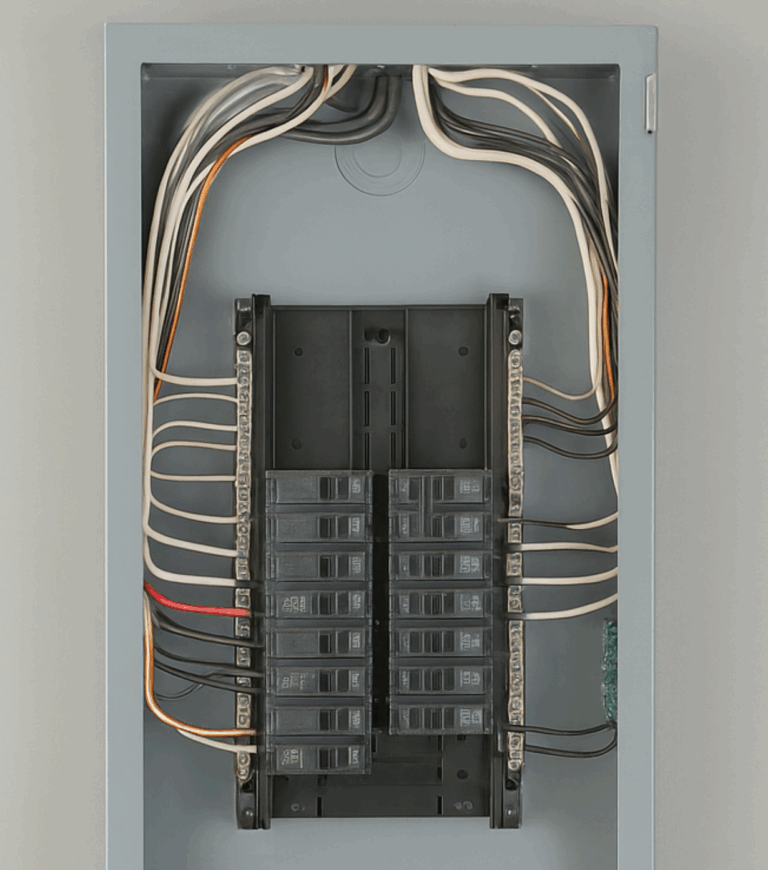
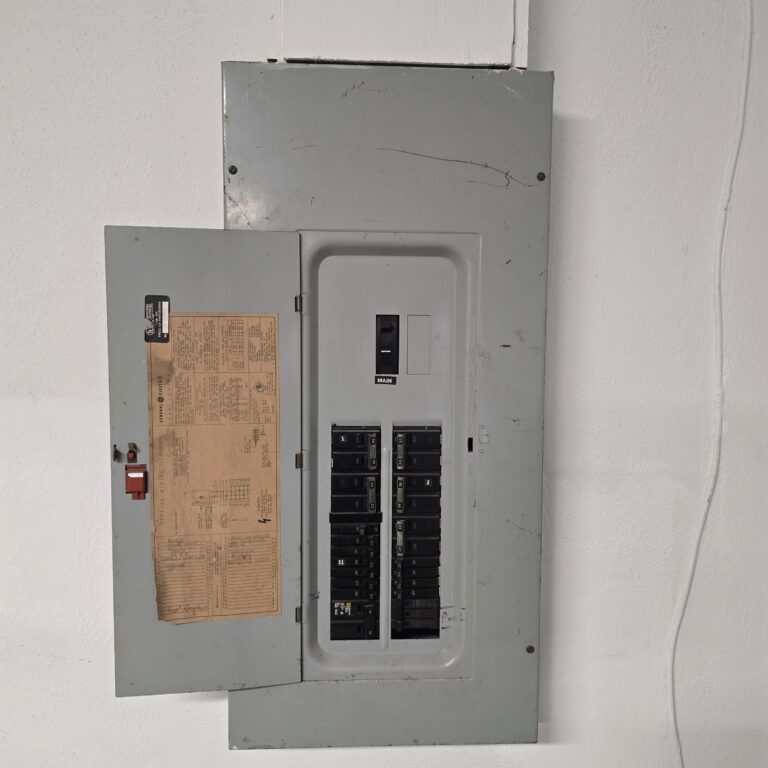
Panel capacity is the piece homeowners cannot evaluate on their own, and it is where a licensed electrician earns their fee. Older homes running a 100 amp service with a full panel may not have room for another circuit without a panel upgrade or the addition of a subpanel, and cramming a tandem breaker into a panel that does not allow it creates a code violation and a safety hazard. An electrician evaluates your total connected load, checks the condition of the panel and its bus, verifies grounding and bonding, and confirms that the service entrance can support what you want to add. If the panel is at capacity, an electrical panel upgrade gives you room for the holiday circuit plus everything else on your list, from an EV charger to a hot tub. Doing that work in the fall is far easier than trying to schedule it during a December cold snap.
Why You Need a Licensed Electrician Before Plugging In Outdoor Christmas Lights
Hanging strands is a homeowner job, but the wiring that feeds them is not. The moment your display requires a new outlet, a new circuit, a panel change, or any repair to existing exterior wiring, you have crossed into work that belongs to a licensed and insured electrician. Ohio weather is brutal on outdoor electrical equipment, and installations done without proper weatherproofing, correct conductor sizing, or code compliant GFCI protection fail in ways that are expensive and occasionally dangerous. A licensed electrician also documents the work, pulls permits where required, and leaves you with an installation that will not create problems during a future home sale or insurance claim. Gragg Electrical Services has been handling this exact work across Stark County for over twenty years. We would rather help you set the display up correctly in October than pull a melted receptacle out of your siding in December.
When to Call an Electrician for Outdoor Christmas Lights Problems
Certain symptoms mean the display comes down immediately and the phone comes out. A breaker that trips repeatedly is not a nuisance to be worked around by resetting it, because it is doing its job and telling you the circuit is carrying more than it should or that a fault exists somewhere in the wiring. A GFCI that trips the instant you plug in a strand is reporting current leaking to ground, which is exactly the condition that shocks people. Burning smells, scorch marks around a receptacle, warm cover plates, and visible arcing all require an electrician the same day. Do not reset the device and hope for the best.
Other warning signs are subtler but just as important. Lights that dim noticeably when a furnace or garage door opener kicks on suggest an overloaded or undersized circuit somewhere in the system. Outlets that no longer hold a plug firmly have worn contacts that arc under load. A receptacle that works intermittently, or a run of lights that flickers in wind, usually points to a loose connection that will only get worse as temperatures drop. Aluminum branch wiring, cloth insulated conductors, and ungrounded two prong receptacles all deserve professional evaluation before you add any seasonal load to them. Lights failing at nine on a Friday night in December? Click here for our emergency electrician service, available around the clock.
Ladder safety deserves a final mention because it causes more holiday injuries than the electrical work itself. Keep any ladder, especially an aluminum one, at least ten feet away from the overhead service drop where the utility line enters your home, and never let a strand or cord contact that line. Set ladders on firm, level ground rather than frozen mud or an icy driveway, and have someone hold the base while you work. Roof edges covered in frost are far slicker than they look at seven in the morning. If your display requires working near the service entrance, on a steep roof, or at any height you are not comfortable with, hire it out. No decoration is worth a fall or a contact with an energized service conductor.
Upgrades That Make Outdoor Christmas Lights Safer Every Year
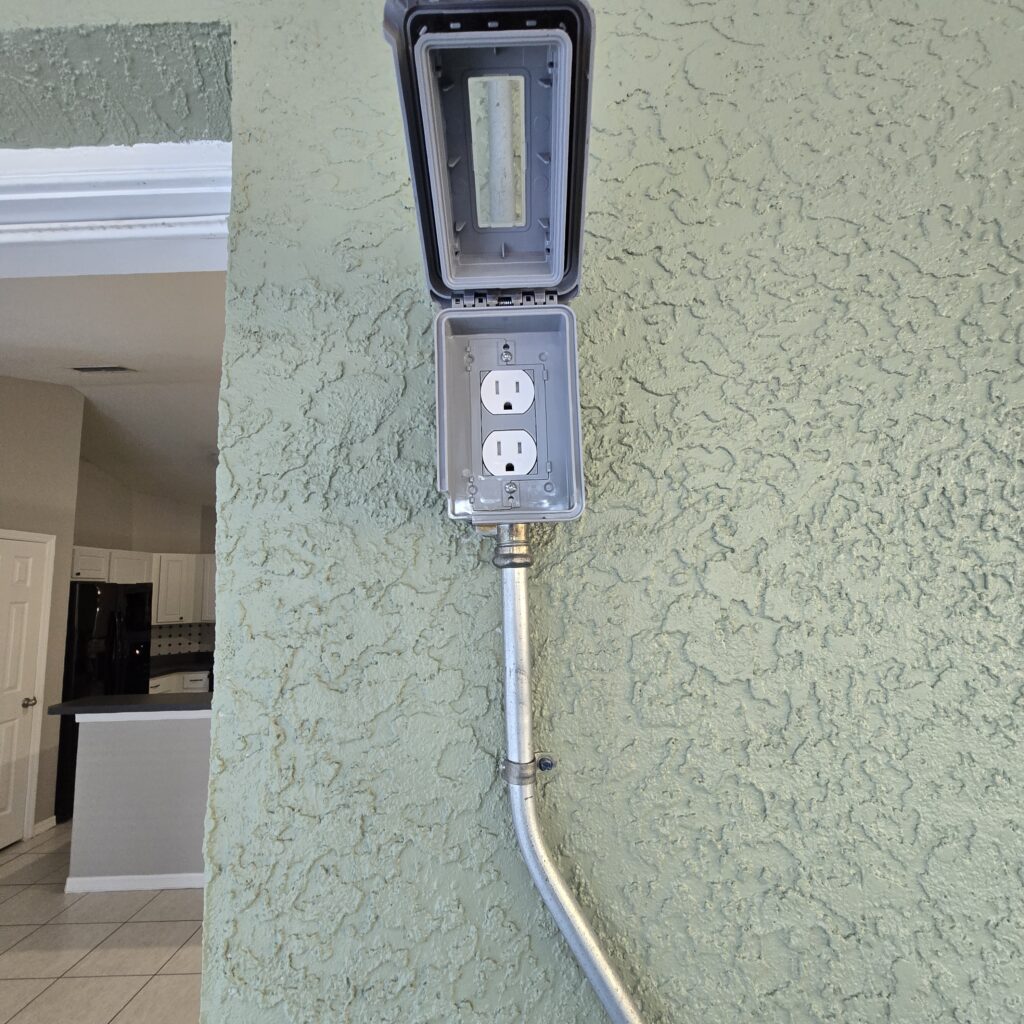
The best time to improve your exterior electrical system is well before the season begins, when schedules are open and the ground is not frozen. Adding weather rated receptacles at the front of the house, under the eaves, and near the landscaping eliminates long cord runs permanently. Upgrading old flip lid covers to in use covers stops water intrusion at the source. Replacing outdated or missing GFCI protection brings your exterior circuits into line with current code and protects everyone who touches an outdoor cord. These are small, affordable jobs individually, and together they transform how easy the holidays are to set up.
Surge protection is the upgrade most homeowners overlook. Winter storms, utility switching, and grid disturbances send voltage spikes into a home’s wiring, and those spikes destroy LED drivers, timers, controllers, and smart plugs along with your televisions and appliances. A whole house surge protector installed at the panel clamps those spikes before they reach anything connected downstream. It costs a fraction of what a single round of damaged electronics would, and it protects continuously rather than only on the circuits where you remembered to plug in a power strip. Want to protect your electronics and your lighting controls from winter storm surges? Click here for our whole house surge protector service.
Homeowners who plan ahead also tend to get more out of their systems year round. The same circuit that powers December lights runs landscape lighting in June, holiday inflatables in October, and a pressure washer in April. Adding a switched, timer controlled exterior circuit means one installation serves every season. Pair that with an evaluation of your panel capacity and you set the foundation for future additions like a generator, a pool, or an EV charger. Building capacity intentionally is always cheaper than reacting to a failure.
Why Choose Gragg Electrical Services for Outdoor Christmas Lights Support
Gragg Electrical Services has spent more than twenty years wiring homes and businesses throughout East Canton, Canton, North Canton, Louisville, Hartville, Massillon, Uniontown, Green, Alliance, and the surrounding communities. We know how local homes are built, what the older neighborhoods have behind their walls, and how Stark County weather treats exterior electrical equipment. Every job we complete is backed by our Lifetime Craftsmanship Guarantee, which means the workmanship stands behind itself for as long as you own the home. Our crews show up on time, treat your property with respect, and clean up completely before they leave. You will never find our technicians tracking mud across your floors or leaving wire scraps in your landscaping.
We also understand that electrical problems do not wait for business hours, which is why our emergency service stands by 24 hours a day, seven days a week, holidays included. A tripped circuit on Christmas Eve gets the same urgent response as one in the middle of a Tuesday. Financing is available through GreenSky and Turns for larger projects like panel upgrades, new circuits, and full exterior lighting installations, so a needed improvement does not have to wait for the right month. We quote clearly and explain the reasoning behind every recommendation. If a repair is all you need, we will tell you that rather than selling you a replacement.
Getting your exterior wiring evaluated before the season starts is the simplest way to guarantee a stress free December. Call Gragg Electrical Services at (330) 488-8009 or email info@graggelectrical.com to schedule an inspection, add protected outdoor receptacles, or design a lighting installation built to handle everything you want to hang. We will confirm your circuits have the capacity for your display, verify your GFCI protection is functioning, and address any exterior wiring issues before cold weather makes them worse. Our team is proud to serve East Canton and the surrounding communities, and we treat every home like it belongs to a neighbor, because it usually does. Reach out today and let us handle the electrical side so you can focus on the decorating.