Signs Your Home Is Pulling Too Much Power at Once
Fall in Stark County changes the way a house uses electricity, and the change happens faster than most homeowners expect. The furnace blower starts cycling again, space heaters come out of storage, and families spend more evenings indoors with lights, televisions, and kitchen appliances running well past dinner. Most homes absorb that seasonal load without any complaint at all; older homes and homes with newer high draw appliances often cannot. When too many large loads run at the same moment, your electrical system tells you about it through dimming lights, tripping breakers, warm cover plates, and outlets that never quite feel right. Those signals are not personality quirks of an old house, and they do not go away on their own. They are measurable symptoms of demand that has grown past what your service, panel, or branch circuits were designed to carry. Learning to read those signs early gives you time to plan a repair instead of reacting to a failure in the middle of a January cold snap.
Early Warning Signs Your Home Is Pulling Too Much Power at Once
Electrical overload rarely announces itself with a single dramatic event. It builds slowly, and the earliest evidence usually shows up in lighting, in the panel, and at the outlets you use most. A homeowner who notices the pattern in September has months of lead time before heating season pushes the system harder. A homeowner who ignores it often meets an electrician on a holiday weekend instead. The signs below are the ones our licensed electricians hear about most often on service calls throughout East Canton, Louisville, Hartville, and the surrounding townships. None of them should be filed away as normal, and several of them point to conditions that create real fire risk. Knowing what each symptom actually means helps you describe the problem clearly and get the right repair the first time.
Dimming Lights and Flickering That Signal Your Home Is Pulling Too Much Power
A brief dip in brightness when the central air compressor or well pump kicks on is common and usually harmless, because motors draw a large surge of current for a fraction of a second before they settle into normal operation. That momentary inrush pulls voltage down slightly across the whole system, and incandescent bulbs in particular react by dimming for an instant. The behavior becomes a warning sign when the dip lasts longer than a blink, repeats every time a large appliance starts, or grows more noticeable over a season. Lights that visibly sag while the electric dryer runs, then recover when the cycle ends, indicate that the load is consuming more of your available capacity than the system can comfortably supply. Voltage drop of that size also shortens the life of electronics and forces motors to run hotter than their design allows. If you have started replacing bulbs more often in one part of the house, that is a related clue worth mentioning. Persistent dimming under load deserves a measurement, not a guess.
Flickering that has nothing to do with an appliance starting points somewhere different, and it is often more serious. Lights that shimmer randomly, brighten unexpectedly, or change intensity in one half of the house while the other half stays steady can indicate a loose or failing neutral connection at the service entrance, the meter base, or the main panel. On a standard residential service, the neutral is what keeps voltage balanced between the two hot legs; when it loosens or corrodes, one side of the panel can climb well above 120 volts while the other side falls. Appliances on the high side can fail suddenly and expensively, and the heat generated at the loose connection can char insulation inside the panel. This condition does not improve with time, and it does not respond to changing bulbs or swapping a switch. A homeowner has no safe way to verify it without opening equipment that carries unprotected current. Call for a professional evaluation the same day you notice it.
Dimming that follows a specific circuit tells a smaller but still important story. When the lights in a single room fade every time a window unit, portable heater, or shop vacuum starts on that circuit, the wiring is carrying more current than it should over its length. Long runs, undersized conductors, and backstabbed outlet connections all add resistance, and resistance turns electrical energy into heat instead of useful work. That heat accumulates behind the wall where no one sees it. Homes built before the 1970s frequently have circuits that were adequate for two lamps and a radio and are now feeding a home office, a treadmill, and a space heater. Adding a dedicated circuit usually solves the problem permanently and costs far less than repairing fire damage. Our team can trace the affected circuit, measure voltage under load, and tell you exactly what the wiring is doing.
Breaker Trips and Warm Panels That Show Your Home Is Pulling Too Much Power
A breaker that trips is doing its job, and that fact gets lost in the frustration of walking to the basement for the third time in a week. Breakers are sized to protect the wire behind them, not the appliance plugged into them, and a trip means current exceeded what that conductor can safely carry. Standard branch circuits in a home are 15 or 20 amps, and any load that runs for three hours or longer is limited by code to 80 percent of that rating, which works out to 12 amps on a 15 amp circuit and 16 amps on a 20 amp circuit. A single 1,500 watt space heater draws roughly 12.5 amps by itself, so one heater can consume an entire 15 amp circuit before you plug in anything else. Add a television and a couple of lamps and the trip becomes inevitable. Never replace a tripping breaker with a larger one; doing so removes the protection and leaves the undersized wire to overheat unnoticed. The correct fix is redistributing the load or installing a properly sized dedicated circuit.
Main breaker trips belong in a different category and demand faster attention. When the main disconnect opens, your entire home briefly exceeded the rating of the service, which on many older Stark County houses is 100 amps or even 60 amps. That happens when heating equipment, a water heater, a range, and a dryer all run within the same few minutes on a system that was never calculated for that combination. Repeated main trips stress the breaker itself, and a main breaker that has opened many times can weaken and stop holding reliably. Losing power to the whole house in the middle of winter also puts your furnace, sump pump, and refrigerator out of service at the worst possible time. A load calculation will show precisely how much demand your home creates and how much headroom remains. If your home keeps outgrowing its service, our electrical service upgrade team can size and install the capacity your household actually needs.
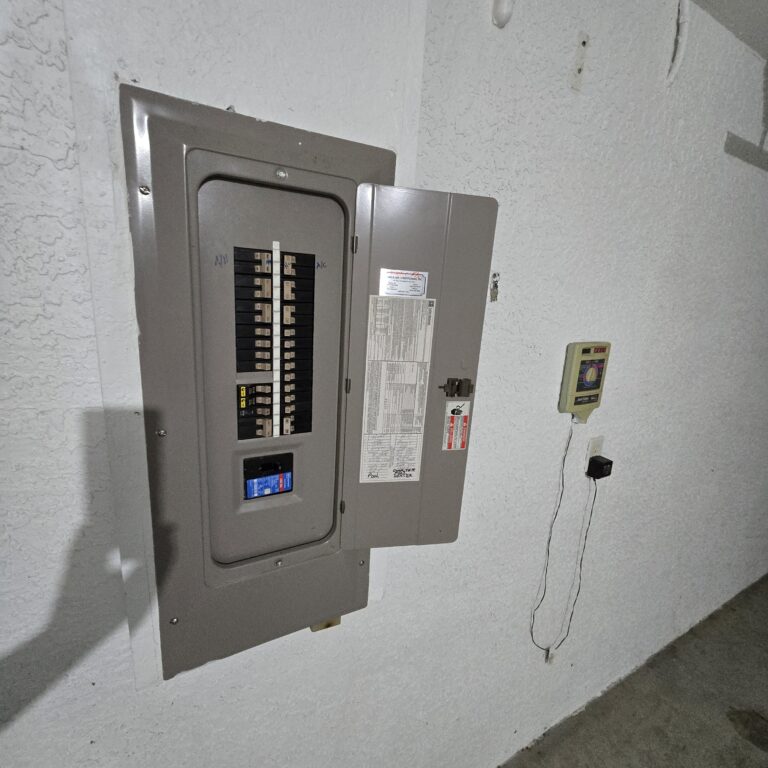
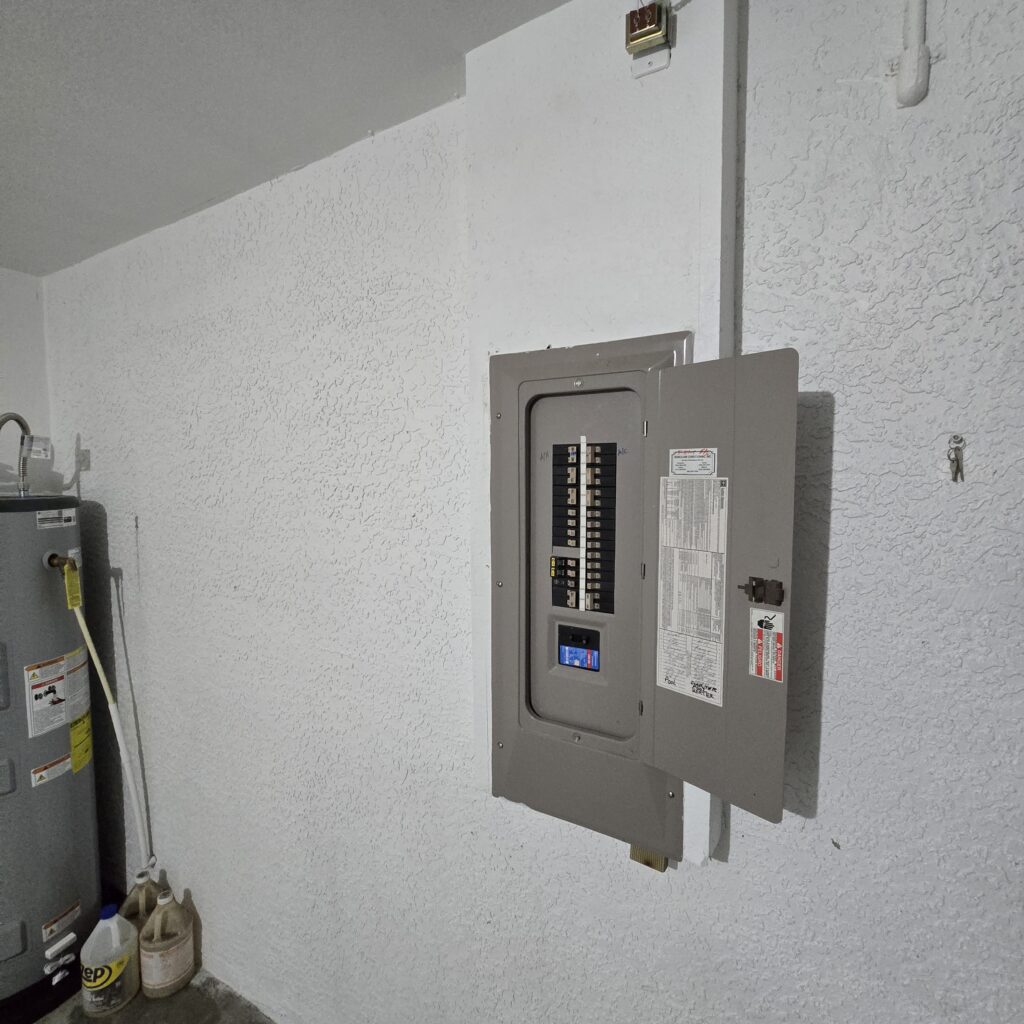
Heat and sound coming from the panel are the signs that should end the conversation and start a phone call. A panel cover that feels warm to the touch, a persistent buzzing or crackling from inside the enclosure, or any smell of hot plastic indicates a connection that is failing under load. Loose lugs, corroded aluminum conductors, double tapped breakers, and worn bus stabs all generate heat at the point of poor contact, and that heat compounds every time demand rises. Scorch marks, rust streaks, or discoloration around a breaker are visible evidence that the problem has been developing for a while. Certain older panels, including Federal Pacific and Zinsco equipment still found throughout the area, have documented histories of breakers that fail to trip when they should. Do not open the panel yourself, because the service conductors above the main remain energized even with the main breaker off. Shut off what you can, keep the area clear, and schedule an inspection immediately.
Outlet, Cord, and Appliance Clues That Your Home Is Pulling Too Much Power
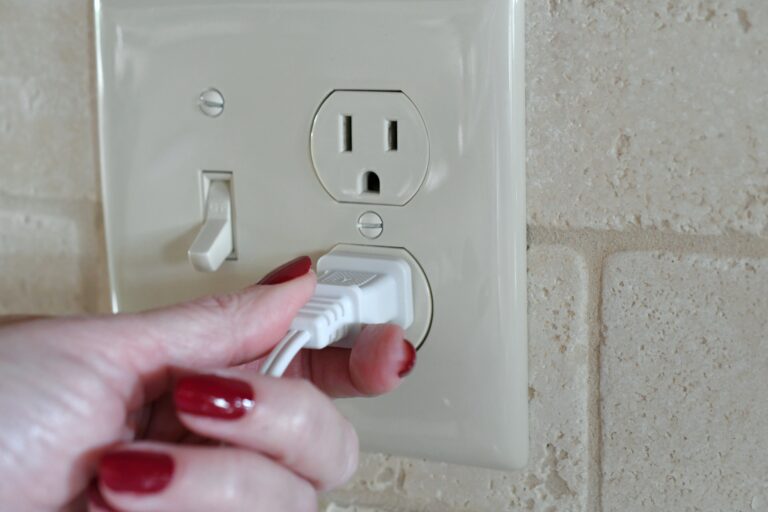
Receptacles carry the honest record of how a circuit has been treated. An outlet that feels warm during use, a cover plate that has yellowed or warped, or a plug that fits loosely all point to heat generated by resistance at the connection. Contacts inside a receptacle lose tension over decades of use, and a loose contact arcs microscopically every time current flows through it. That arcing pits the metal, raises resistance further, and accelerates the damage in a cycle that ends in charring. Kitchens, garages, and home offices see this first because they host the heaviest and most frequent loads. Any outlet showing brown discoloration around the slots should be taken out of service until it is replaced. Our electricians replace failing receptacles, verify the wiring behind them, and correct the backstabbed connections that cause so many of these failures.
Extension cords and power strips deserve their own mention, because they are usually a symptom rather than a solution. A power strip does not create additional capacity; it simply lets more devices share the same limited circuit. Cords that feel warm along their length, strips that trip their internal protection, or adapters that get hot at the wall all mean the circuit behind them is working harder than it should. Space heaters, window air conditioners, and portable EV cordsets should always plug directly into a properly rated wall receptacle rather than a cord or strip. When a room genuinely needs more places to plug things in, the answer is additional receptacles on adequate circuits. Relying on cords through the winter creates both an overload risk and a tripping hazard. Adding capacity is straightforward work that pays for itself in safety and convenience.
Appliance behavior rounds out the picture. Motors that hum louder than usual, refrigerator compressors that struggle to start, furnace blowers that hesitate, and LED fixtures that buzz can all reflect voltage that sags under heavy demand. Undervoltage forces motors to draw additional current to produce the same work, which raises operating temperature and shortens equipment life. Homeowners often replace an appliance that was never actually broken, only underfed. Newer high efficiency equipment tends to be more sensitive to poor supply than the equipment it replaced, so problems can surface right after an upgrade. Tracking which appliances misbehave and when gives an electrician valuable diagnostic information. Bring that list to your appointment and the troubleshooting goes much faster.
What Causes a Home to Pull Too Much Power at Once
Overload is almost always the result of demand growing while infrastructure stayed the same. The wiring in a 1965 ranch was designed for a household with far fewer electrical devices, no central air, no EV, and no induction range. Every decade since has added load without adding capacity, and the panel in the basement is often the original. Understanding the specific cause matters because the fixes are very different in scope and cost. Some homes need one dedicated circuit; others need a new panel; a growing number need a larger service from the utility. A proper diagnosis separates those cases instead of guessing. The three causes below account for the large majority of overload calls our team handles.
Old Service Size and Panel Limits That Cause a Home to Pull Too Much Power
Service size sets the ceiling for everything else in your home. Houses built in this region before roughly 1970 commonly received 60 or 100 amp services, and many of them still have exactly that. A 100 amp service was generous when the largest loads were a range and a water heater, but modern households routinely stack central air conditioning, electric dryers, dishwashers, microwaves, well pumps, and heating equipment on top of that baseline. The National Electrical Code provides load calculation methods that convert your square footage, appliances, and heating equipment into a real number in amps. When that number approaches or exceeds your service rating, the system has no reserve for the moments when everything runs together. Upgrading the service involves the utility, new service entrance conductors, a new meter base in many cases, and a new panel. It is planned work, and fall is a good time to schedule it before winter demand arrives.
Panel condition limits a home just as often as service size. A panel can be rated 200 amps and still be functionally full, because every panel has a maximum number of circuit spaces and a listed limit on how many tandem breakers it will accept. Installers who ran out of room sometimes double tapped two conductors under a single breaker terminal, which is not permitted on most breakers and creates a loose connection over time. Neutral and ground bars have their own rules about one conductor per terminal, and violations there produce the same heating problems. Older panels also suffer from bus corrosion, especially in damp basements and garages, and corroded bus stabs cannot maintain solid contact with a breaker. Replacement parts for discontinued panels are frequently unavailable or expensive. When your panel has no room and no reliable parts, an electrical panel upgrade solves several problems in one visit.
Grounding and bonding are the quiet half of this equation, and they are easy to overlook. A home with an inadequate grounding electrode system, missing bonding jumpers at the water and gas piping, or a corroded ground rod connection will not necessarily trip a breaker, but it will handle faults and surges poorly. Proper grounding gives fault current a low resistance path back to the source so that overcurrent devices operate quickly and clear the problem. Without it, a fault can linger and energize metal parts that people touch. Older services sometimes relied entirely on a metallic water line that has since been partly replaced with plastic, silently breaking the path. Any panel or service upgrade includes bringing the grounding system up to current requirements. It is one of the least visible improvements and one of the most important.
New Appliances and EV Chargers That Cause a Home to Pull Too Much Power
The single fastest way to outgrow an electrical service is to add a large continuous load, and Level 2 EV charging is the most common example today. A typical residential charger draws 32 to 48 amps continuously, which requires a 40 to 60 amp circuit dedicated to that purpose alone. On a 100 amp service already supporting a range, a dryer, and central air, that addition can consume nearly half the remaining capacity for hours at a stretch. Charging usually happens overnight, which overlaps with heating cycles during Ohio winters. Some homes solve this with a load management device that pauses charging when other demand peaks; others genuinely need a larger service. A load calculation performed before installation prevents an expensive surprise afterward. Our team handles EV charger installation from the calculation through the permit and final inspection.
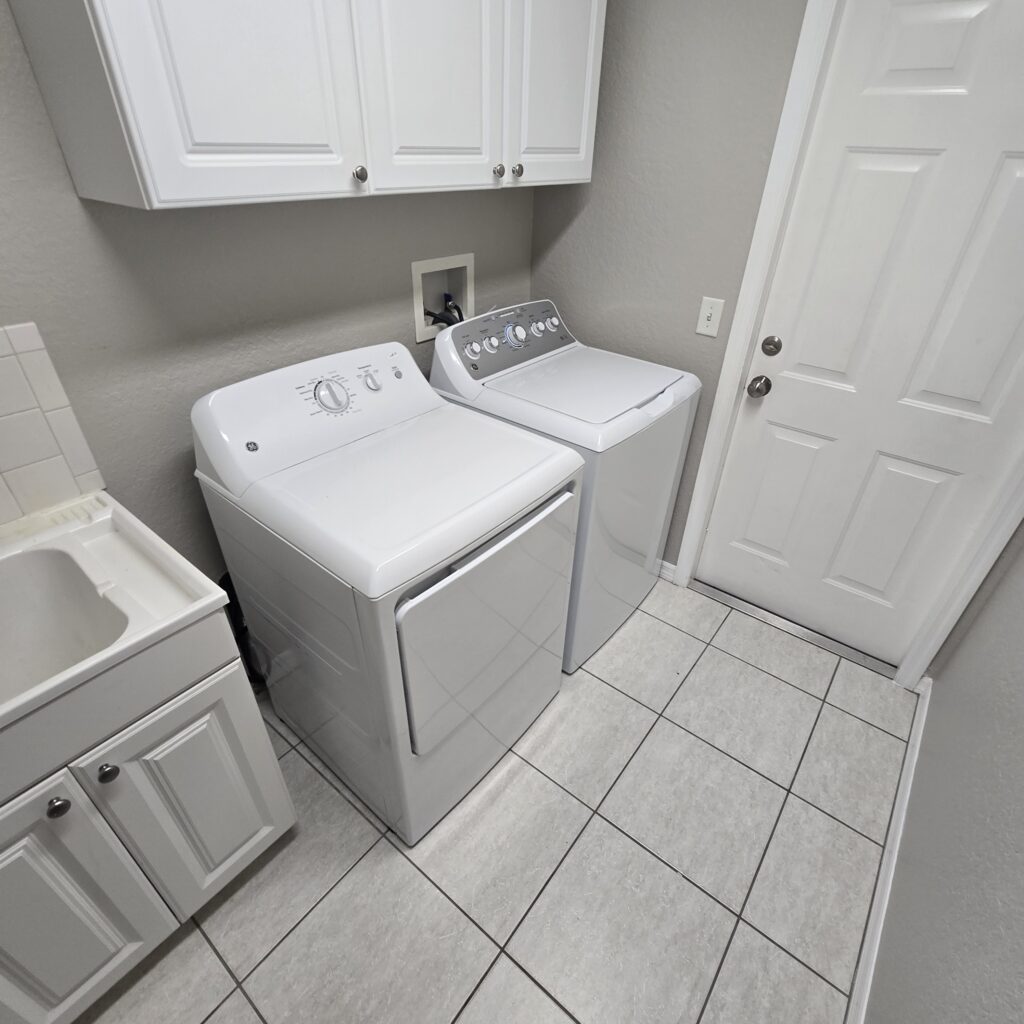
Kitchen and laundry upgrades create the same pressure in smaller increments. An induction range can draw 40 to 50 amps at full output, a heat pump water heater or standard electric water heater needs its own 30 amp circuit, and a modern electric dryer requires 30 amps of dedicated 240 volt supply. Kitchens also require multiple 20 amp small appliance branch circuits, plus separate circuits for the dishwasher and disposal, which older kitchens almost never have. Homeowners who convert from gas to electric appliances often discover that the panel simply has no space left for the new breakers. Remodeling projects compound the issue by adding recessed lighting, exhaust fans, and additional receptacles to circuits that were already loaded. Planning the electrical work at the beginning of a remodel costs far less than reworking it at the end. We are glad to review appliance specifications before you buy.
Comfort and hobby equipment fills in the rest. Hot tubs typically require a 50 amp GFCI protected circuit, workshop tools draw heavy starting current, pool equipment runs for hours daily in season, and detached garages and pole barns need feeders sized for their full expected load. Portable space heaters multiply quickly as fall arrives, and three of them running in different rooms adds nearly 40 amps of demand to circuits that were never intended for it. Standby generators change the picture as well, since the transfer equipment and load management have to be coordinated with the existing panel. Each of these additions is reasonable by itself; the total is what matters. An electrician evaluates the sum rather than the individual pieces. That total is the number that determines what your home can support.
Overloaded Circuits and Wiring Problems That Cause a Home to Pull Too Much Power
Sometimes the service is adequate and a single circuit is the problem. Older homes frequently have one general purpose circuit serving an entire floor, including bedrooms, a hallway, and part of a living room. That arrangement was code compliant when it was installed and remains legal as existing work, but it cannot support the density of devices we use now. The fix is usually adding dedicated circuits for the heaviest loads and rebalancing what remains. Balancing across the two legs of the panel also matters, because a panel with most of its load on one side runs unevenly and can contribute to voltage imbalance. Our electricians map circuits, measure actual current draw, and document what feeds what. Many homeowners have never had an accurate panel directory, and that alone makes future work faster and safer.
Connection quality is the hidden variable in most overload complaints. Every splice, terminal, and device is a potential point of resistance, and resistance grows as connections loosen through thermal cycling. Aluminum branch circuit wiring installed in the late 1960s and early 1970s is especially prone to this, because aluminum expands and contracts more than copper and oxidizes in a way that increases resistance at terminations. Homes with that wiring need approved connectors and specific repair methods rather than ordinary wire nuts. Backstabbed receptacles, where conductors push into small spring clips on the back of a device, are another frequent failure point in homes from the 1980s forward. Replacing those connections with screw terminations makes a measurable difference. This is detailed work that pays off in reliability and safety.
Shared neutrals introduce a specific hazard worth knowing about. Multi wire branch circuits use two hot conductors and one shared neutral, and they must be arranged so both hots open together, typically with a handle tie or a two pole breaker. When that requirement is missed during a panel change or a remodel, the neutral can carry the sum of both circuits rather than the difference, which overloads a conductor that has no overcurrent protection of its own. Working on one half of such a circuit while the other remains live is also dangerous for anyone doing repairs later. These installations are common in kitchens and in homes where an electrician saved wire on a long run. Identifying and correcting them is part of a thorough inspection. Small corrections like this often eliminate mysterious problems that resisted every other fix.
Why You Need a Licensed Electrician When Your Home Pulls Too Much Power
Overload symptoms are measurable, and measurement is what separates a real diagnosis from a guess. A licensed electrician arrives with clamp meters, insulation testers, and thermal tools that show current draw and connection temperature under actual working conditions. That data determines the difference between a 400 dollar circuit addition and a full service upgrade, and no homeowner should have to guess which one applies. Permits and inspections protect you as well, since documented work satisfies insurers and future buyers. Winter demand in Ohio is not forgiving, and the time to correct capacity problems is before the first hard freeze. Gragg Electrical Services has been solving these problems for local families for more than twenty years.
What an Electrical Load Evaluation Looks Like When Your Home Pulls Too Much Power
An evaluation starts at the meter and works inward. Our electrician verifies the service rating, inspects the service entrance conductors and meter base for damage or corrosion, and confirms that the grounding electrode system is intact and properly bonded. Inside the panel, we check breaker sizing against conductor sizes, look for double taps and improper neutral terminations, and note any signs of heat, rust, or arcing. Torque specifications matter on modern equipment, and connections are verified rather than assumed. You receive a clear account of what we found and what it means.
Next comes the load side of the work. We perform a code based load calculation using your square footage, appliances, heating and cooling equipment, and any planned additions such as an EV charger or hot tub. Then we measure real current draw on the main and on individual circuits while the home operates normally, which reveals actual peak demand rather than theoretical numbers. Circuits are traced and the panel directory is corrected so every breaker is labeled accurately. Receptacles in problem areas are opened and inspected for heat damage and loose terminations. The result is a factual picture of how close your home runs to its limits.
Finally, we translate the findings into options with real costs. Some homes need nothing more than two dedicated circuits and a handful of receptacle replacements. Others need a new panel in the existing service size, and some need a coordinated service upgrade with the utility. We explain what each option solves, what it does not, and how long it takes. Financing through GreenSky and Turns is available when a larger project makes sense for your household. You decide with complete information and no pressure.

Repairs and Upgrades That Stop Your Home From Pulling Too Much Power
Dedicated circuits are the most common and most effective repair. Adding a properly sized circuit for a space heater location, a home office, a freezer, or a workshop removes that load from a shared circuit and eliminates the trips it was causing. Each new circuit is sized for its intended load and protected by the correct breaker, with AFCI or GFCI protection where the code requires it. Kitchens and laundry areas often benefit the most because their loads are heavy and frequent. The work is usually completed in a single visit. Homeowners are consistently surprised by how much a few dedicated circuits improve daily life.
Panel replacement addresses capacity, condition, and safety together. A new load center provides adequate circuit spaces, modern breakers with current safety features, clean and correctly torqued terminations, and an accurate directory. Homes with Federal Pacific or Zinsco equipment gain reliable overcurrent protection that the original panel could not guarantee. Grounding and bonding are corrected during the same project, and the installation is permitted and inspected. Adding a whole house surge protector at the panel is an inexpensive way to protect the electronics and appliances that overload conditions tend to damage. Most panel changes are completed in one day.
Service upgrades are the right answer when the calculation shows the home has genuinely outgrown its supply. Moving from 100 amps to 200 amps involves new service entrance conductors, a new meter base, a new panel, and coordination with the utility for the disconnect and reconnect. It gives your home the headroom for EV charging, electric heat, an addition, or a finished basement without further rework. Combined projects like this are more efficient than doing the pieces separately over several years. We handle the permitting and inspection process from start to finish. When the work is done, your home has capacity that matches the way you actually live.
Why Choose Gragg Electrical Services When Your Home Pulls Too Much Power
Gragg Electrical Services has served East Canton and the surrounding communities for more than twenty years, and that experience shows up in the diagnosis rather than in the sales pitch. Our licensed electricians work on Stark County homes every day and know the panels, wiring methods, and utility requirements common in this area. We back our work with a Lifetime Craftsmanship Guarantee, so the repair you pay for stays right. Our crews show up on time, protect your floors, clean up completely, and treat your home with respect. You get straight answers and a written explanation of what we found.
Electrical problems do not follow business hours, and a failing panel or a dead main breaker in December cannot wait until Monday. Our 24/7 emergency service is always on standby for East Canton, Canton, North Canton, Louisville, Hartville, Uniontown, Massillon, Alliance, Green, and the surrounding townships. If you smell burning plastic, hear buzzing from the panel, or see scorch marks anywhere in your electrical system, call us right away at (330) 488-8009. Larger projects can be financed through GreenSky and Turns so that safety does not have to wait on budget. We schedule promptly and communicate clearly about timing.
Fall is the ideal window to correct capacity problems before heating season stacks demand on top of everything else your home already runs. Schedule an evaluation now and you have time to plan the work instead of reacting to a failure. Call (330) 488-8009 or email info@graggelectrical.com to set up an appointment at 333 Cedar St S, East Canton, OH 44730. Want a complete review of your home’s wiring, panel, and grounding before winter arrives? Click here for our electrical inspection service. We look forward to keeping your home safe, powered, and ready for the season ahead.