Why Your Lights Flicker When Large Appliances Turn On
You flip on the air conditioner and the kitchen lights dim for a second. Maybe the dryer kicks on and every bulb in the hallway flickers. This is one of the most common electrical complaints homeowners report during the summer months in Stark County. Air conditioners, well pumps, refrigerators, and dryers all pull a large surge of power the moment they start. That sudden demand can cause a brief voltage drop across your home, and your lights show it first. A quick, minor flicker is often normal; a frequent or severe flicker is a warning sign. It can point to an overloaded circuit, an undersized electrical panel, or loose wiring that needs attention. This guide explains why your lights flicker when large appliances turn on, how to fix it, and when to call a licensed electrician.
What Causes Lights to Flicker When Large Appliances Turn On
Flickering lights almost always come down to voltage. Every appliance in your home shares the electrical service coming in from the utility. When a large appliance with a motor or compressor starts, it can draw several times its normal running current for a split second. That inrush current pulls voltage away from everything else on the system, including your lighting circuits. The result is a visible dip in brightness. In many East Canton and Canton area homes, this problem gets worse in July because air conditioners run constantly. Below are the three most common reasons lights flicker when large appliances turn on, from harmless to serious.
Voltage Drop Makes Lights Flicker When Large Appliances Start
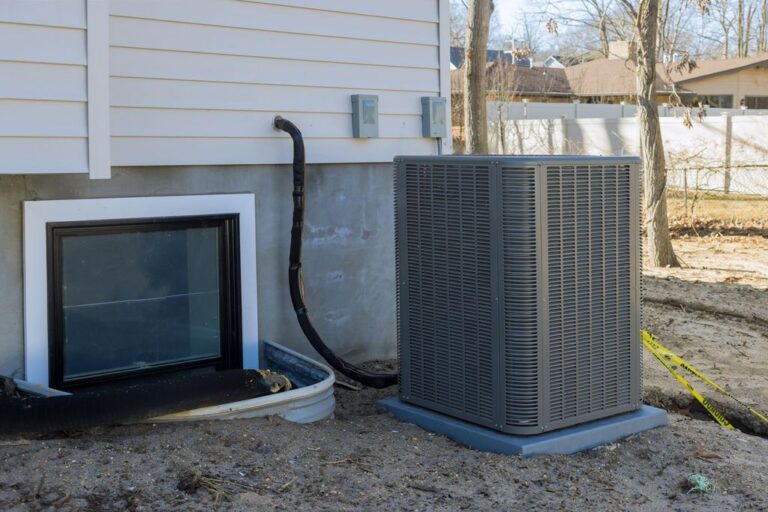
Voltage drop is the most common reason lights flicker when large appliances start. Your home receives 240 volts of service, split into two 120 volt legs at the panel. When an air conditioner compressor or dryer motor starts, it can briefly demand three to six times its normal running amperage. This is called inrush current, and it lasts only a fraction of a second. During that fraction of a second, the voltage available to your lights sags. Incandescent bulbs dim visibly, and many LED bulbs flicker because their drivers are sensitive to voltage changes. A single quick dip when a big appliance starts is generally normal behavior. It becomes a problem when the dip is deep, lasts longer than a moment, or happens with smaller appliances.
The distance electricity travels also affects voltage drop inside your home. Long wire runs from the panel to a bedroom or detached garage lose voltage along the way, and that loss gets worse under heavy load. Undersized wire makes the problem even more noticeable. Older homes around Canton, Massillon, and Louisville were often wired with smaller gauge conductors than modern code requires. Those older circuits were never designed to handle a modern central air conditioner, an electric range, and a finished basement full of electronics at the same time. When demand climbs on a summer afternoon, the whole system runs closer to its limit. Lights flickering across multiple rooms is a sign the service itself is strained, not just one circuit.
Utility side issues can cause the same symptom, so it helps to rule them out. If your neighbors see their lights flicker at the same time yours do, the problem may sit with the transformer or the service lines feeding your street. A loose connection at the utility drop or the meter base can also cause flickering that a homeowner cannot fix. A licensed electrician can measure voltage at your panel under load and determine which side of the meter is responsible. This testing takes the guesswork out of the diagnosis. It also documents the problem if you need to file a report with your utility company. Never open your meter base or panel to check this yourself; that equipment can remain energized even with breakers off.

An Overloaded Circuit Causes Lights to Flicker When Large Appliances Turn On
An overloaded circuit is another frequent reason lights flicker when large appliances turn on. Many homes have lighting and receptacles sharing the same circuit, which was common practice decades ago. When a window air conditioner, space heater, or microwave shares a circuit with your lights, every startup steals power from those bulbs. A 15 amp circuit can only deliver so much before voltage sags and breakers heat up. Modern living has multiplied the loads on these old circuits with computers, gaming systems, chargers, and kitchen gadgets. The National Electrical Code now requires dedicated circuits for most major appliances for exactly this reason. If your lights flicker every time one specific appliance runs, a shared circuit is a prime suspect.
Overloaded circuits do more than annoy you with flickering; they create real safety risks. Wires carrying current near their maximum rating generate heat inside your walls. Over time, that heat degrades wire insulation and loosens terminal connections at outlets and switches. Breakers that trip repeatedly are doing their job, but repeated tripping also signals a circuit that needs to be redesigned. Some homeowners respond by installing a larger breaker, which is extremely dangerous and violates code. The breaker size must match the wire gauge, and oversizing a breaker removes the protection that prevents fires. The correct fix is redistributing loads or adding new circuits, not forcing more current through old wire.
Diagnosing an overloaded circuit starts with mapping what shares the affected breaker. A licensed electrician will identify every outlet, light, and appliance on the circuit, then calculate the total load against its rating. In many cases the fix involves running a new dedicated circuit for the appliance causing the flicker. Air conditioners, refrigerators, dryers, and ranges should each have their own properly sized circuit. This work requires panel space, correct wire sizing, and proper breaker selection. It is not a DIY project, and Ohio requires this work to meet code and pass inspection in most jurisdictions. Need an overloaded circuit fixed the right way? Click here for our electrical repair service.
Loose Wiring Makes Lights Flicker When Large Appliances Run
Loose wiring is the most dangerous reason lights flicker when large appliances run. Every electrical connection in your home, from the panel lugs to the smallest wire nut, must stay tight to carry current safely. Connections loosen over time due to thermal cycling, which is the constant expansion and contraction of metal as circuits heat up and cool down. A loose connection creates resistance, and resistance creates heat and voltage fluctuation. When a large appliance starts and current surges through a loose connection, the voltage instability shows up as flickering lights. Unlike normal voltage drop, flickering from loose wiring is often erratic and random. Loose connections are a leading cause of residential electrical fires in the United States, which is why this symptom should never be ignored.
Certain wiring conditions found in older Stark County homes make loose connections more likely. Aluminum branch wiring, installed in many homes built in the late 1960s and early 1970s, expands and contracts more than copper and loosens at terminations. Back stabbed outlets, where wires are pushed into spring clips instead of secured under screws, are another common failure point. Homes with knob and tube wiring or repeated amateur repairs carry even higher risk. Warm outlet covers, buzzing switches, or a faint burning smell near the panel are urgent warning signs alongside the flickering. If you notice any of these symptoms together, stop using the affected circuit. Call a licensed electrician immediately rather than waiting for a convenient appointment.
Finding a loose connection requires systematic inspection, not guesswork. A licensed electrician will check the panel first, verifying that breaker connections and neutral bar terminations are torqued to specification. From there, the inspection moves to junction boxes, switches, and outlets along the affected circuits. Thermal imaging can reveal hot spots behind cover plates before they become visible damage. A loose neutral, especially the main service neutral, is particularly serious because it can send wild voltage swings through the entire house and destroy appliances. Repairs may involve re terminating connections, replacing damaged devices, or pigtailing aluminum wiring with approved connectors. This is precise safety work that belongs in the hands of a professional every single time.
How to Fix Lights That Flicker When Large Appliances Turn On
The right fix depends on the cause, and the cause determines the cost. Minor flickering from normal compressor startup may need nothing more than a hard start kit on the air conditioner. Flickering from shared circuits calls for new dedicated circuits. Flickering across the whole house often points to a panel or service problem that needs a bigger solution. Summer is the season when these problems surface because cooling loads push home electrical systems to their peak. The good news is that every one of these causes has a proven, code compliant fix. Here are the three most effective solutions for lights that flicker when large appliances turn on.
Dedicated Circuits Stop Lights That Flicker When Large Appliances Turn On
Installing dedicated circuits is the most direct fix for lights that flicker when large appliances turn on. A dedicated circuit serves one appliance and nothing else, with its own breaker and its own wire run back to the panel. When your air conditioner has a dedicated circuit, its startup surge no longer pulls voltage from your lighting circuits. The flicker disappears because the loads are electrically separated. The National Electrical Code requires dedicated circuits for central air conditioners, electric ranges, dryers, water heaters, and other fixed appliances. Refrigerators, microwaves, garbage disposals, and dishwashers should have them as well. Many older homes in Canton, North Canton, and Massillon were built before these requirements existed. Adding dedicated circuits brings those homes up to modern standards and modern loads.
Proper dedicated circuit installation involves more than running a new wire. The electrician must calculate the appliance load, select the correct wire gauge, and match the breaker to both. An air conditioner circuit is sized from the nameplate data on the condenser, which lists minimum circuit ampacity and maximum overcurrent protection. Getting this wrong in either direction creates problems; undersized wire overheats, and oversized breakers fail to protect. The wire route matters too, since long runs may need upsized conductors to limit voltage drop. Code also requires specific disconnect and GFCI provisions depending on the appliance and location. This is why appliance circuits should always be installed by a licensed professional rather than a handyman.
Summer is the ideal time to address air conditioning circuits specifically. Cooling season exposes weak circuits fast, and an AC unit starving for voltage works harder and wears out sooner. Low voltage at startup stresses the compressor, which is the most expensive component in the entire system. A properly wired dedicated AC circuit protects that investment and stops the flickering at the same time. Gragg Electrical Services installs and repairs air conditioning circuits throughout Stark County. Is your AC causing lights to flicker every time it starts? Click here for our air conditioning wiring service.
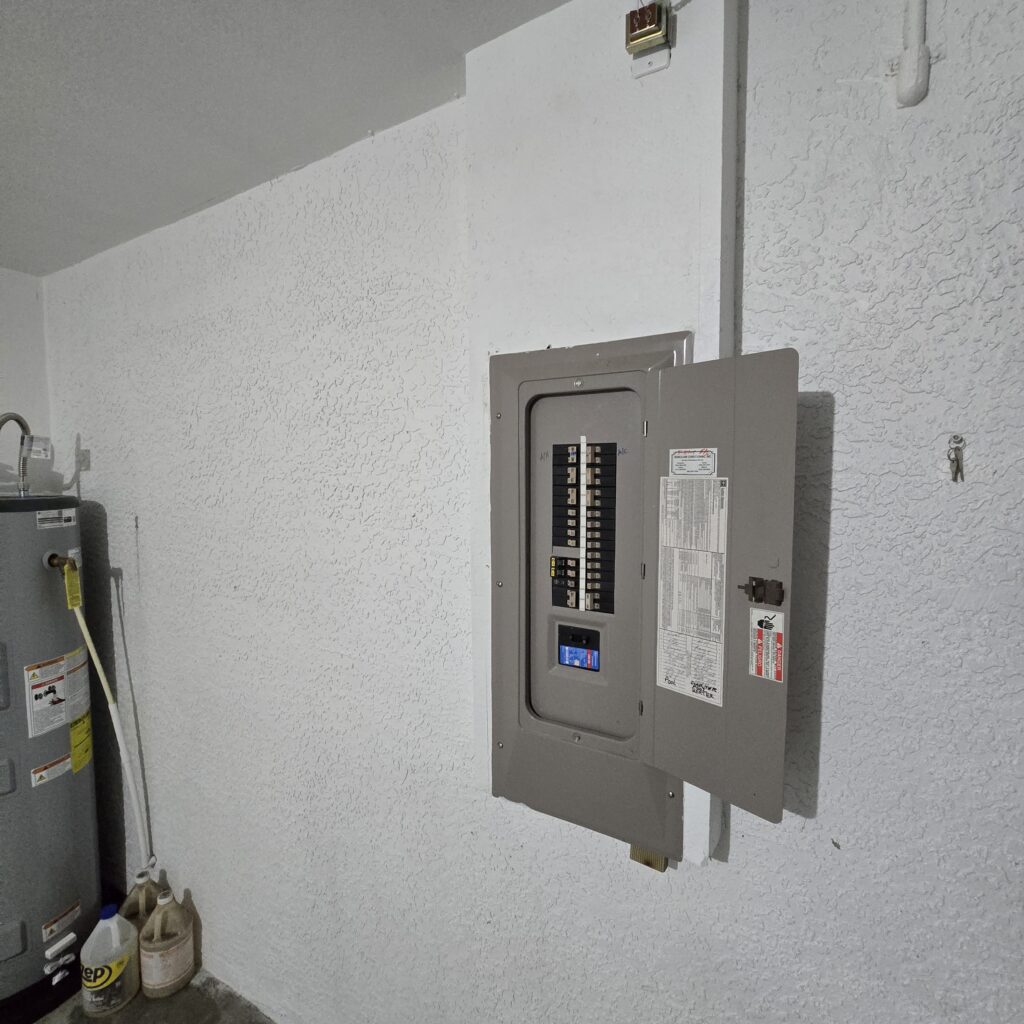
An Electrical Panel Upgrade Fixes Lights That Flicker When Large Appliances Start
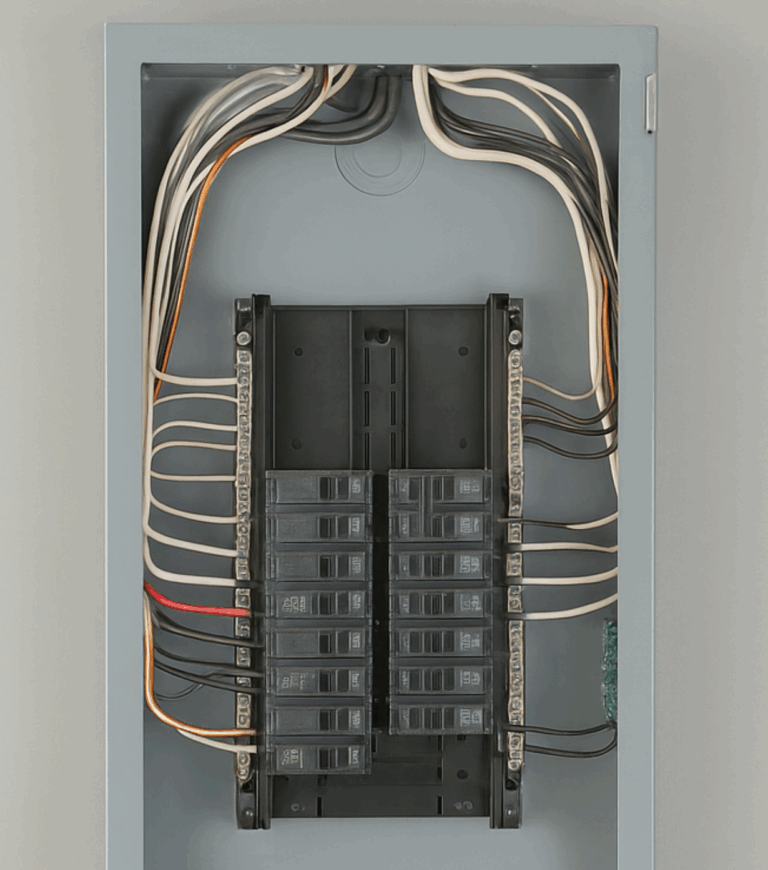
An electrical panel upgrade is often the real fix when lights flicker when large appliances start throughout the whole house. Your panel is the heart of your electrical system, and many homes in the East Canton area still run on 60 or 100 amp service. Those panels were sized for a different era, before central air, electric water heaters, hot tubs, and EV chargers became common. When total demand approaches the panel’s capacity, voltage stability suffers everywhere. Flickering in multiple rooms whenever any big appliance runs is the classic symptom. A modern 200 amp panel provides the capacity and the breaker space today’s homes actually need. It also creates room for future additions like a generator, pool wiring, or an EV charger.
Aging panels cause flickering through deterioration, not just undersizing. Breakers wear out internally, bus bars corrode, and connections loosen after decades of thermal cycling. Certain older panel brands, including Federal Pacific and Zinsco, are known fire hazards because their breakers can fail to trip under fault conditions. If your home has one of these panels, flickering lights may be the least of your risks. A panel upgrade replaces all of this aging equipment with new breakers, a new bus, and fresh, torqued connections. Many homeowners notice immediately that their lights burn steady and bright after the upgrade. Insurance companies increasingly ask about panel age and brand, so an upgrade can help there too.
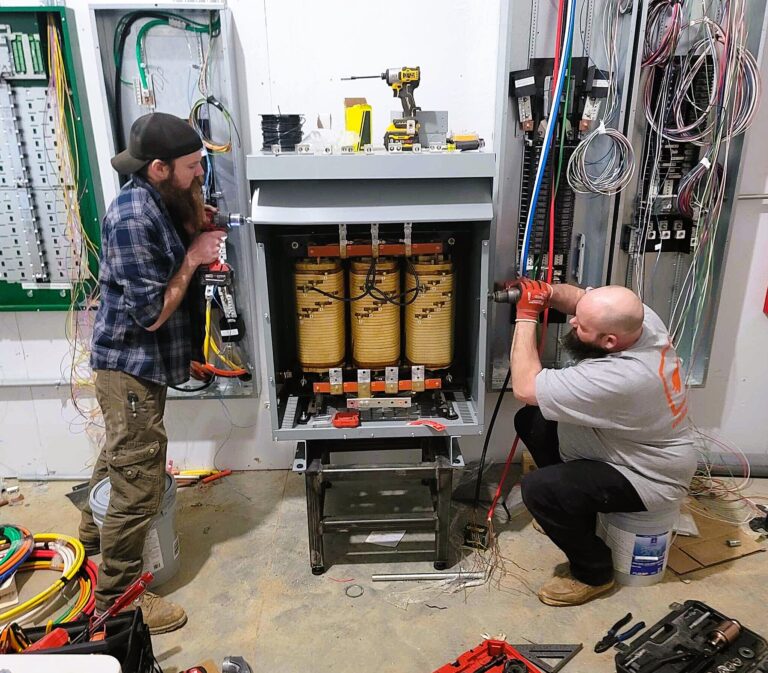
A professional panel upgrade is a coordinated project handled start to finish by licensed electricians. The utility disconnects service, the old panel comes out, and the new panel is mounted, wired, grounded, and labeled. Every branch circuit is re terminated to specification, and the grounding and bonding system is brought up to current code. The work is then inspected and the utility restores power, usually within a single day. Gragg Electrical Services has performed panel upgrades across Stark County for over 20 years, and financing is available through GreenSky and Turns. Tired of flickering lights and a crowded, outdated panel? Click here for our electrical panel upgrade service.
An Electrical Inspection Finds Why Lights Flicker When Large Appliances Run
A professional electrical inspection is the smartest first step when you cannot pinpoint why lights flicker when large appliances run. Guessing at electrical problems wastes money and leaves hazards hidden. An inspection replaces guessing with measurement and evidence. A licensed electrician will test voltage at the panel under load, check for voltage drop at outlets, and verify that circuits are loaded within their ratings. The inspection covers the panel, the grounding system, the service entrance, and the specific circuits tied to your flickering lights. Thermal imaging and torque checks reveal loose connections before they become fires. At the end, you receive clear findings and a prioritized plan instead of a mystery.
Inspections frequently uncover problems the homeowner never suspected. Flickering that seems tied to the air conditioner may actually trace back to a corroded neutral connection at the panel. A circuit that seems overloaded may have a hidden junction box with a failing splice buried in the attic. Older homes often carry layers of past work, some of it done well and some of it done by previous owners without permits. An inspection maps all of it and separates cosmetic issues from genuine hazards. This knowledge matters most in summer, when every weak point in the system is under maximum stress. Catching a failing connection in July can prevent an emergency call in August.
Electrical inspections also protect you during major life and home events. Buying a home, selling a home, finishing a basement, or adding a hot tub all warrant a professional inspection first. Insurance carriers may require documentation of electrical condition for older houses. An inspection report from a licensed electrician gives you that documentation along with real peace of mind. Gragg Electrical Services performs thorough inspections throughout East Canton, Canton, North Canton, Massillon, and surrounding communities. Want to know exactly why your lights flicker? Click here for our electrical inspection service.
Why You Need a Licensed Electrician for Flickering Lights
Flickering lights sit on the line between a nuisance and a warning. Only proper testing can tell you which side of that line your home is on. Electrical work involves lethal voltage, strict code requirements, and consequences that hide inside walls for years. A licensed electrician brings the training, tools, and insurance that protect your home and your family. Ohio homeowners also need permitted, code compliant work to keep insurance coverage valid and home sales smooth. Here is why professional help matters and why Stark County homeowners trust Gragg Electrical Services.
The Dangers of Ignoring Flickering Lights
Ignoring flickering lights can cost far more than fixing them. Loose connections behind that flicker generate heat every hour current flows through them. Heat degrades insulation, insulation failure causes arcing, and arcing inside walls starts fires. The U.S. fire services respond to tens of thousands of home electrical fires every year, and faulty connections rank among the leading causes. A flicker is often the only visible symptom before smoke. Treating it as an early warning is the cheapest insurance you will ever buy.
Voltage instability also destroys the expensive equipment in your home. Compressors, motors, and electronics are all sensitive to sagging and spiking voltage. An air conditioner that starts on low voltage draws extra current, overheats its windings, and fails years early. Computers, televisions, and smart home devices can suffer cumulative damage from repeated dips. Replacing a compressor or a houseful of electronics costs far more than repairing the wiring problem behind the flicker. Fixing the cause protects everything plugged into your system.
There is also a legal and financial dimension homeowners overlook. Insurance companies can deny fire claims when unpermitted or negligent electrical work is involved. Home inspectors flag flickering, double tapped breakers, and amateur wiring during sales, which stalls closings and lowers offers. Documented professional repairs remove those obstacles before they appear. Addressing flickering lights now protects your safety, your equipment, and your property value at the same time. Waiting only lets a small problem compound in the dark.

What a Licensed Electrician Does About Flickering Lights
A licensed electrician approaches flickering lights with a diagnostic process, not trial and error. The visit starts with questions: which lights flicker, which appliances trigger it, and how long it has happened. Voltage measurements at the panel and affected outlets follow, taken both at rest and under load. This testing isolates the cause to the utility, the panel, a branch circuit, or a specific connection. Clamp meters, thermal cameras, and circuit analyzers reveal what eyes cannot see. You get an answer backed by data.
The repair itself is performed to code and built to last. That may mean torquing panel connections, replacing a worn breaker, running a dedicated circuit, or upgrading the panel entirely. A licensed electrician pulls the required permits and schedules inspections where the jurisdiction requires them. Materials are selected to match the load, the environment, and the code, not just what is on the truck. Workmanship like this is why Gragg Electrical Services backs its work with a Lifetime Craftsmanship Guarantee. The flicker gets fixed once, correctly.
Timing matters too, and a professional company meets you where the problem is. Some flickering can wait for a scheduled appointment; some cannot. Burning smells, hot outlets, or severe whole house flickering demand immediate response. Gragg Electrical Services offers 24/7 emergency service throughout Stark County for exactly these situations. Facing a flickering problem that feels dangerous right now? Click here for our emergency electrician service.
Why Choose Gragg Electrical Services for Flickering Lights
Gragg Electrical Services has served East Canton and surrounding communities for more than 20 years. Our licensed electricians have diagnosed flickering lights in homes of every age, from century farmhouses to new construction. That local experience means we recognize the wiring styles, panel brands, and common problems specific to Stark County housing. We do not guess; we test, explain, and fix. Every repair is backed by our Lifetime Craftsmanship Guarantee. When we leave, your lights stay steady.
We built our reputation on respect for your home and your time. Our crews arrive on schedule, work clean, and leave your space the way we found it. We explain your options in plain language and give honest pricing before work begins. Emergencies do not wait for business hours, so our 24/7 emergency line is always on standby. Financing is available through GreenSky and Turns for larger projects like panel upgrades. Quality electrical work should be within reach for every homeowner.
We proudly serve East Canton, Canton, North Canton, Massillon, Louisville, Alliance, Hartville, Green, Canal Fulton, Navarre, Minerva, Carrollton, Uniontown, and the surrounding townships. Our shop is located at 333 Cedar St S, East Canton, OH 44730, right in the community we serve. One phone call connects you with a real local team, not a call center. Call Gragg Electrical Services at (330) 488-8009 or email info@graggelectrical.com. Stop living with flickering lights and start living with confidence in your electrical system. We are ready when you are.