Landscape Lighting Ideas That Add Curb Appeal at Night
Spring in East Canton brings longer evenings, blooming gardens, and the perfect chance to show off your home after dark. Landscape lighting transforms an ordinary yard into a warm, welcoming space that boosts curb appeal the moment the sun sets. Good outdoor lighting highlights architectural details, illuminates walkways for safety, and makes your property stand out in the neighborhood. It also adds real value to your home and extends the hours you can enjoy your outdoor living space. With the right fixtures, wiring, and placement, your yard can look just as stunning at night as it does during the day. A licensed electrician can design a system that brings out the best features of your landscape while staying code-compliant and energy efficient.
How Landscape Lighting Boosts Curb Appeal at Night
Landscape lighting does more than make a yard look pretty after dark. It creates depth, drama, and a sense of arrival that draws the eye from the street to the front door. The right mix of path lights, uplights, and accent fixtures can turn a plain front yard into a magazine-worthy scene. Professional outdoor lighting also improves safety by illuminating steps, driveways, and dark corners where trips or intruders might hide. Homes with well-planned landscape lighting often feel more inviting, more secure, and more upscale to guests and potential buyers alike.
Curb Appeal Starts with Strategic Landscape Lighting Placement
Placement is the single biggest factor in how polished your landscape lighting looks at night. Uplights positioned at the base of mature trees cast dramatic shadows on branches and leaves, giving your yard natural movement and texture. Downlights mounted high in trees or under eaves create a soft, moonlit glow across lawns and flower beds. Wall-wash fixtures aimed at stone or brick siding bring out the texture of your home’s exterior and make the whole structure feel grounded and substantial. A skilled electrician plans each fixture around sightlines from the street, the driveway, and the front walkway so every angle looks intentional.
Path lights should be spaced evenly along walkways, usually eight to ten feet apart, to create a smooth line of light without hot spots or dark gaps. Step lights recessed into risers keep stairs safe without overwhelming the overall design. Accent lights on garden beds, water features, and sculptures pull the eye through the yard and create layers of interest. The goal is a balanced composition where no single fixture shouts for attention. When placement is done right, guests notice the beauty of the home first and the lights themselves second.
Placement also takes the seasons into account, which matters a lot in Ohio. Spring foliage is lighter and more open, so uplights on trees will show off new growth in a way that looks very different from summer or fall. Fixtures need to sit at heights and angles that still work once leaves fill in and perennials reach full size. A professional electrician will walk the property, study the landscape, and map out a plan that looks great in April and still shines in August. That kind of forward thinking separates a quick DIY job from a design that holds up year-round.
Curb Appeal Grows with the Right Landscape Lighting Fixtures
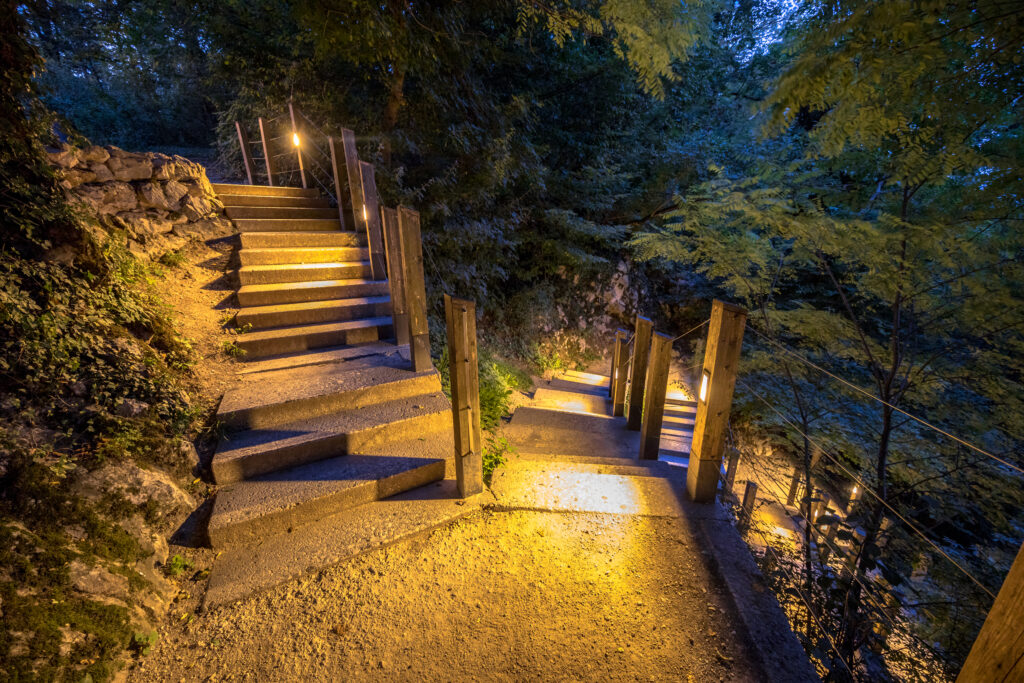
Fixture quality makes a huge difference in how your landscape lighting performs and how long it lasts. Cheap plastic fixtures from big-box stores often crack, fade, or fill with moisture after one or two Ohio winters. Solid brass, copper, and powder-coated aluminum fixtures stand up to snow, rain, freeze-thaw cycles, and lawn equipment for decades. A licensed electrician will recommend fixtures rated for wet locations and sized correctly for the space they need to light. The right hardware looks almost invisible during the day and performs flawlessly at night.
LED bulbs are now the clear choice for landscape lighting because they use a fraction of the energy of halogen and last many times longer. Warm white LEDs in the 2700K to 3000K range give off a soft, inviting color that flatters stone, wood, and greenery. Cooler bulbs can make a yard feel harsh or industrial, so color temperature matters as much as brightness. Many modern LED fixtures are also dimmable and compatible with smart controls, so you can adjust the mood from your phone. An electrician can match bulb wattage, beam spread, and color to each spot in the yard for a truly custom look.
Beam angle is another detail that separates professional installs from amateur ones. Narrow-beam spotlights work well on tall trees, chimneys, and flagpoles where you want a tight column of light. Wide-beam flood fixtures are better for washing entire walls, hedges, or garden beds with even brightness. Mixing beam angles adds depth and keeps the design from feeling flat. If you want help choosing fixtures that will last and look great, click here for our outdoor lighting installation service.
Curb Appeal Shines with Layered Landscape Lighting Design
Layered lighting is the secret behind every landscape that looks expensive at night. The idea is simple; use at least three types of light to build depth and dimension across the yard. Ambient light sets the overall brightness, task light covers walkways and entries, and accent light highlights special features like trees or fountains. When these layers work together, the eye moves naturally from one focal point to the next. A flat, single-layer install tends to look like a parking lot, while a layered design feels like an invitation.
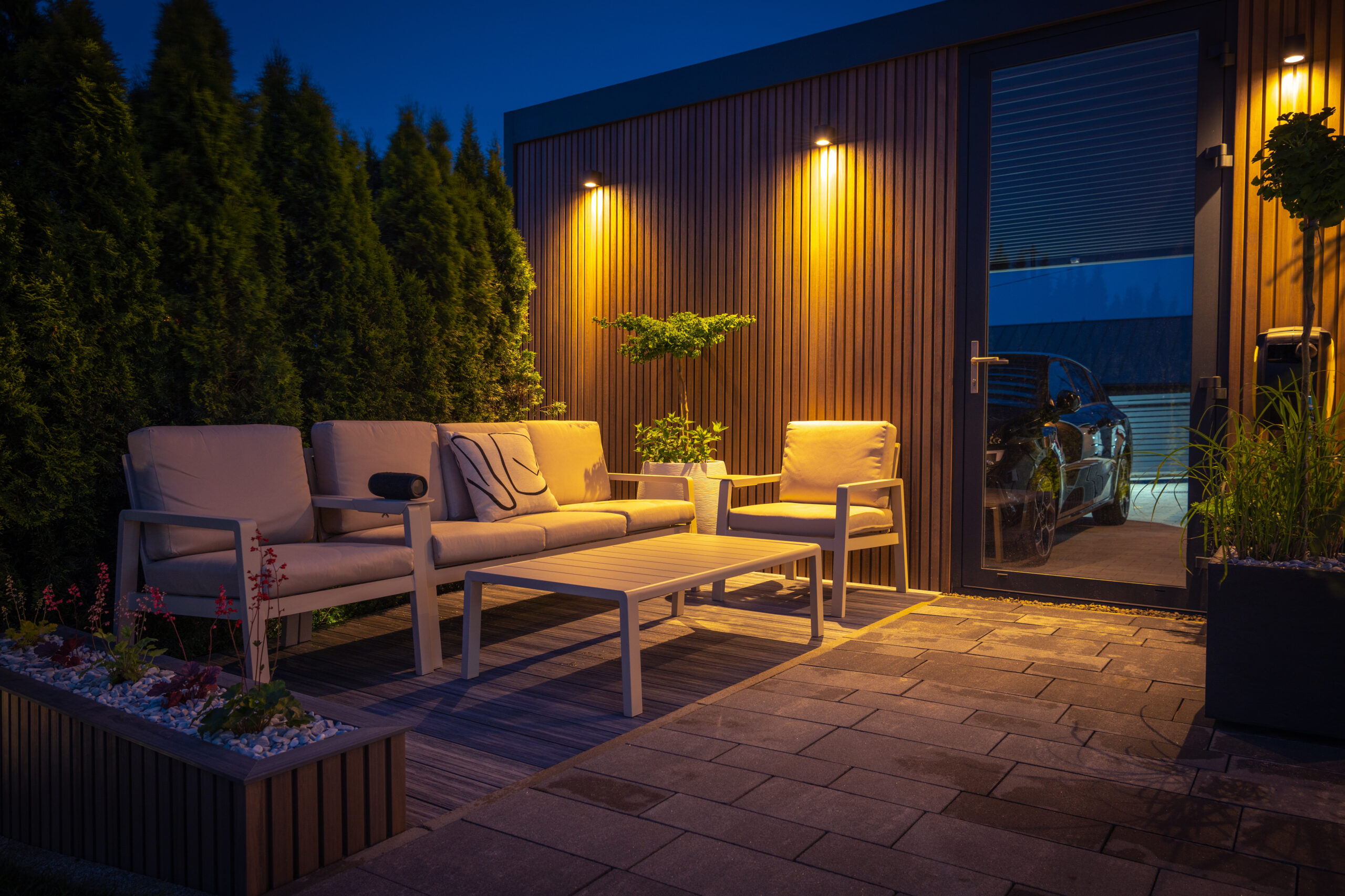
Front-yard layers usually start with soft ambient light near the house, path lights along walkways, and uplights on one or two feature trees. Side yards can be lit more simply with low path lights and a single wall pack for security near side doors. Backyards often benefit from the most layers because they include patios, pergolas, pools, and gardens that each deserve their own moment. Accent lights on a pavilion, string lights overhead, and subtle garden lights can turn a backyard into a true outdoor room. For pavilion and outdoor structure wiring, click here for our outdoor pavilion wiring service.
Good layering also considers what you don’t want to light. Glare in a neighbor’s window, harsh shadows on the front door, or hot spots on the driveway can ruin an otherwise nice design. A professional electrician uses shields, glare guards, and careful aiming to keep light where it belongs. Dark sky principles are becoming more popular in Stark County because they reduce light pollution and let homeowners enjoy the stars. A well-layered system gives you all the curb appeal without any of the eyesores.
What to Know Before Installing Landscape Lighting This Spring
Spring is the ideal season to install landscape lighting because the ground is thawing, plants are just waking up, and you have months of warm evenings ahead to enjoy the results. Installing before the yard fills in makes trenching, fixture placement, and wiring far easier than doing it in July. A professional install also protects your investment by using the right voltage, wire gauge, and transformer size for the job. Homeowners who try to DIY often run into tripped breakers, flickering fixtures, or burned-out bulbs within a single season. Planning ahead with a licensed electrician saves money, time, and frustration.
Know the Landscape Lighting Electrical Requirements for Your Home
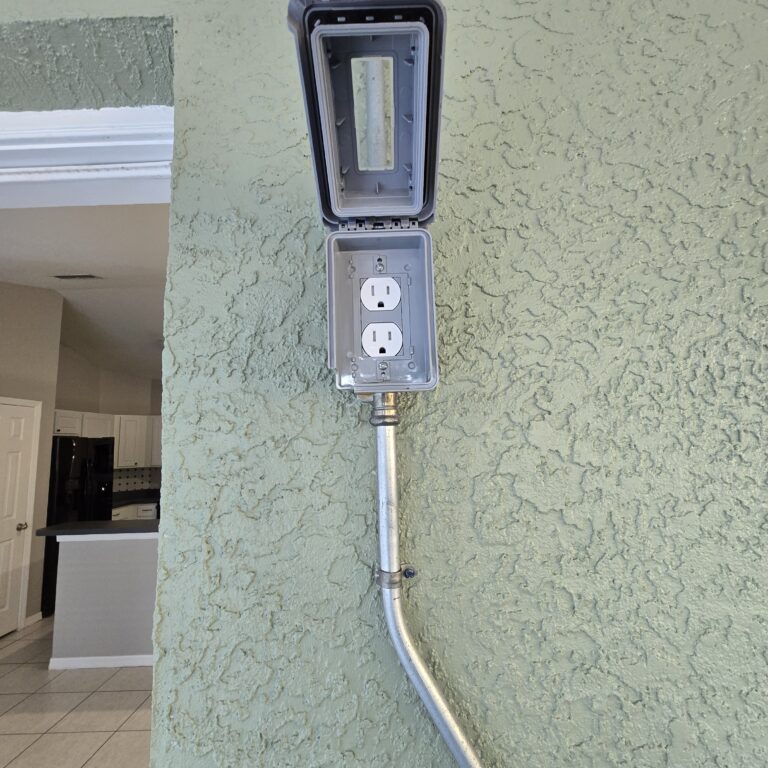
Most residential landscape lighting runs on a low-voltage 12-volt system powered by a transformer connected to a standard 120-volt outlet. The transformer steps the power down to a safe level that can be buried in the yard without the strict conduit requirements of line-voltage wiring. Even so, the 120-volt side of the system still needs a properly wired, GFCI-protected outdoor outlet installed to code. Many older Ohio homes don’t have a suitable exterior outlet, so a new circuit or GFCI receptacle may be needed before the lighting goes in. A licensed electrician handles that part quickly and safely.
Transformer sizing is one of the most overlooked details in landscape lighting. A transformer that’s too small will cause voltage drop, dim fixtures at the end of the run, and shortened bulb life. One that’s too large wastes energy and adds unnecessary cost. The right size accounts for total wattage, wire length, and the number of fixtures on each run. Professional installers calculate this up front so every fixture in the system puts out full, consistent brightness.
Wire gauge and burial depth also matter more than most homeowners realize. Low-voltage cable should be sized correctly, usually 12- or 10-gauge for longer runs, and buried at a depth that protects it from shovels, aerators, and frost. Connections need to be waterproof and made with listed connectors, not wire nuts wrapped in electrical tape. Cutting corners here leads to corrosion, shorts, and fixtures that fail in the middle of winter. A code-compliant install done once is always cheaper than fixing a bad one twice.
Know the Landscape Lighting Controls and Smart Features Available
Modern landscape lighting gives you far more control than the old dusk-to-dawn photocells of the past. Smart transformers with Wi-Fi connectivity let you schedule on and off times, adjust brightness, and even change scenes from an app on your phone. You can set the front yard to turn on at sunset, dim at eleven, and shut off completely at two in the morning. Some systems integrate with Alexa, Google Home, or full smart home platforms for hands-free control. That kind of flexibility used to be reserved for commercial properties and now fits comfortably in a residential budget.
Zone control is another powerful feature worth asking about. Instead of every fixture turning on at once, you can group path lights, accent lights, and patio lights into separate zones. That way you can light the front walkway for arriving guests without blasting the whole backyard. Zones also help with energy savings because you only power the areas you’re actually using. For homeowners interested in connecting lighting to a larger automation system, click here for our smart home installation service.
Astronomical timers are a nice touch that adjust automatically as sunset shifts through the year. In Ohio, sunset moves by several hours between June and December, and a fixed timer quickly falls out of sync. An astronomical timer uses your location to track sunset and sunrise, so lights always come on at the right moment. Combined with motion sensors at key entry points, these controls add both convenience and security. A good electrician will walk you through every option and help you pick the features that fit your lifestyle.
Know the Landscape Lighting Maintenance Needs for Ohio Weather
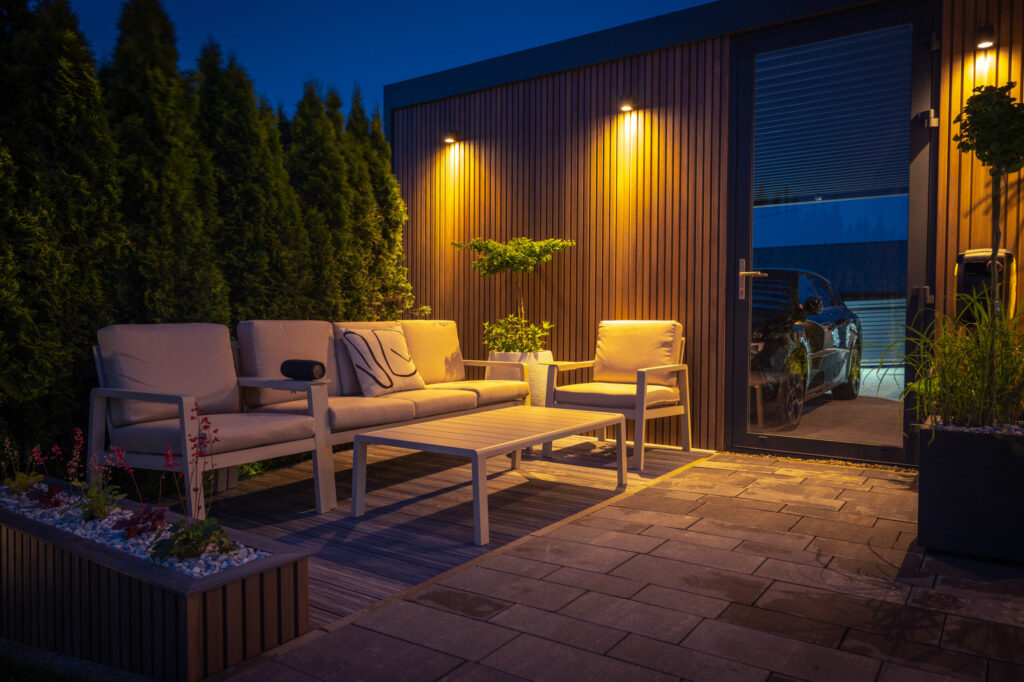
Ohio weather is tough on outdoor electrical systems, and landscape lighting is no exception. Freeze-thaw cycles, heavy snow, ice dams, and spring storms all put stress on fixtures, wiring, and connections. Annual maintenance keeps small problems from becoming expensive repairs. A yearly check includes cleaning lenses, replacing failed bulbs, tightening connections, and making sure transformers are running cool and dry. Skipping that maintenance is the fastest way to end up with a dim, patchy system after only a few seasons.
Mulching, edging, and landscaping work can damage buried cables and knock fixtures out of alignment more often than most homeowners expect. Lawn crews with aerators and edgers are frequent offenders, and a single cut cable can take out an entire run of lights. Marking cable paths, using protective conduit in high-traffic spots, and keeping fixtures slightly recessed from mower lines all help. A licensed electrician can repair damage quickly and upgrade vulnerable sections to prevent future issues.
Spring is also the right time to inspect and reset everything after a long winter. Water intrusion, corroded sockets, and frost-heaved fixtures all show up once the snow melts. Catching those issues early means your system is ready to shine through summer parties, fall gatherings, and holiday decorating. Regular inspections also help you plan for expansions, like adding lights to a new garden bed or a freshly built pavilion. A proactive approach keeps your landscape lighting looking its best for decades.
Why You Need a Licensed Electrician for Landscape Lighting Installation
Landscape lighting looks simple from the outside, but a safe, long-lasting install involves real electrical work. Improper wiring, undersized transformers, or missing GFCI protection can lead to tripped breakers, damaged fixtures, or worse. A licensed electrician brings the training, tools, and code knowledge to get the job done right the first time. Professional installs also come with warranties and craftsmanship guarantees that DIY jobs and handymen simply can’t match. For East Canton homeowners who want lasting beauty and safety, hiring a licensed pro is the smart move.
A Licensed Electrician Delivers Safer Landscape Lighting Installations
Safety is the biggest reason to hire a licensed electrician for landscape lighting. Outdoor circuits must be GFCI-protected, properly grounded, and wired to current National Electrical Code standards. A licensed pro knows those codes inside and out and pulls permits when required. Mistakes in outdoor electrical work can cause shock hazards, fire risk, and insurance headaches down the road. Professional installation removes all of that risk from your shoulders.
Licensed electricians also use the right tools to test every part of the system before walking away. Voltage testing at each fixture, ground-fault verification, and load checks at the panel make sure nothing is overloaded or miswired. Those steps are easy to skip when you’re doing it yourself but critical for long-term safety. A professional install is one you can trust and forget about. That peace of mind alone is worth the investment.
Safety extends to your home’s existing electrical system too. Adding landscape lighting means adding load, and older panels may not have the capacity to handle it. A licensed electrician will check your panel, breakers, and grounding before adding new circuits. If an upgrade is needed, they can handle that as part of the project. This full-system approach protects your home from the ground up.
A Licensed Electrician Designs Landscape Lighting That Lasts
Good design is what separates landscape lighting that looks great for twenty years from a system that fades in two. Licensed electricians work with fixture brands, transformer lines, and control systems they know and trust. They match components correctly, plan for future expansion, and choose materials built for Ohio weather. Homeowners benefit from a system that performs consistently and is easy to service if anything ever goes wrong. That kind of longevity is only possible with professional planning.
Design also means thinking about how the yard will change over time. Trees grow, gardens shift, and new outdoor features like pools or patios often come later. A well-designed landscape lighting system leaves room for those changes without requiring a full rewire. Extra capacity in the transformer, strategically placed junction points, and documented wiring runs all make future upgrades simple. This kind of foresight saves homeowners real money over the long haul.
A professional also helps you avoid the common mistakes that ruin curb appeal. Too many path lights lined up like an airport runway, uplights pointing straight into bedroom windows, or fixtures that glare at drivers on the street are all avoidable with good design. An experienced electrician has seen what works and what doesn’t across hundreds of yards. That experience turns into a better result for your home.
Why Choose Gragg Electrical Services for Landscape Lighting Installation
Gragg Electrical Services brings over 20 years of proven local experience to every landscape lighting project in East Canton and the surrounding communities. Our team treats your property with respect, keeps job sites clean, and shows up in uniform ready to work. Every install is backed by our Lifetime Craftsmanship Guarantee, so you know the work will stand the test of time. We pull permits, follow code, and never cut corners on materials or safety. That commitment to quality is why so many local homeowners trust us with their homes.
We also make the process easy from start to finish. Free consultations, honest pricing, and financing through GreenSky and Turns mean you can get the landscape lighting you want without financial stress. Our crews handle everything from panel upgrades to final fixture aiming, so you have one team to call for the whole project. Emergency service is available 24/7 if anything ever needs attention after hours. No other local electrician offers that level of support.
When you choose Gragg Electrical Services, you get a partner who cares about your home as much as you do. Call us today at (330) 488-8009 or email info@graggelectrical.com to schedule your landscape lighting consultation. You can also click here for our outdoor lighting installation service to learn more. We’re proud to serve East Canton, Canton, North Canton, Hartville, Louisville, Alliance, and every surrounding community with top-quality electrical work. Let us help you turn your yard into the best-looking home on the block after dark.