How to Avoid Overloading Outlets During the Holidays
Holiday decorating puts more demand on home wiring than any other season of the year, and most homeowners never stop to think about how much power they are actually pulling from a single wall outlet. Light strings, inflatables, extension cords, space heaters, and kitchen appliances all draw from circuits that were sized decades ago for a much lighter lifestyle. When too much of that load lands on one circuit, the breaker trips, the cord gets hot, and in the worst cases the wiring behind your wall starts to fail where you cannot see it. The good news is that overloading outlets during the holidays is almost entirely preventable once you understand how circuits are rated and how holiday decorations add up. A little planning in the fall gives you a safer, brighter December without the frustration of a dead outlet on the day guests arrive. Gragg Electrical Services has spent more than twenty years working on homes throughout East Canton, Canton, North Canton, and the surrounding Stark County communities, and we see the same overload patterns every single holiday season. This guide walks through why overloads happen, how to spread your load correctly, and when it makes sense to call a licensed electrician before the decorations go up.
How Overloading Outlets Happens During the Holidays
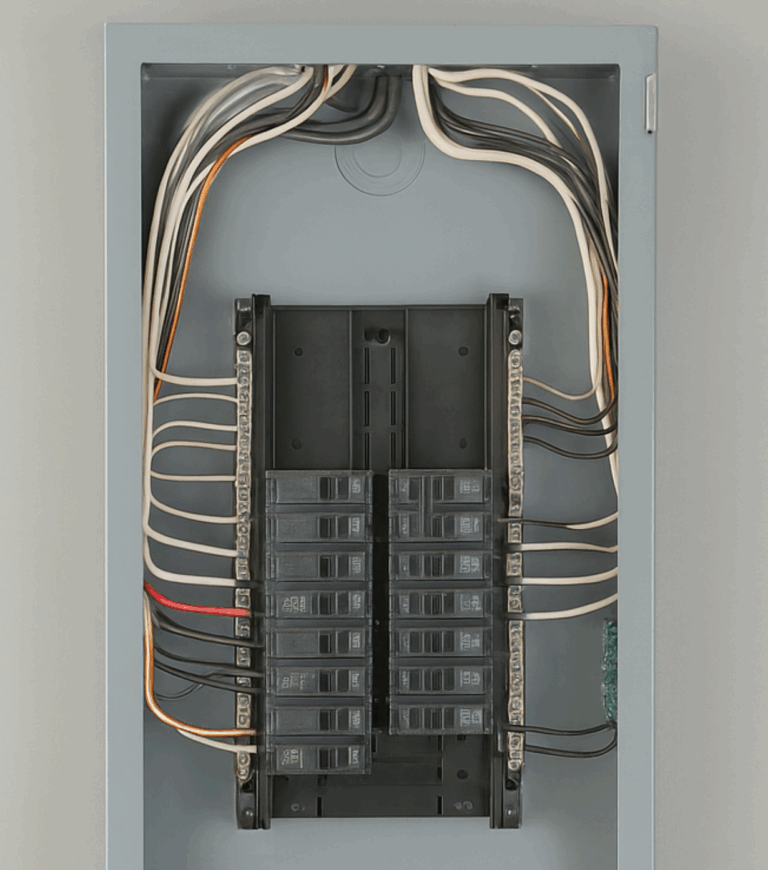
An outlet is not an unlimited source of power; it is one point on a branch circuit that runs back to a breaker in your electrical panel, and that breaker sets a hard limit on how much current the circuit can safely carry. Most homes in Ohio are wired with a mix of 15 amp circuits using 14 AWG copper conductors and 20 amp circuits using 12 AWG copper conductors. That single circuit usually feeds several outlets across one or two rooms, so the load you plug in at the living room wall may be sharing capacity with the hallway, the dining room, and sometimes the porch light. Holiday decorating concentrates a large amount of small loads in exactly the rooms people gather in, which is why the tripping starts right after Thanksgiving. Overloading outlets during the holidays is rarely caused by one big appliance; it is caused by fifteen small things added together without anyone doing the math. Understanding where your power comes from is the first step toward keeping every string lit through New Year’s Day.
The Wattage Math Behind Overloading Outlets During the Holidays
Every circuit in your home has a ceiling that is easy to calculate, and once you know it you can plan your decorations with real numbers instead of guesswork. A 15 amp circuit at 120 volts can carry 1,800 watts at its absolute maximum, and a 20 amp circuit can carry 2,400 watts. Electrical code treats anything running three hours or more as a continuous load, and continuous loads should be kept to 80 percent of the circuit rating. That leaves you a practical working limit of roughly 1,440 watts on a 15 amp circuit and 1,920 watts on a 20 amp circuit. Holiday lights that run from dusk until bedtime absolutely qualify as a continuous load, so the 80 percent figure is the number that matters. Write those two numbers down before you start decorating, because they are the budget you are spending from every time you plug something in.
Now compare that budget to what holiday decorations actually consume, because the difference between bulb types is enormous. A single C9 incandescent bulb draws around seven watts, so a twenty five bulb string pulls roughly 175 watts all by itself. Four of those strings put you near 700 watts, and that is before the tree, the mantel, the inflatable in the yard, and the television. Incandescent mini light strings are gentler at roughly 40 watts per hundred bulb string, but they still add up quickly across a whole house. LED strings change the equation completely, often drawing four to six watts for the same hundred bulbs, which is why a full LED display can run on a fraction of one circuit. Switching your oldest incandescent strings to LED is the single most effective change most homeowners can make.
The load does not stop at the lights, and that is where most people miscalculate. Inflatable yard decorations use a small blower motor that typically pulls 40 to 150 watts each and runs for hours at a time. Projectors, animated figures, heated blankets, and phone chargers all pull from the same circuits your decorations are on. Inside the house, the real capacity killers are portable space heaters at 1,500 watts, roaster ovens between 1,400 and 1,650 watts, and electric griddles that sit right at 1,500 watts. A single space heater consumes about 12.5 amps, which means it effectively claims an entire 15 amp circuit on its own. Add one string of C9 lights to that same circuit and you are already over the line. This is exactly why holiday breaker trips cluster around the living room and the kitchen.
Common Holiday Devices That Cause Overloading Outlets
Extension cords deserve close attention, because they are the most misused product in holiday decorating and the most common contributor to overheated connections. Cords are rated by wire gauge, and the number works backward from what people expect: 16 AWG is thinner and weaker than 14 AWG, and 12 AWG is heavier still. A light duty 16 AWG cord is acceptable for a modest LED display over a short distance, but it is not appropriate for a long run feeding several incandescent strings. Length matters as much as gauge, since voltage drop increases and heat builds as the run gets longer. The dangerous part is that your breaker may never trip while a thin cord slowly overheats, because the breaker protects the house wiring rather than the cord you added. Feel your cords with your hand during the first week of decorating and pay attention to anything that is noticeably warm.
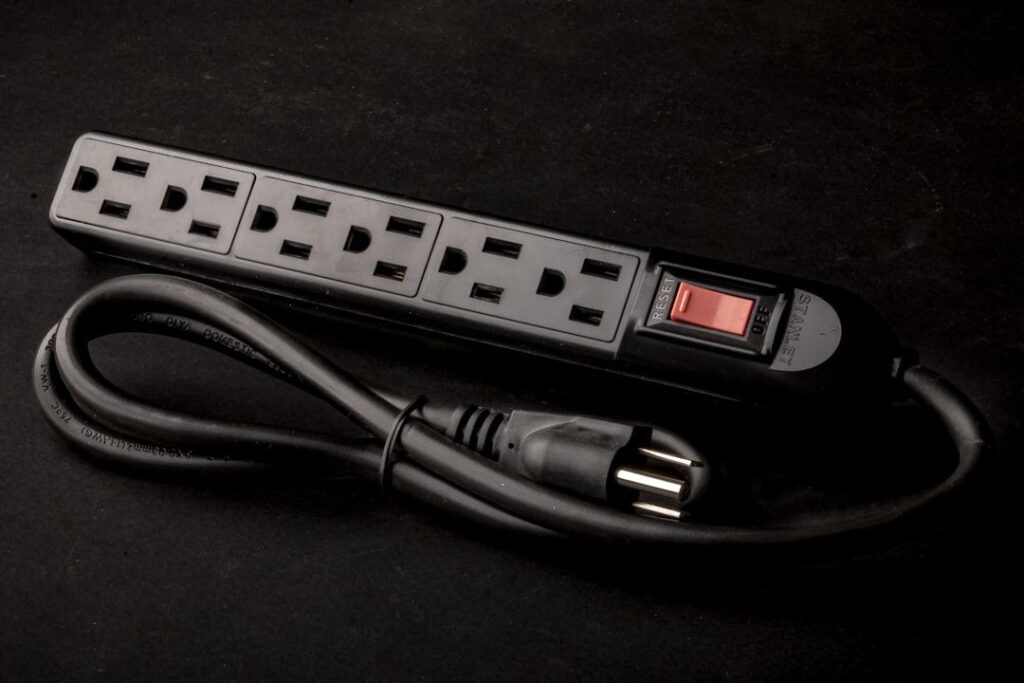
Power strips create a different problem, which is the illusion of capacity. A strip with eight receptacles does not deliver eight times the power; it delivers whatever the single circuit behind it can supply, split among everything you plug in. Daisy chaining one strip into another compounds the risk and is prohibited by fire code in most settings for good reason. Cube taps and those flat multi outlet adapters that fan out from a single receptacle are worse still, since they concentrate several connections at one set of contacts with no overcurrent protection at all. High wattage items like space heaters, roaster ovens, and coffee makers should always go directly into a wall receptacle. If you need more receptacles in a room where you gather, the correct solution is added outlets on a properly sized circuit rather than more adapters.
Older homes throughout East Canton and the surrounding townships add another layer to the problem, and it is worth knowing what you are working with. Houses wired before the mid 1960s often have ungrounded two prong receptacles, cloth insulated conductors, and service equipment sized at 60 or 100 amps for a household that owned a refrigerator and a radio. Some homes still have aluminum branch circuit wiring from the late 1960s and 1970s, which requires specific connectors and terminations to remain safe. Panels from certain manufacturers, including Federal Pacific Stab Lok and Zinsco equipment, have documented histories of breakers failing to trip under fault conditions. Loading those systems up with a full holiday display asks a lot of equipment that was never designed for it. If your home falls into any of these categories, a professional evaluation before the season is a genuinely worthwhile investment.
Warning Signs You Are Overloading Outlets During the Holidays
A breaker that trips is doing its job, and the correct response is to reduce the load rather than to reset it repeatedly and hope for the best. Never replace a tripping breaker with one of a higher amperage, because the breaker is matched to the wire size behind the wall and a larger breaker allows that wire to overheat before it ever trips. Repeated trips on the same circuit tell you something specific: you have exceeded capacity, you have a loose connection, or you have a fault developing somewhere on that run. Track which outlets go dead together and you will learn how your circuits are grouped, which is genuinely useful information for planning decorations. Label your panel while you are at it, since most panel directories are either blank or inaccurate. That map becomes your decorating plan for every year that follows.
Some warning signs are more serious than a tripped breaker and require immediate attention. A receptacle that feels warm to the touch is not normal, and neither is a faceplate that has yellowed, browned, or begun to distort near the slots. Buzzing or crackling from an outlet or switch indicates arcing, which produces extreme localized heat. Any burning smell near a receptacle, cord, or panel should be treated as an emergency, and the circuit should be shut off at the breaker right away. Lights that dim noticeably when a large appliance cycles on can point to loose connections or an undersized service. These symptoms do not improve on their own, and holiday loads make them worse.
Plugs that fall out of a receptacle or feel loose when inserted are telling you the internal contacts have lost tension, usually from age or from heat cycling over many years. Worn contacts create resistance, resistance creates heat, and heat accelerates the wear in a loop that ends badly. Scorch marks around the slots, a plug blade that is discolored, or a cord that only works at a certain angle all point to the same underlying failure. Receptacles are inexpensive to replace and should be swapped out as soon as they show these symptoms. If you are noticing warm outlets, buzzing, or repeated trips right now, do not wait for December. Dealing with an outlet that is hot, sparking, or smells like burning? Click here for our emergency electrician service.
How to Prevent Overloading Outlets During the Holidays
Preventing an overload comes down to distributing your load across multiple circuits and choosing equipment that matches the job. Most homeowners plug everything into the nearest available outlet without realizing that four different rooms may share a single breaker. Once you know which receptacles belong to which circuit, spreading your display becomes simple arithmetic. Pair that with quality cords, correctly rated strips, and LED bulbs, and a full house display can run comfortably within your existing wiring. Outdoor decorations require additional consideration, since moisture and ground fault protection come into play. The steps below reflect how our licensed electricians approach holiday load planning in real homes across Stark County.
Spreading Holiday Decorations Across Circuits Prevents Overloading Outlets
Start by mapping your circuits, which takes about thirty minutes and pays off for years. Plug a lamp or a receptacle tester into an outlet, switch off one breaker at a time, and record every receptacle that goes dead with it. Work room by room and include the garage, the basement, the porch, and any exterior receptacles, since those are frequently tied into interior circuits. Write the results directly on the panel directory in pencil so you can revise it later. What usually surprises people is how far a single circuit reaches, sometimes covering two bedrooms plus a hallway plus an outdoor outlet. That map tells you exactly where your holiday capacity is hiding.
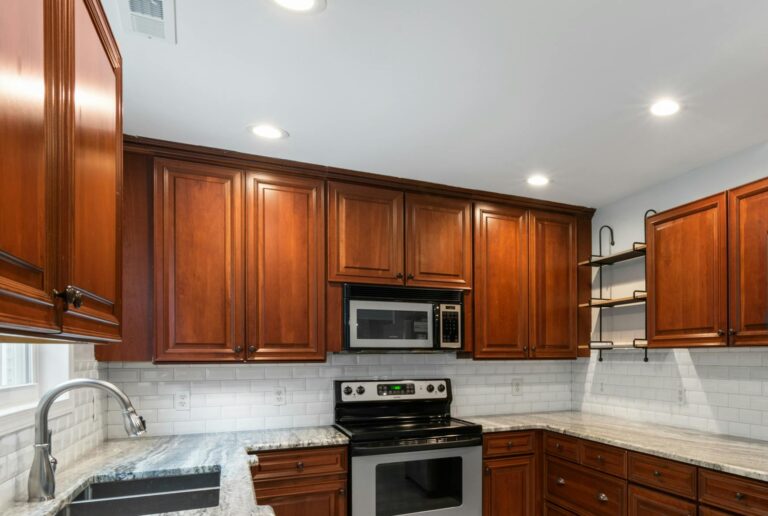
With the map in hand, assign your decorations deliberately rather than by convenience. Put the tree on one circuit, the mantel and window candles on another, and the outdoor display on a third if your wiring allows it. Kitchens are a special case, because electrical code requires at least two 20 amp small appliance branch circuits serving the countertop receptacles, and those circuits are meant for cooking loads rather than decorations. Keep the roaster oven, the griddle, and the coffee maker on separate kitchen circuits during holiday meals, and keep decorative lighting out of the kitchen entirely if you can. Basements, garages, and bathrooms often share circuits in ways that are not obvious from the room layout. A few minutes of planning eliminates almost every trip you would otherwise experience.
Timers help in a way that is worth explaining accurately, since they reduce runtime rather than peak load. A timer will not stop an overload if everything comes on at once, but staggering the start times across your display keeps inrush current from stacking up and reduces the total hours your circuits spend under load. Set the tree lights and the interior displays to a different schedule than the outdoor lights if the two share a circuit. Smart plugs give you the same benefit with the added ability to shut everything down from your phone. Lower runtime also translates into a smaller December electric bill, which is a welcome side effect. Combine timers with LED conversion and most homes gain a comfortable margin of unused capacity.
Choosing Safe Cords and Power Strips to Avoid Overloading Outlets
Match the cord to the load and the distance, and do not treat all extension cords as interchangeable. For runs under twenty five feet with a light LED display, a 16 AWG cord is generally adequate. For longer runs, heavier displays, or anything involving incandescent bulbs, step up to 14 AWG or 12 AWG. Cords intended for outdoor use carry markings such as SJTW or a W in the type designation, and they use insulation formulated to resist moisture, cold, and sunlight. Indoor cords used outside become brittle in Ohio winters and crack, exposing conductors to snow and ice melt. Buy the correct cord once and it will serve you for many seasons.
How you route the cord matters as much as which cord you buy. Never run an extension cord under a rug or carpet, because heat cannot escape and foot traffic damages the insulation where you cannot see it. Do not pinch cords in doorways, window sashes, or garage doors, and do not staple or nail through them; use insulated cord clips or plastic hooks designed for the purpose. Keep connection points off the ground and out of standing water, and protect outdoor connections with a weatherproof cord cover or a listed connection box. Extension cords are approved for temporary use only, which is exactly what a holiday display is; they should come down when the season ends. Any cord that is cracked, taped, missing a ground prong, or warm during operation belongs in the trash rather than back in the storage bin.
Respect the connection limits printed on your light strings, because those numbers come from the manufacturer’s testing of the string’s internal wiring and fuses. Incandescent sets typically allow only three strings connected end to end, while LED sets often permit twenty or more depending on the product. Exceeding that limit overloads the small conductors inside the string itself, and the fuse in the plug is the only protection you have. Check that the plug fuses are the correct rating and replace them with the exact type specified rather than something from the junk drawer. Inspect every string before hanging it, looking for cracked sockets, missing bulbs, exposed copper, and damaged insulation. Ten minutes of inspection prevents a great deal of trouble later.
Outdoor Holiday Setups and How to Avoid Overloading Outlets
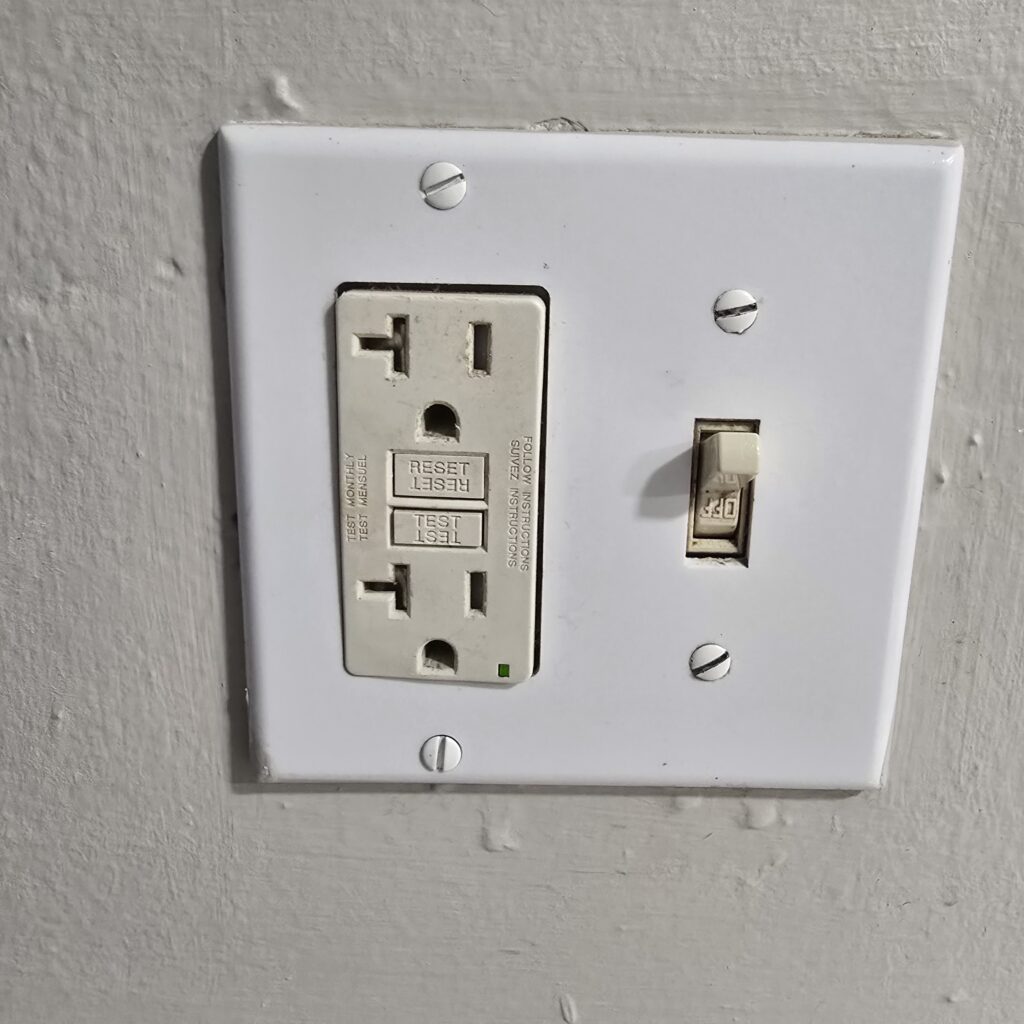
Outdoor decorating introduces ground fault risk on top of overload risk, and both need to be addressed. Electrical code requires ground fault circuit interrupter protection for outdoor receptacles, garages, basements, crawl spaces, kitchens, bathrooms, and laundry areas. GFCI devices monitor current leaving and returning on a circuit and cut power in milliseconds when they detect a difference, which is what protects you from a shock when snow melts into a cord connection. Test every exterior GFCI before you decorate by pressing the test button and confirming that power drops, then press reset. A GFCI that will not trip during testing or will not reset has failed and needs replacement. Ground fault protection does not prevent overloads, so you still need to manage your total wattage separately.
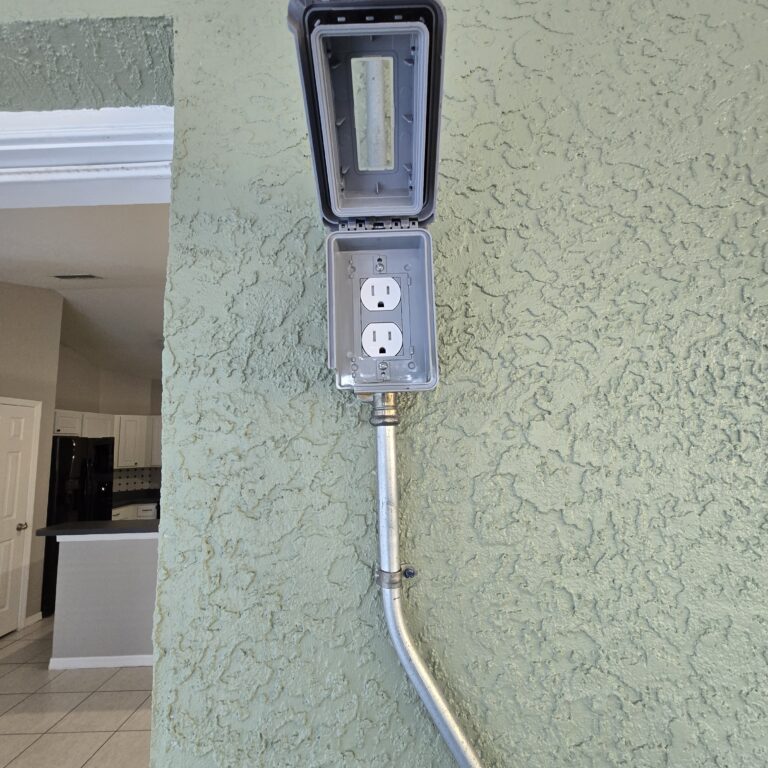
Exterior receptacles also need the right enclosure to stay functional through an Ohio winter. Outdoor receptacles in damp or wet locations require weather resistant devices, and receptacles that will have something plugged in continuously need an in use cover, which is the bubble style enclosure that closes over the plug. The older flip up covers only protect the receptacle when nothing is plugged in, which is useless for a holiday display. Water intrusion causes nuisance GFCI tripping, corrosion, and eventually failure of the device. If your outdoor receptacle has a flat metal cover or no cover at all, replace it before the display goes up. Need GFCI protection added or replaced before you decorate outside? Click here for our GFCI outlet installation service.
Permanent outdoor lighting solves the annual overload problem entirely for many homeowners, and it is worth considering. Professionally installed exterior lighting runs on dedicated circuits sized for the load, with underground conductors in conduit, weatherproof junction boxes, and proper grounding throughout. Modern LED architectural and landscape lighting draws very little current while producing far more usable light than temporary strings. You skip the ladder work each November, you eliminate the tangle of extension cords across the yard, and you gain year round curb appeal. Many systems allow color changes and scheduling from an app, so the same fixtures serve the holidays, game days, and everyday evenings. Want lighting that handles the holidays without extension cords? Click here for our outdoor lighting installation service.
Why You Need a Licensed Electrician Before the Holiday Season Starts
Holiday overloads are a symptom, and the underlying cause is usually a home that has more devices than circuits. A licensed electrician can tell you in one visit what your service can support, where your capacity is being wasted, and what it would take to add the circuits you actually need. That conversation is far more productive in September or October than it is on a cold December evening with company on the way. Gragg Electrical Services works throughout East Canton, Canton, Louisville, Hartville, Uniontown, Massillon, North Canton, Green, and the surrounding communities. Our crews arrive on time, work clean, and explain what they find in language that makes sense. Getting ahead of the problem costs less and stresses you far less than reacting to it.
An Electrical Inspection Prepares Your Home for the Holidays
A professional electrical inspection identifies the specific weak points that holiday loading exposes. Our electricians evaluate your panel, check breaker sizing against conductor sizing, look for loose terminations, verify grounding and bonding, and test GFCI and AFCI protection throughout the home. We also identify overloaded circuits, backstabbed receptacle connections, and outdated devices that have lost contact tension. The report gives you a clear picture of what is safe to load and what needs attention first. Homes over thirty years old benefit most, though newer homes with finished basements and added appliances frequently show issues too.
The timing of the inspection matters more than people expect. Finding a failing breaker in October means we can schedule the repair at your convenience with parts ordered ahead. Finding it on December twenty third means an emergency call and whatever equipment is available that day. An inspection also documents the condition of your system for insurance purposes and for any future sale of the home. Small corrections made early prevent the compounding failures that show up under heavy seasonal load.
Inspections pay for themselves in ways that are easy to overlook. Correcting loose connections improves efficiency and eliminates the heat that slowly destroys devices and conductors. Identifying an undersized service before you buy a new appliance saves you from an expensive surprise. Knowing exactly which circuits have headroom lets you decorate confidently instead of guessing. Want a full picture of your home’s electrical health before the holidays? Click here for our electrical inspection service.
Panel and Circuit Upgrades Give Your Holidays More Capacity
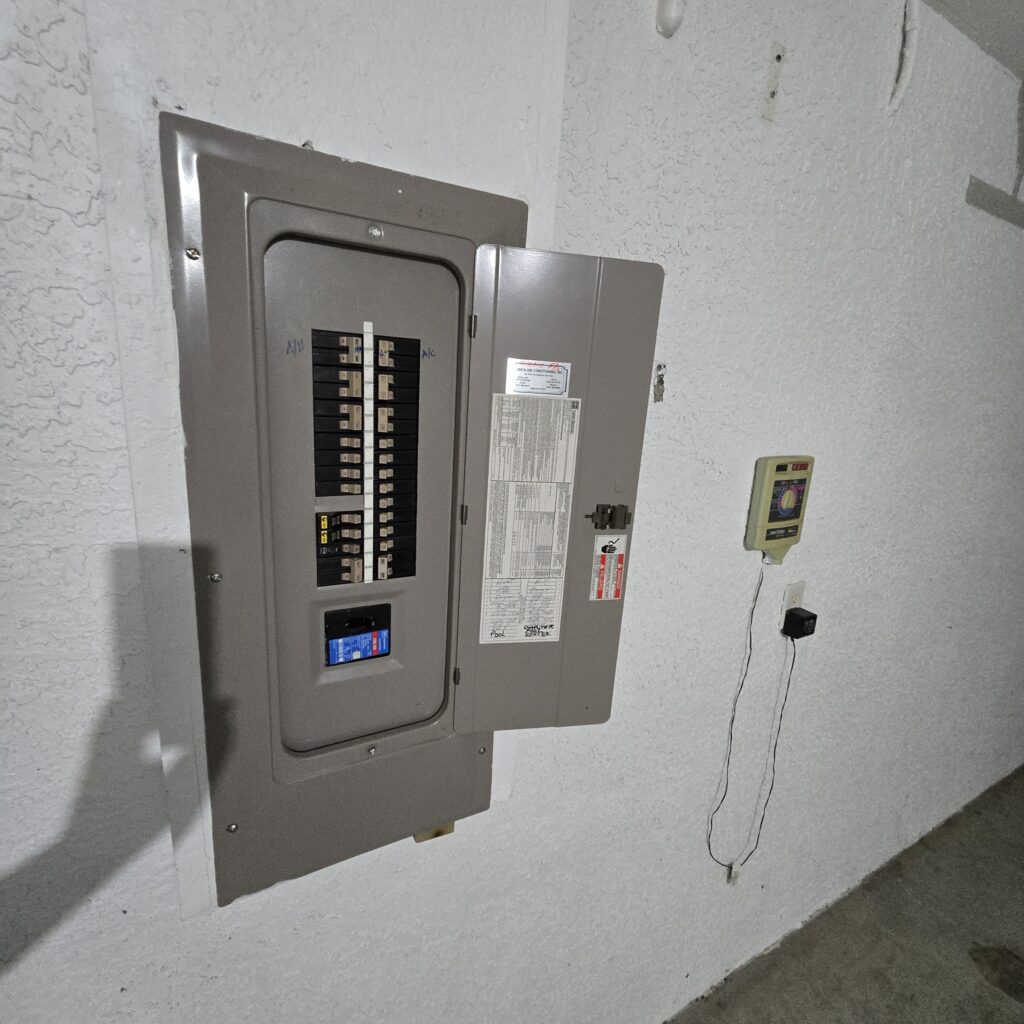
When a home consistently runs out of circuits, the real answer is more circuits rather than more power strips. Adding a dedicated 20 amp circuit to the living room, the garage, or the exterior of the house gives your decorations their own supply with no competition from anything else. Dedicated circuits are also the correct solution for space heaters, freezers, workshop equipment, and home office loads. Our electricians run the new conductors, install the breaker, and terminate everything to code with proper grounding. The work is usually completed in a single visit for most standard installations.
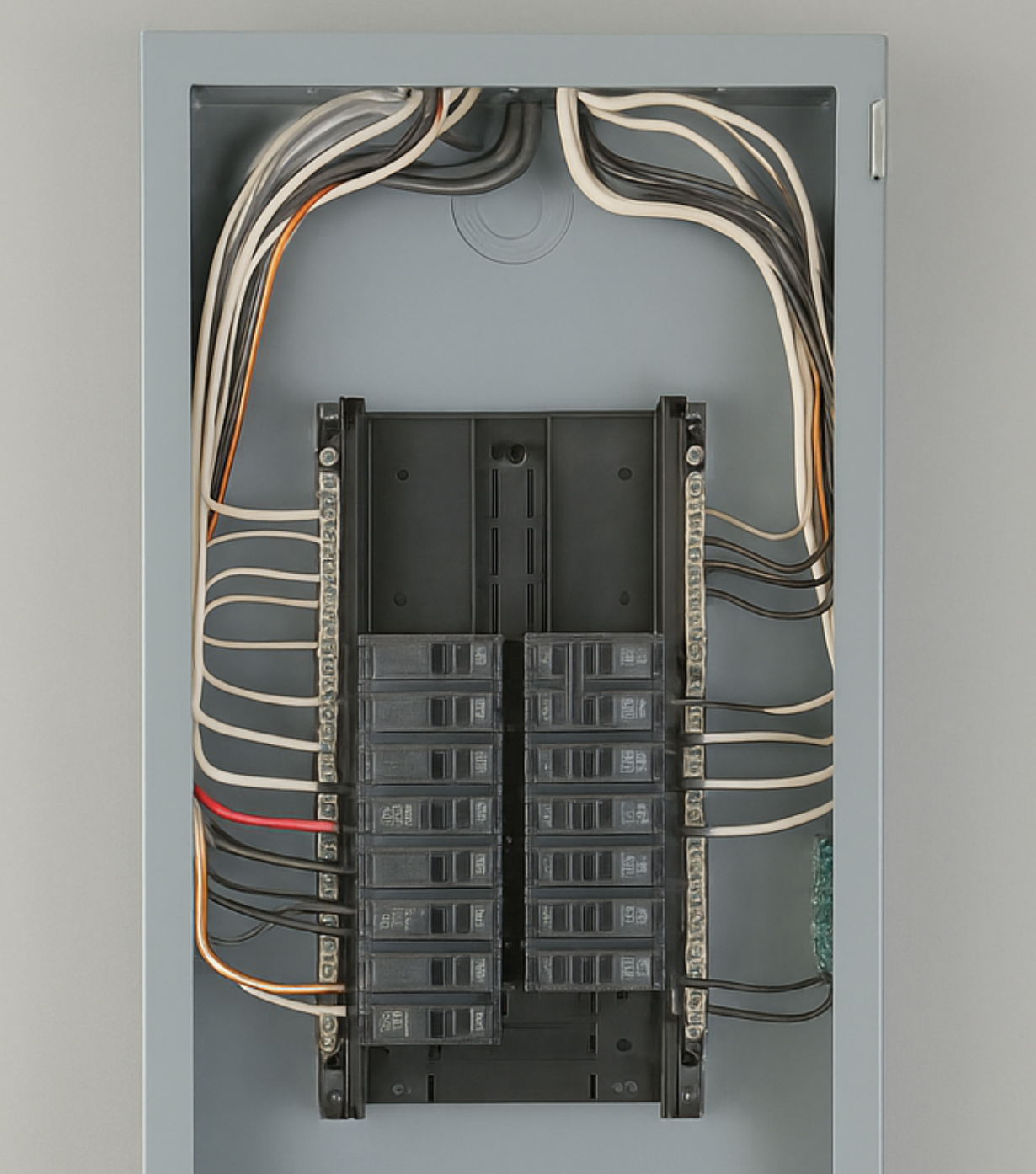
Panels fill up, and many homes reach a point where there is simply no room left for another breaker. An electrical panel upgrade replaces outdated or full equipment with a modern panel that has adequate spaces and current overcurrent protection. Homes still running 60 or 100 amp services often need a service upgrade to 200 amps to support electric vehicle charging, heat pumps, hot tubs, and modern kitchen appliances. If your panel is a Federal Pacific, Zinsco, or fuse based system, replacement addresses a real safety concern rather than a convenience issue. We handle the utility coordination and permitting so the process stays simple for you.
Capacity upgrades are an investment that keeps paying off long after the decorations come down. Additional circuits reduce nuisance tripping year round, support future appliance purchases, and improve the resale appeal of the home. Modern panels accept AFCI and GFCI breakers that provide protection older equipment never offered. Financing is available through GreenSky and Turns, which makes larger projects manageable on a normal household budget. Running out of breaker spaces or dealing with an outdated panel? Click here for our electrical panel upgrade service.
Why Choose Gragg Electrical Services for Your Holiday Electrical Needs
Gragg Electrical Services brings more than twenty years of proven local experience to every job in East Canton and the surrounding communities. We know the housing stock in Stark County, from century homes with knob and tube remnants to new construction in Jackson Township and Green. Our licensed electricians hold themselves to code and to a standard of workmanship we stand behind with a Lifetime Craftsmanship Guarantee. Every crew we send is respectful, clean, and professional, and we treat your home the way we would treat our own. That reputation is the reason our neighbors call us back season after season.
Electrical problems do not follow business hours, and holiday problems least of all. Our 24/7 emergency service is always on standby for the tripped circuit that will not reset, the outlet that smells like burning, or the power loss that hits during a family gathering. We answer the phone, we show up, and we fix the problem correctly the first time. You can reach us any hour at (330) 488-8009 or by email at info@graggelectrical.com. We are located at 333 Cedar St S in East Canton, OH 44730.
Making the holidays safe starts with a conversation about what your home can handle. Call us for an inspection, a new circuit, a GFCI installation, or a full panel upgrade, and we will give you honest pricing and a straight answer about what you need. Financing through GreenSky and Turns keeps larger projects within reach. We are proud to serve East Canton, Canton, North Canton, Louisville, Hartville, Uniontown, Massillon, Minerva, Navarre, Alliance, Carrollton, Canal Fulton, Green, and every community around them. Schedule your service today and light up the season with confidence.